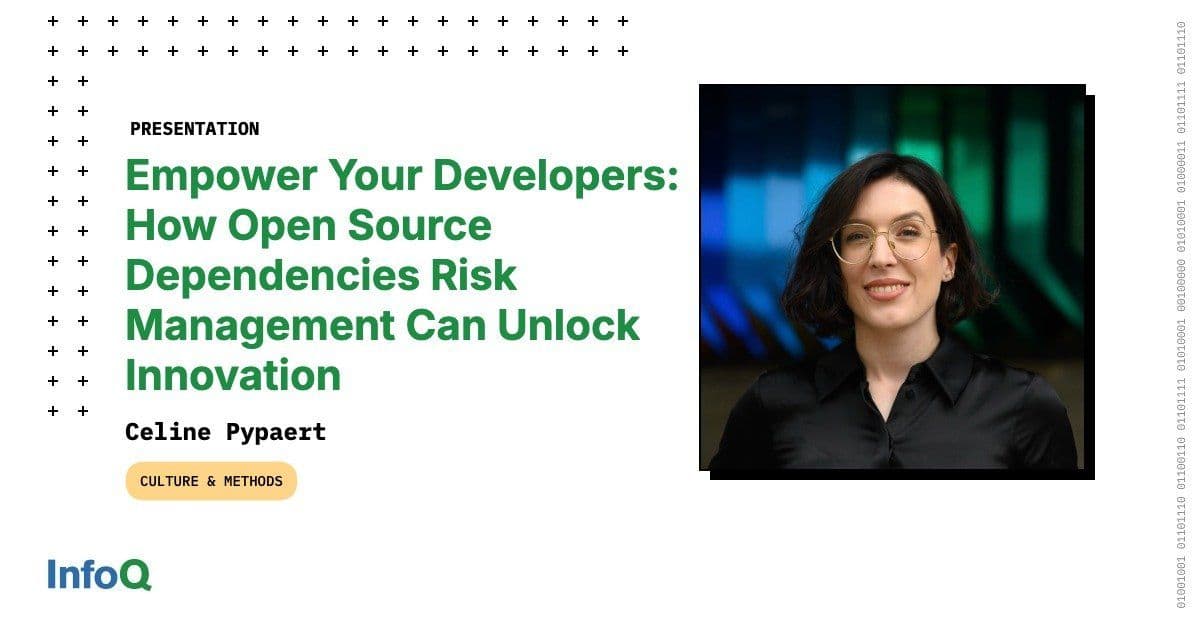
Celine Pypaert discusses the ubiquitous nature of open-source software and shares a blueprint for securing modern applications. She explains how to prioritize high-risk vulnerabilities using exploitability data, the role of Software Bill of Materials (SBOM), and the importance of bridging the gap between DevOps and Security through clear accountability and automated governance.
Celine Pypaert, Security Vulnerability Manager at Johnson Matthey, presents a comprehensive framework for managing open-source dependencies while maintaining developer productivity. Her approach transforms security from a blocker into an enabler of innovation through strategic risk management and automation.
The Foundation: Understanding Open Source Dependencies
Pypaert begins by establishing why open-source security matters. With 96% of commercial codebases containing open-source components, these dependencies form the foundation of modern applications. However, this ubiquity creates a chain-link vulnerability - when one component fails, the entire application can break.
The challenges are multifaceted:
- Lone maintainers: Many popular packages rely on one or two part-time maintainers
- Implicit trust: Developers assume widely-used packages are inherently secure
- AppSec fatigue: Security becomes another job on top of existing responsibilities
Real-world examples illustrate the stakes. The XZ Utils backdoor, where a malicious contributor gained trust over three years before introducing a critical vulnerability, demonstrates how social engineering can compromise even trusted projects. The left-pad incident showed how deleting a single dependency could break thousands of applications.
Strategic Approach: From Reactive to Proactive
Pypaert outlines a three-phase strategy for managing open-source dependencies effectively:
1. Identify and Prioritize
Detection: Implement Software Composition Analysis (SCA) tools to catalog all dependencies across dev, test, and production environments. This continuous process reveals the complete software supply chain.
Prioritization formula: Focus on vulnerabilities that are:
- Critical or high severity
- Likely to be exploited (exploitability data)
- Easy to fix (quick wins)
This approach reduces overwhelming lists of hundreds of vulnerabilities to manageable top 5-10 priorities. Tools like Dependabot can automatically assess exploitability and link issues to project management systems.
2. Ownership and Accountability
Bridging the gap: Pypaert identifies a critical disconnect between IT operations and DevOps teams. While operations manages infrastructure, developers own application code - but neither may own dependencies.
Governance solutions:
- Draft standards mandating security reviews before production deployments
- Define clear ownership models for dependencies
- Integrate security requirements into development workflows
- Train teams on policy compliance
Risk register integration: Map low-level dependency risks to enterprise-level risk registers. This traceability helps justify resources and demonstrates business impact to leadership.
3. Automation and Continuous Improvement
SLA-based automation: Set thresholds where only critical/high-risk vulnerabilities with exploitability triggers automated alerts. This reduces noise and prevents alert fatigue.
Pipeline integration: Embed SCA scanning into CI/CD pipelines with daily jobs that automatically notify maintainers of available updates.
Compensating controls: When vulnerabilities can't be immediately fixed, implement additional protections like web application firewalls, rate limiting, or network segmentation.
Practical Implementation
Getting Started (Crawl Stage)
- Detect: Use SCA tools to identify top 5 fixable vulnerabilities
- Assign: Clarify ownership within your organizational structure
- Automate: Integrate scanning into existing workflows
- Document: Create standards and policies for dependency management
Advanced Practices
Software Bill of Materials (SBOM): Generate JSON-formatted ingredient lists showing all components, versions, and licenses. SBOM adoption correlates with improved vulnerability management maturity.
Incident response triggers: Define thresholds for when vulnerabilities require formal incident tickets, ensuring proper escalation and resource allocation.
Cross-team collaboration: Engage security champions, CISOs, legal teams, and data governance officers to build comprehensive support.
Addressing Common Challenges
Ownership Models
Pypaert addresses the tension between centralized and distributed ownership:
- Centralized teams: Limited resources, but consistent expertise
- Developer ownership: Better context, but potential resistance
- Hybrid approach: Security champions within teams, supported by central expertise
Transitive Dependencies
For vulnerabilities in dependencies you don't directly control (like left-pad in React), focus on reducing exploitability through infrastructure controls and compensating security measures.
Resource Constraints
Small teams without formal risk registers can start with simple spreadsheets tracking vulnerabilities, actions, and ownership. The key is documentation and continuous improvement.
Key Takeaways
- Security enables innovation: Strong foundations allow faster, more confident development
- Prioritize strategically: Focus on high-impact, easily fixable vulnerabilities first
- Build accountability: Clear ownership and governance prevent technical debt accumulation
- Automate intelligently: Reduce manual work while maintaining security effectiveness
- Continuous cycle: Dependency management is ongoing, not a one-time project
By implementing these practices, organizations can transform open-source dependency management from a security burden into a competitive advantage, enabling developers to innovate with confidence while maintaining robust security postures.
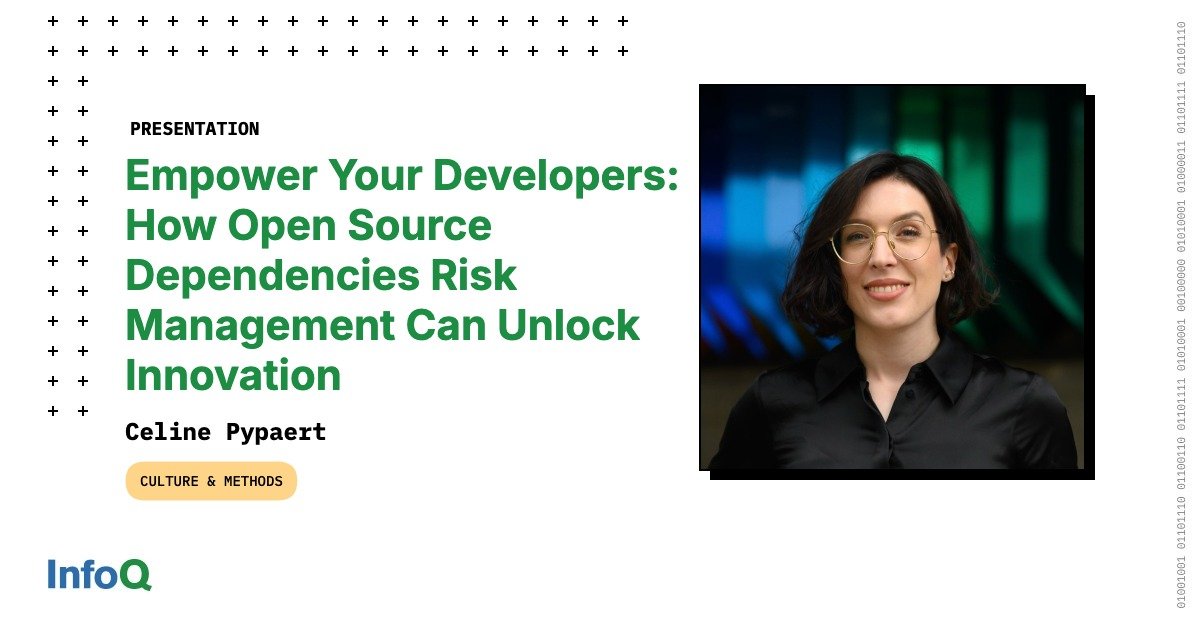
The post Empower Your Developers: How Open Source Dependencies Risk Management Can Unlock Innovation appeared first on InfoQ.
Comments
Please log in or register to join the discussion