
Financial Times reports EU officials express disbelief and anger at US accusations of censorship, with some Big Tech lobbyists privately acknowledging American claims are exaggerated amid growing transatlantic tech policy disputes.
The transatlantic tech policy rift deepened this week as EU officials expressed disbelief and anger at US accusations of censorship, with some Big Tech lobbyists privately acknowledging that American claims are overstated, according to the Financial Times.
Growing Transatlantic Tensions
The dispute centers on US allegations that the EU's Digital Services Act and other regulatory frameworks amount to censorship of American tech companies. EU officials have pushed back forcefully, arguing that their regulations aim to protect consumers and maintain fair competition rather than suppress speech.
"The reaction in Brussels has been one of disbelief and anger," the Financial Times reports, citing multiple sources familiar with the discussions. "Some Big Tech lobbyists, who have traditionally aligned with US positions, are now acknowledging that the American accusations are exaggerated."
Context of the Dispute
This tension comes amid broader disagreements over:
- Digital sovereignty and data localization requirements
- Content moderation standards and platform liability
- Antitrust enforcement against major tech platforms
- AI regulation and development frameworks
The EU has positioned itself as a global leader in tech regulation, implementing comprehensive frameworks like the DSA, DMA, and AI Act. The US has increasingly framed these regulations as protectionist measures that disadvantage American companies.
Industry Response
Several major tech companies have found themselves caught between their home market in the US and their significant European operations. While publicly maintaining support for US positions, some industry representatives have reportedly been more candid in private discussions.
"The lobbyists are walking a fine line," one source told the Financial Times. "They need to maintain relationships with both US policymakers and EU regulators, but the reality is that the American narrative doesn't fully reflect the situation on the ground."
Implications for Tech Policy
The dispute highlights the growing divergence between US and EU approaches to technology governance. While the US has traditionally favored a more hands-off regulatory approach, the EU has pursued aggressive intervention to address concerns about market concentration, data privacy, and online safety.
This divide could have significant implications for:
- Cross-border data flows and digital trade
- Global standards for AI development and deployment
- Platform liability and content moderation practices
- Competition policy and market access
Looking Ahead
The tension comes at a critical time for the global tech industry, as companies navigate an increasingly complex regulatory landscape. The disagreement between the US and EU could complicate efforts to establish international norms for emerging technologies like AI and quantum computing.
Industry observers suggest that finding common ground will be essential for addressing shared challenges, from cybersecurity threats to the ethical development of artificial intelligence. However, the current rhetoric suggests that bridging the transatlantic divide may prove difficult in the near term.
The Financial Times' reporting underscores the complexity of global tech governance and the challenges of balancing national interests with the inherently international nature of digital platforms and services.
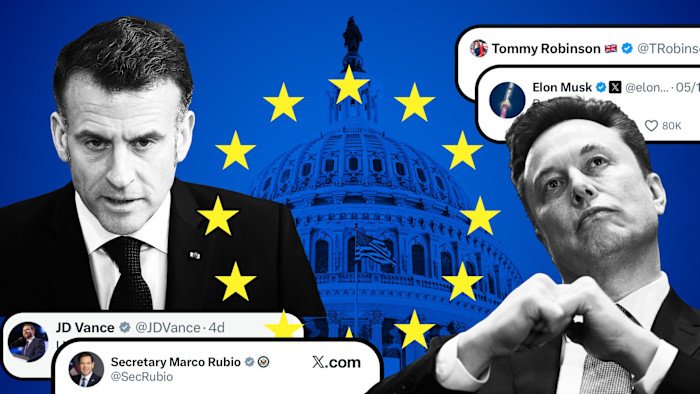
Featured image: Illustration of EU and US flags with digital technology overlay, representing the growing transatlantic tech policy divide.
Comments
Please log in or register to join the discussion