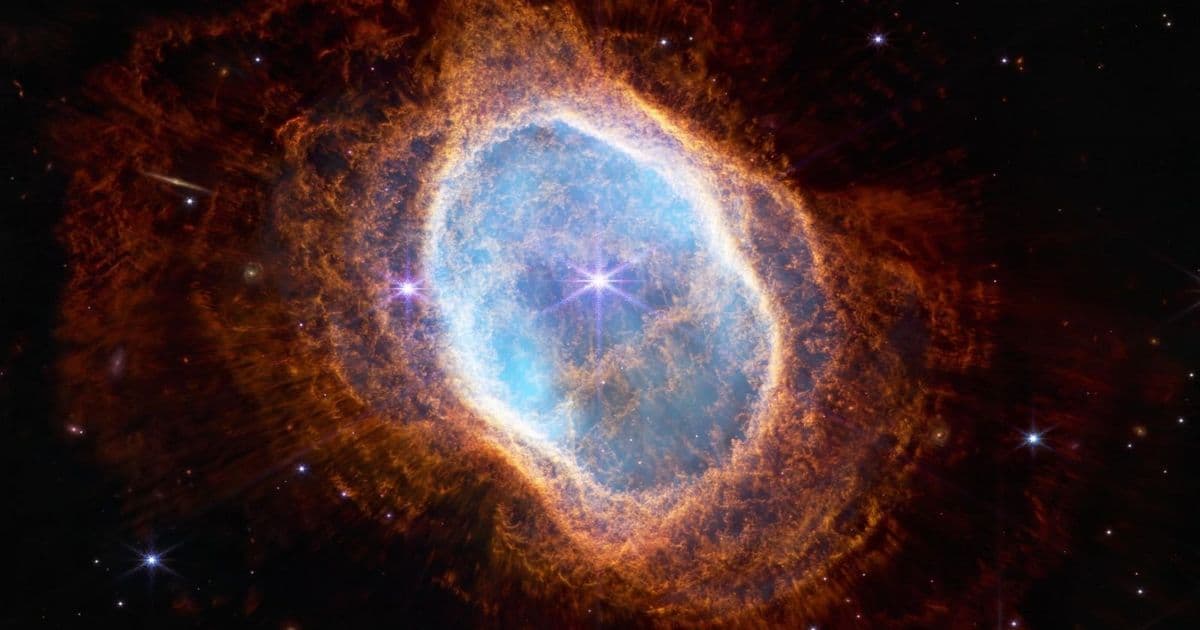
The Euclid and Hubble space telescopes have captured two new detailed images of the Cat's Eye Nebula, revealing its complex structure and colorful gas halo while providing astronomers with valuable data about planetary nebulae formation.
The Euclid and Hubble space telescopes have delivered two breathtaking new images of the Cat's Eye Nebula, offering astronomers unprecedented views of this fascinating celestial object while deepening our understanding of stellar death processes.
What Makes the Cat's Eye Nebula Special
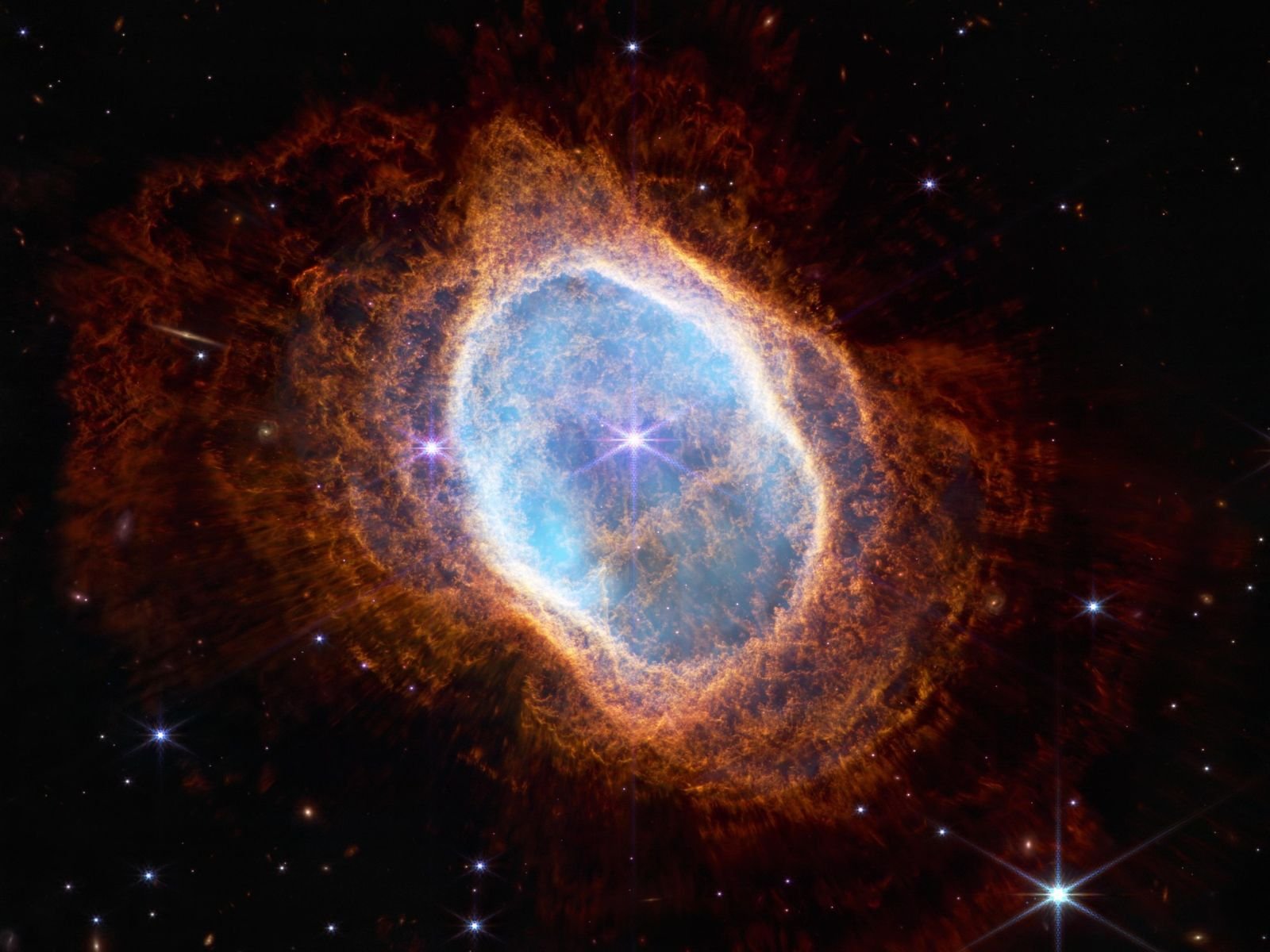
The Cat's Eye Nebula, scientifically designated as NGC 6543, represents one of the most studied examples of a planetary nebula in our night sky. Located approximately 4,400 light-years from Earth, this cosmic structure has captivated astronomers since its discovery in 1864. The nebula's distinctive rounded shape, formed by expanding gas surrounding a dying star, has made it a crucial object for understanding stellar evolution.
Planetary nebulae like the Cat's Eye Nebula occur during the final stages of a star's life cycle. When a star similar in mass to our Sun exhausts its nuclear fuel, it undergoes dramatic transformations that create these intricate structures. The process involves the star shedding its outer layers while its core contracts and heats up, creating the beautiful yet violent phenomena we observe.
Euclid's Wide-Angle View Reveals the Nebula's Halo
The European Space Agency's Euclid telescope has captured an extraordinary wide-field image that showcases the Cat's Eye Nebula's expansive halo structure. This new perspective reveals a colorful halo of gas that appears to be moving away from the central star, creating a dynamic visual effect that wasn't fully appreciated in previous observations.
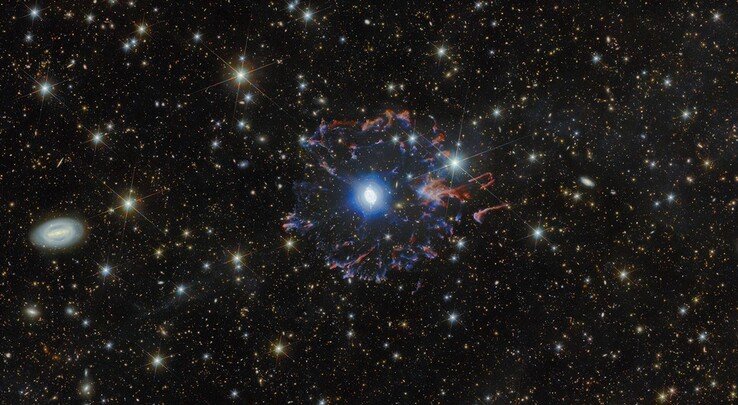
Euclid's image demonstrates the telescope's capability to capture large-scale structures in space with remarkable clarity. The colorful halo visible in this image represents material that the star expelled during earlier phases of its evolution. These outer layers provide crucial information about the star's mass-loss history and the chemical composition of the material it has shed over time.
Hubble's Close-Up Reveals Chaotic Core Activity
While Euclid provides the broad context, the Hubble Space Telescope has delivered an equally impressive close-up view of the nebula's heart. Hubble's image reveals high-speed gas jets emanating from the central region, along with the chaotic environment surrounding the dying star at the nebula's core.
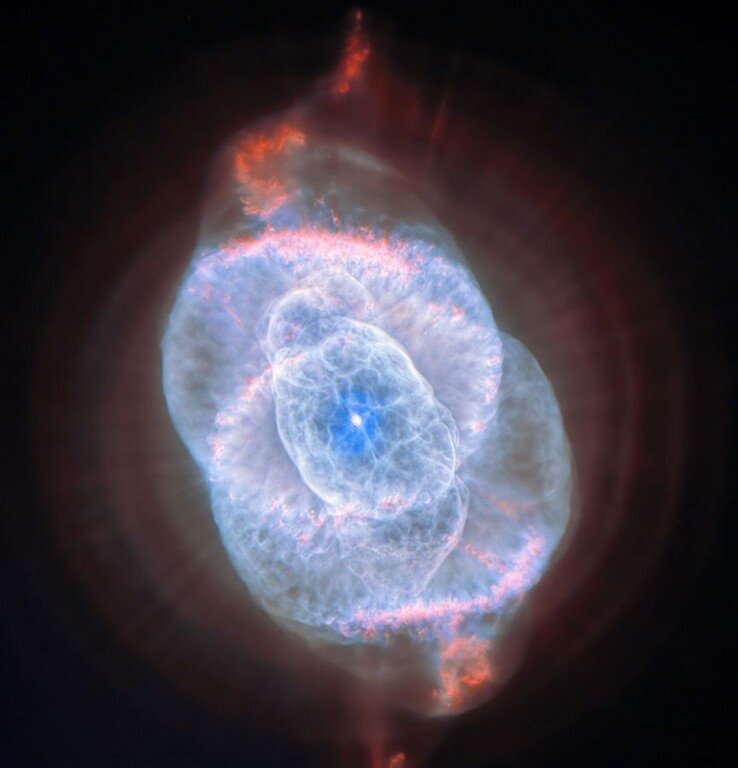
This detailed view allows astronomers to observe the complex interactions between the central star and the surrounding gas. The high-speed jets visible in Hubble's image represent material being ejected at tremendous velocities, creating shock waves and turbulence within the nebula. The central star itself appears as a bright point, surrounded by the intricate patterns of gas and dust that make the Cat's Eye Nebula so distinctive.
Scientific Significance of the New Images
These new observations from both telescopes provide astronomers with complementary data that will help refine models of planetary nebula formation and evolution. The Euclid image's wide-field perspective helps scientists understand the full extent of the nebula and its surrounding environment, while Hubble's high-resolution view reveals the detailed physics occurring in the nebula's core.
The combination of these images allows researchers to study the nebula across different scales and wavelengths, providing a more complete picture of the physical processes at work. This multi-wavelength approach is essential for understanding the complex interplay between radiation, gas dynamics, and magnetic fields in planetary nebulae.
Understanding Stellar Death Through Planetary Nebulae
Planetary nebulae serve as natural laboratories for studying stellar death processes. The Cat's Eye Nebula, with its well-defined structure and proximity to Earth, offers an ideal target for such investigations. The new images will help astronomers better understand several key aspects of stellar evolution:
- The mechanisms by which stars shed their outer layers during the late stages of their lives
- The chemical enrichment of the interstellar medium through stellar mass loss
- The formation and shaping of complex nebular structures
- The physics of high-speed gas flows and shock waves in astrophysical plasmas
Technical Achievements of the Observations
The successful capture of these images demonstrates the continued capabilities of both the Hubble and Euclid telescopes. Hubble, launched in 1990, continues to deliver cutting-edge science despite its age, while Euclid, ESA's newer mission focused on dark energy and cosmology, has proven its versatility in studying diverse astronomical objects.
The coordination between these two telescopes highlights the value of having multiple observatories with different capabilities working in tandem. While Hubble provides unmatched high-resolution imaging in visible and ultraviolet wavelengths, Euclid's wide-field capability and infrared sensitivity complement these observations perfectly.
Future Research Directions
These new images of the Cat's Eye Nebula will likely inspire additional observations and studies. Astronomers may use ground-based telescopes to obtain spectroscopic data that can reveal the chemical composition of different regions within the nebula. Space-based observatories operating at other wavelengths, such as the James Webb Space Telescope, could provide infrared views that penetrate the dust and reveal previously hidden structures.
The data from these observations will also contribute to broader studies of planetary nebulae populations, helping astronomers understand how factors like stellar mass, composition, and environment affect the appearance and evolution of these objects.
Public Engagement and Scientific Communication
The release of these stunning images serves not only scientific purposes but also helps engage the public with astronomy and space science. The Cat's Eye Nebula's distinctive appearance makes it an excellent subject for public outreach, demonstrating the beauty and complexity of the universe while conveying important scientific concepts about stellar evolution and the life cycles of stars.
These images remind us that even objects we think we understand well can still surprise us with new details and insights when viewed with advanced instrumentation and fresh perspectives. The Cat's Eye Nebula continues to be a valuable astronomical object, providing both scientific knowledge and visual wonder to researchers and the public alike.
Comments
Please log in or register to join the discussion