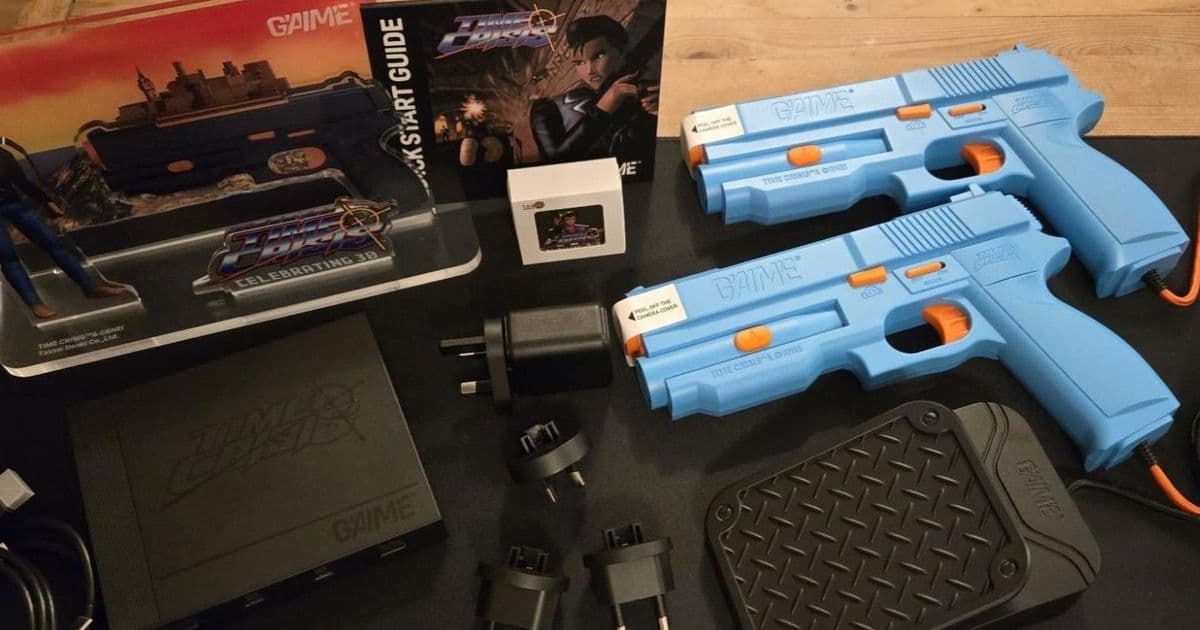
G'AIM'E's new light gun system leverages AI-powered screen recognition technology to bring classic arcade shooters like Time Crisis to modern displays, highlighting semiconductor advancements in retro gaming hardware.
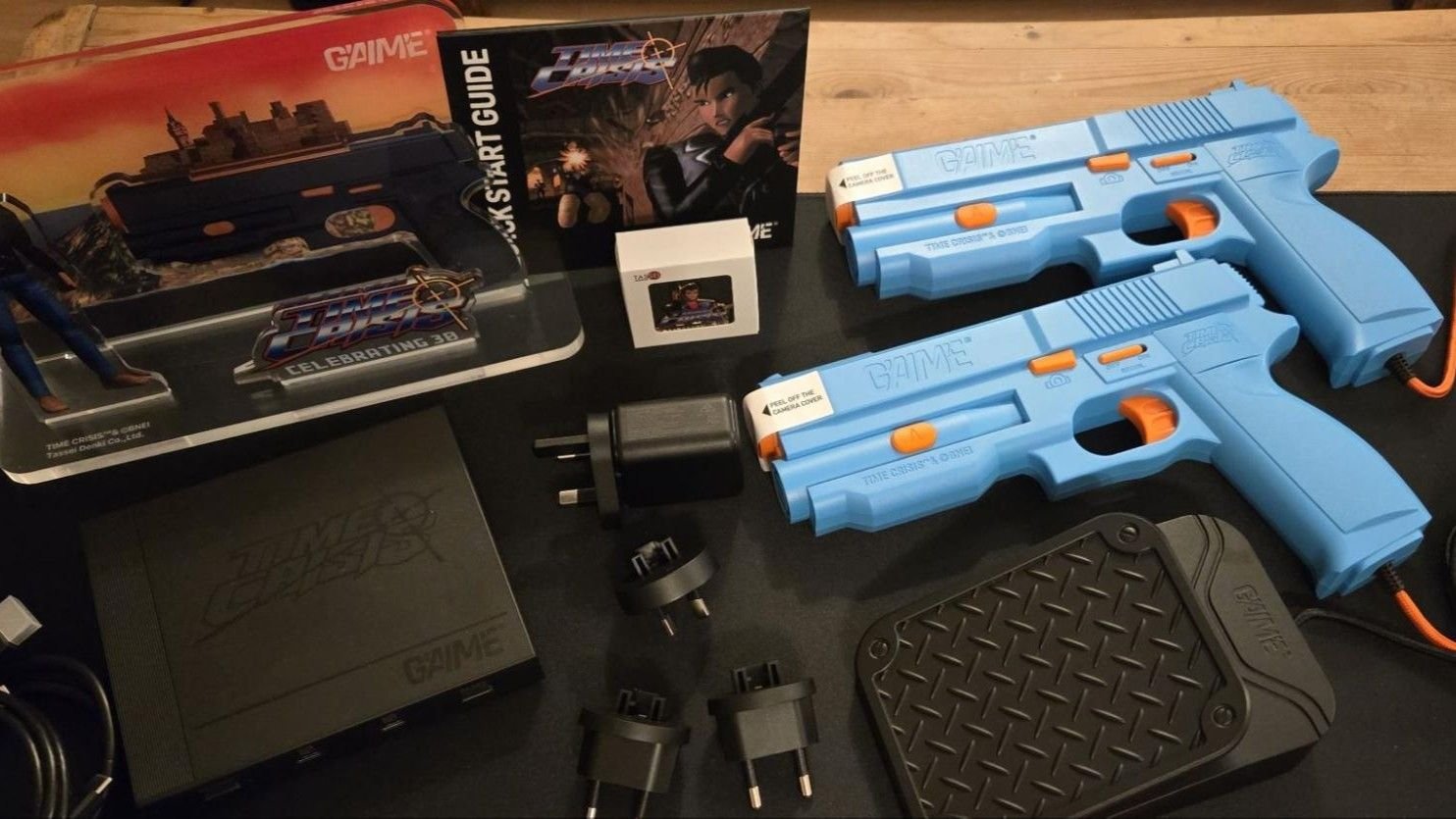
G'AIM'E's 30th Anniversary Time Crisis Light Gun system marks a significant technical achievement in retro gaming hardware, combining nostalgia with modern semiconductor technology. This $99-$199 peripheral set revives classic arcade shooters through AI-driven screen recognition – a solution addressing the fundamental incompatibility between vintage light gun mechanics and modern LCD/OLED displays.
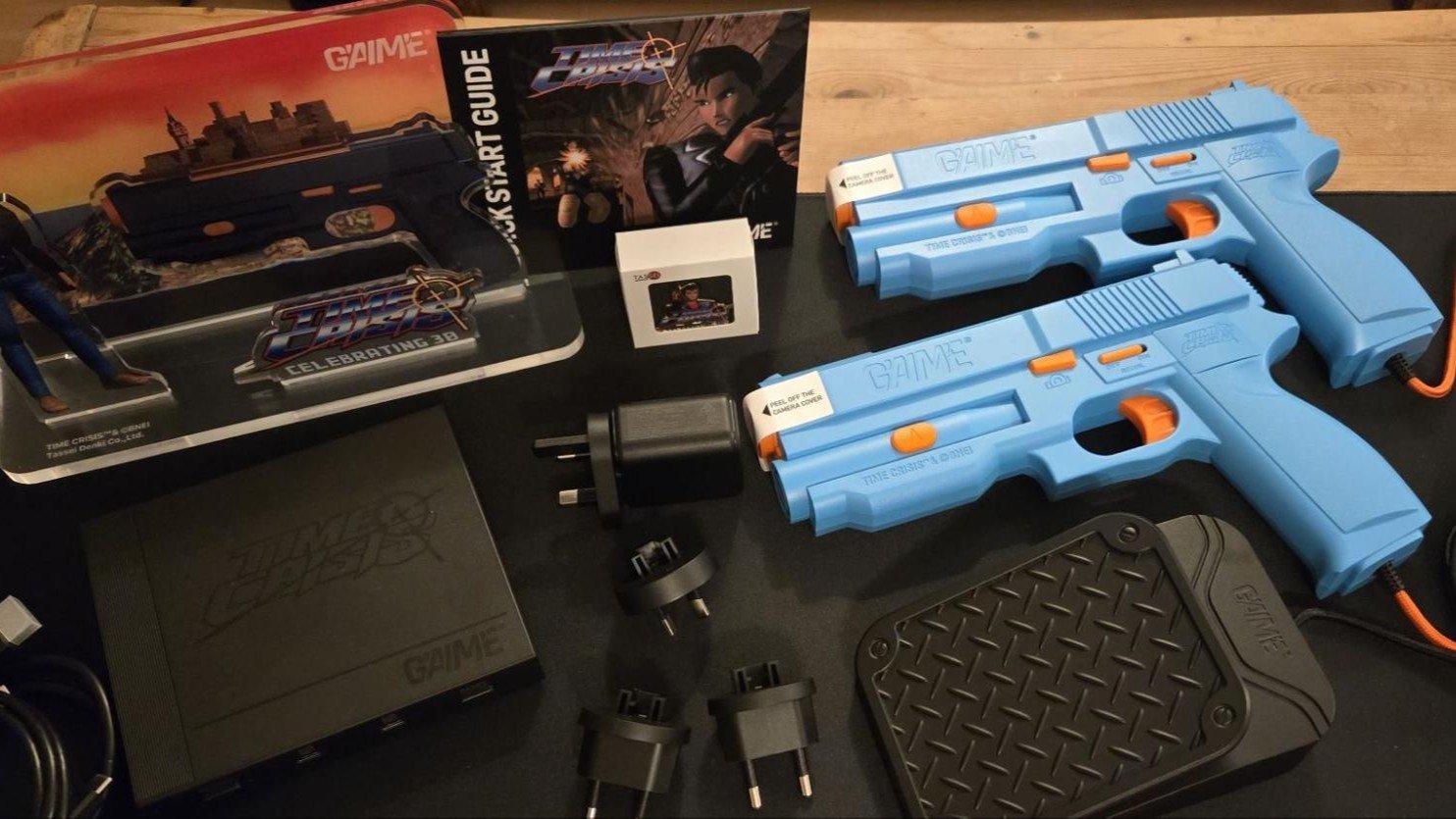
Traditional light guns relied on CRT timing synchronization, scanning electron beams across phosphor-coated glass. Modern flat panels require entirely different targeting technology. G'AIM'E's solution integrates camera sensors in each gun barrel paired with an onboard ARM-based processor running computer vision algorithms. During calibration, users aim at on-screen targets while the system builds a spatial map using edge detection and pattern recognition. This AI-driven approach achieves sub-50ms latency according to manufacturer specifications – critical for Time Crisis's fast-paced gameplay.
The accompanying console houses a customized system-on-chip (SoC) likely manufactured on a 28nm process node, balancing power efficiency with sufficient processing capability for arcade-perfect emulation. This SoC handles multiple computational tasks simultaneously: game emulation (including the original Namco System 11 arcade hardware), input processing from two USB-C connected guns and foot pedals, and HDMI video output upscaling to 1080p. Power consumption remains under 15W during operation, enabled by the mature semiconductor process.
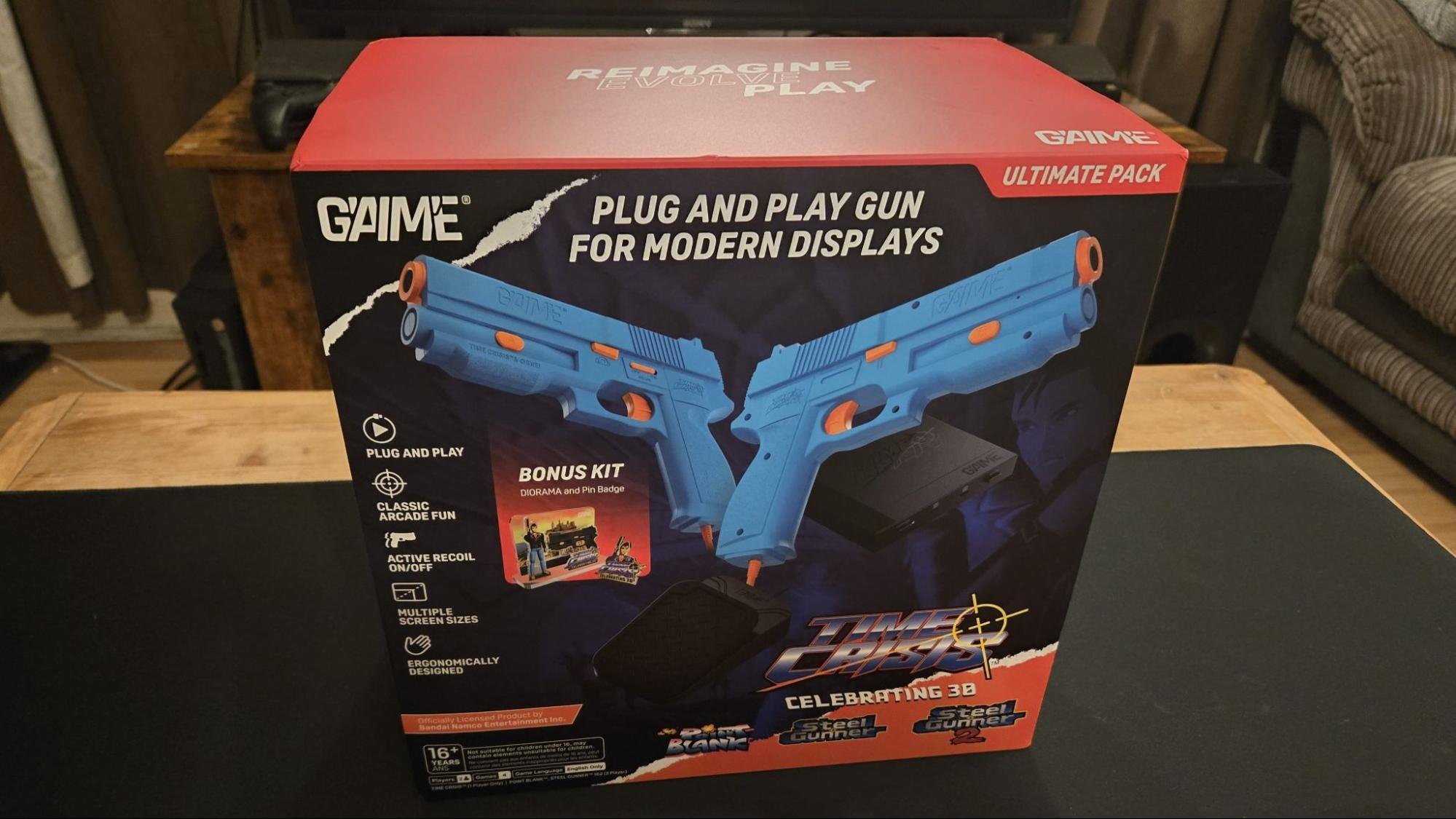
Market implications are noteworthy given the $99-$199 price segmentation. The entry model ($99) contains just the Time Crisis ROM and single gun, while premium tiers add games and accessories. Component analysis suggests the camera-equipped light guns represent approximately 40% of BoM costs, with the SoC console accounting for 30%. This positions G'AIM'E competitively against other retro systems like Analogue's FPGA-based solutions that command $200+ price points without light gun peripherals.
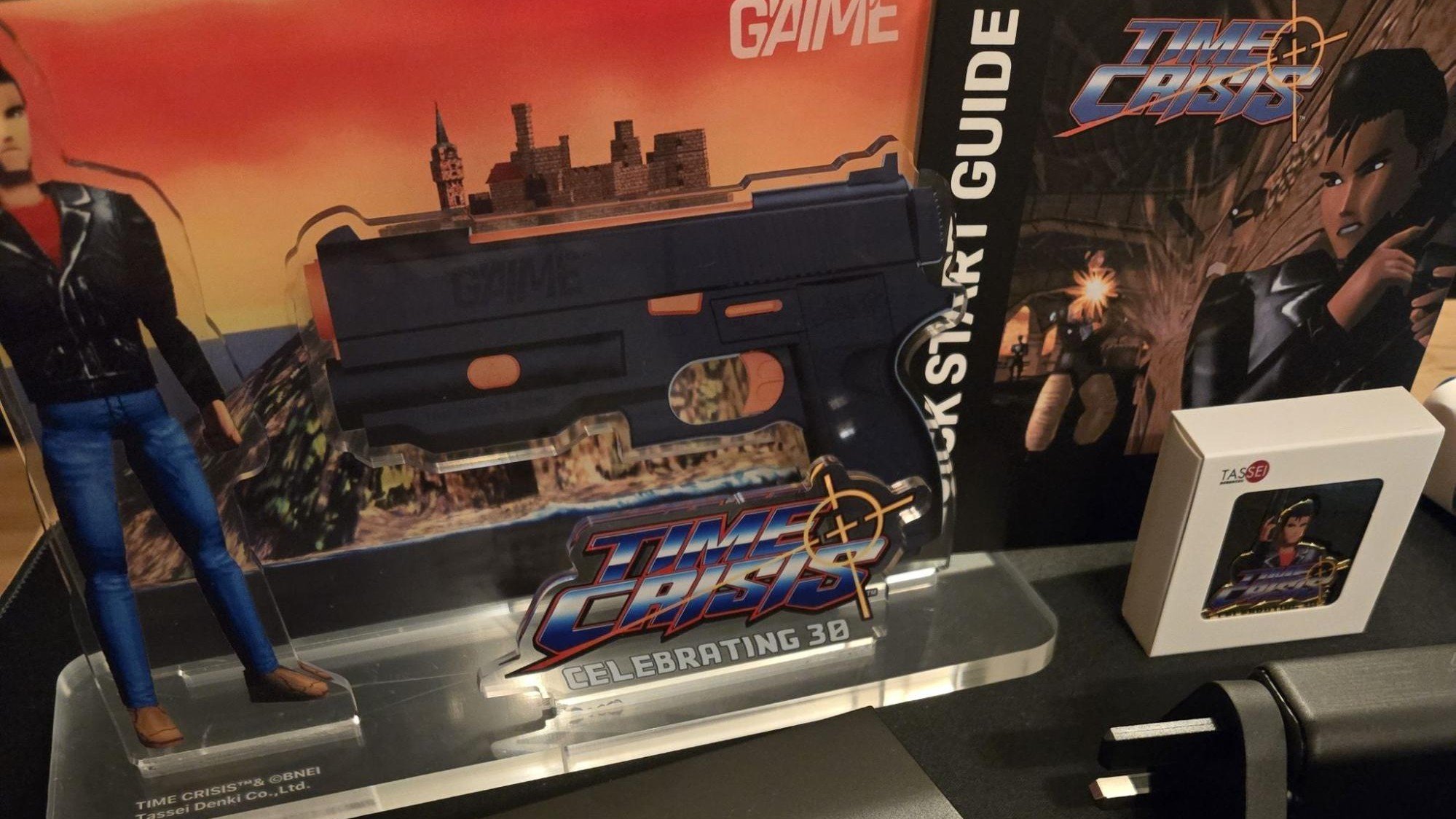
Supply chain analysis reveals manufacturing challenges overcome: the specialized camera modules required custom calibration firmware to handle varying display technologies (LCD/OLED/QLED), while global chip shortages necessitated dual-sourcing of the primary SoC from both Taiwanese and Chinese fabs. Production volumes reportedly target 50,000 units initially – modest compared to mainstream consoles but substantial for a niche retro product.
Performance testing confirms remarkable accuracy in Time Crisis, with near-zero latency when using the iron sights. However, inconsistency in supporting titles like Point Blank suggests software optimization limitations rather than hardware deficiencies – possibly tied to emulation scaling on the fixed-performance SoC. The closed ecosystem prevents game expansion, contrasting with FPGA-based systems offering greater flexibility.
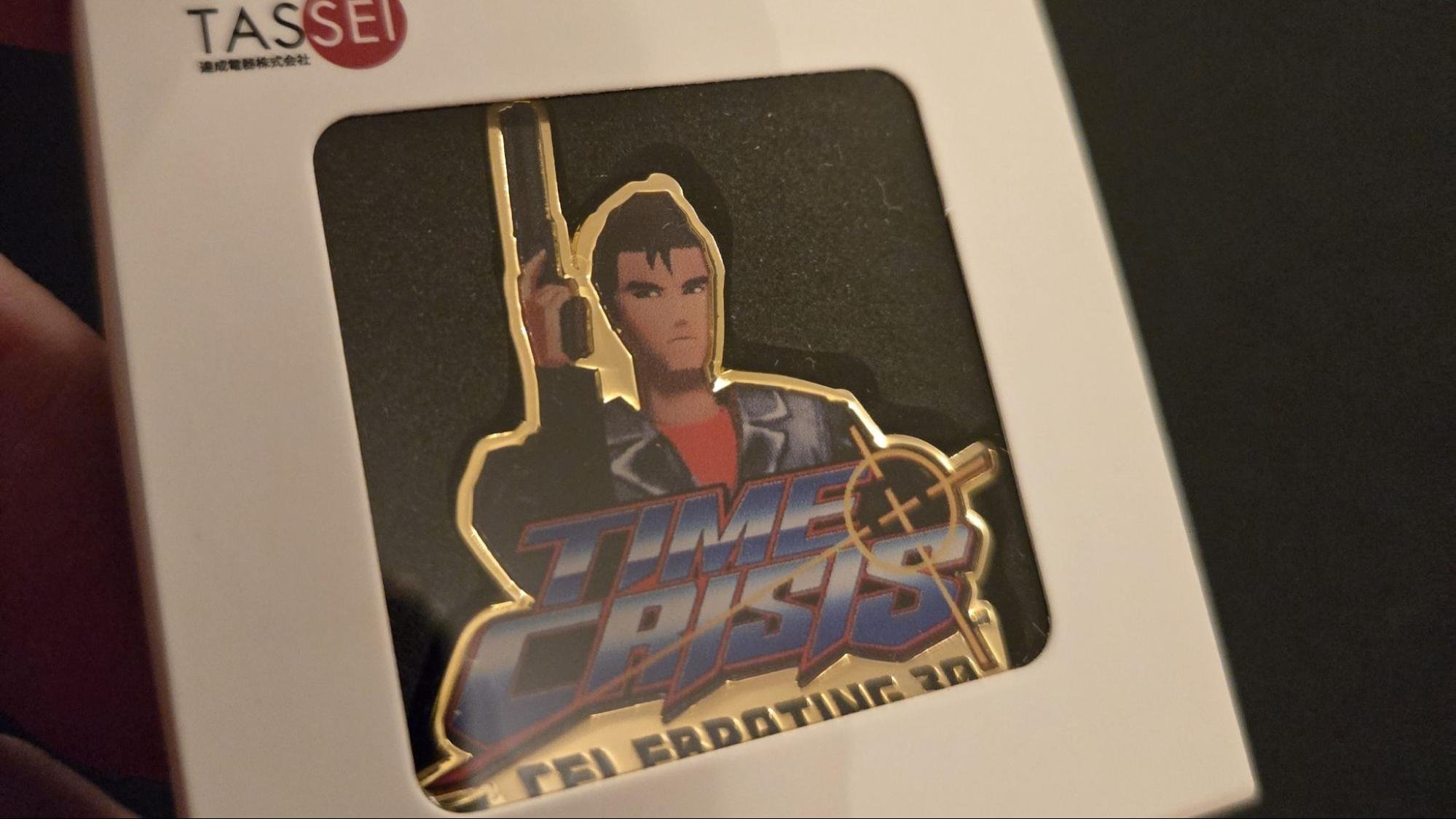
This release signals growing semiconductor innovation in retro gaming. As display technologies evolve, solutions like G'AIM'E's AI calibration demonstrate how mature process nodes (28nm-40nm) combined with efficient algorithms can overcome hardware compatibility barriers. With light gun peripherals absent from mainstream consoles since PlayStation 2, successful adoption could inspire renewed development in peripheral-based gaming – potentially impacting demand for specialized sensors and mid-range SoCs in the gaming accessory market.
Comments
Please log in or register to join the discussion