GitHub is moving Copilot CLI from ad hoc command help toward repeatable, repository-owned workflows that teams can review, version, and run across security, infrastructure, release, and incident tasks.
GitHub’s June 9, 2026 update to GitHub Copilot CLI adds a practical building block for teams that have already learned the limits of one-off AI prompts: custom agents defined as Markdown files inside a repository. The announcement, From one-off prompts to workflows, is not just a developer-product feature. It is a small architectural shift in how teams can package operational knowledge.
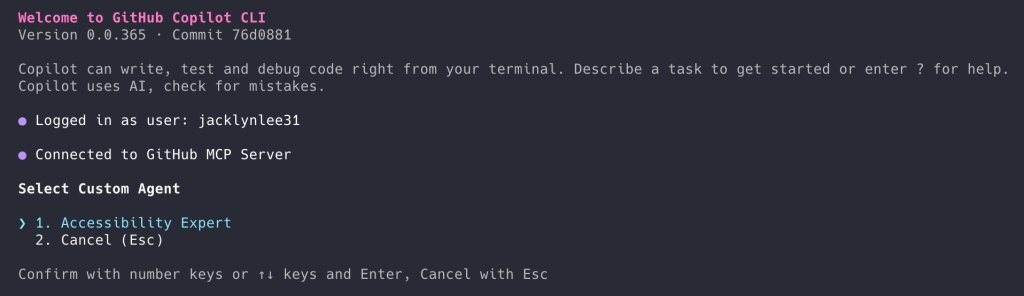
The core service update is straightforward. A team can create an agent profile under .github/agents, describe the agent’s role in Markdown, set YAML frontmatter for metadata, declare allowed tools, and encode operating rules, output formats, and guardrails. The file can end in .agent.md, such as accessibility.agent.md, and Copilot CLI can invoke it from the terminal through the /agents command.
That matters because the terminal is where many operational workflows already begin. A developer does not only write code there. They run Terraform plans, inspect Kubernetes manifests, call gh, scan containers, check logs, generate changelog entries, and prepare pull request notes. Copilot CLI custom agents give those repeated steps a shared definition instead of leaving them as local shell history, wiki pages, or private prompt snippets.
From a cloud architecture perspective, this resembles the move from manually triggered scripts to event-oriented runbooks. The event might be a pull request, a release candidate, a security review, an incident window, or a failed deployment. The response is no longer a blank prompt. It is a named workflow with tools, constraints, and expected output.
GitHub is also positioning this beside partner and off-the-shelf agents from companies including JFrog, Dynatrace, Octopus Deploy, and Arm. The pattern is familiar from managed cloud services: start with a managed baseline, then specialize where the organization has its own rules. Partner agents can cover common product-specific tasks. Custom agents cover the local details: naming conventions, internal tools, security policies, compliance thresholds, deployment order, and team ownership maps.
Pricing is the part architects should treat carefully. The GitHub post frames custom agents as a Copilot CLI capability, so access depends on GitHub Copilot availability and plan entitlements. GitHub’s broader Copilot packaging is tracked on the GitHub Copilot plans page. For cost planning, the key change is not a new infrastructure meter like Lambda invocations or API Gateway requests. The cost model is closer to managed developer automation: agent activity consumes Copilot capacity under the applicable subscription and request limits. Teams should measure which workflows are frequent enough to standardize, then decide whether the time saved justifies the Copilot usage they generate.
The most useful integration pattern is repository-local workflow-as-code. Agent profiles sit next to the software they operate on, which means they can move through the same review path as application code. A security audit agent can declare that it uses gh, git, Semgrep, Trivy, Gitleaks, and jq. It can require redaction of secrets, severity grouping, owner mapping, and a pull request-ready checklist. That makes the workflow inspectable before it runs.
A second pattern is policy-assisted infrastructure review. An IaC compliance agent can run Terraform, Open Policy Agent, Conftest, and kubeconform. The important architectural idea is separation of concerns. Terraform produces a plan, OPA evaluates policy, kubeconform validates Kubernetes manifests, and the agent turns the evidence into an approval summary. The agent should not become the policy engine. It should orchestrate the checks, preserve evidence, and explain risk in a format reviewers can act on.
A third pattern is release automation. A release docs agent can use GitHub CLI and git to gather merged pull requests since a tag, group them into Added, Changed, Fixed, Security, Performance, and Maintenance, then update CHANGELOG.md. This is not FaaS in the cloud-provider sense, but the operating model is similar to function composition. A small unit of automation receives a bounded input, calls managed APIs, performs a repeatable transformation, and emits a structured artifact.
Incident response is where the event-driven analogy becomes even clearer. Given a service name and time window, an incident agent can collect recent deploys from GitHub Actions or deployments, query documented metrics endpoints, inspect logs, summarize top failing endpoints, and draft a first-look report. In mature cloud systems, this kind of workflow often crosses AWS Lambda, Amazon EventBridge, CloudWatch Logs, Datadog, Dynatrace, Kubernetes, GitHub Actions, and internal runbooks. A Copilot CLI custom agent can become the terminal-side coordinator that turns those sources into a consistent incident packet.
The use case is not replacing SRE judgment. It is reducing the cold-start cost during the first 15 minutes. Instead of every responder remembering which command to run first, the agent profile can encode the sequence: look for deploys within the time window plus two hours, compare error rate against baseline, identify the hottest paths, redact sensitive log lines, label uncertainty, and assign owners for immediate actions.

For FaaS and managed-service teams, the architectural appeal is strongest when custom agents are used as thin orchestration layers over existing control planes. A deployment review agent might call GitHub, Terraform Cloud, AWS CloudFormation, Kubernetes, and a ticketing API. A serverless cost agent might inspect AWS Lambda memory settings, timeout values, provisioned concurrency, EventBridge schedules, SQS batch sizes, and API Gateway routes. A reliability agent might compare retry policies across Lambda, Step Functions, SQS dead-letter queues, and managed database clients.
The best agents will be boring in the right ways. They will call known tools, follow explicit rules, produce predictable output, and leave evidence behind. They should not make hidden architectural decisions. If a Terraform plan creates a public load balancer, the agent can flag the risk, point to the path, name the owner, and suggest the review needed. A human still decides whether the exposure is intentional.
There are trade-offs. The first is drift. If an agent profile says to run trivy fs ., but CI has moved to a different scanner, the custom agent becomes stale documentation with execution rights. Treat agent profiles like code: assign owners, review changes, and test important workflows after toolchain updates.
The second trade-off is tool access. An agent that can run commands is useful because it can inspect real state. That same power requires boundaries. Profiles should declare the narrowest tool set that fits the job. A release docs agent may need gh and git, but not Terraform. A security agent may need scanners, but it should be instructed not to print secrets or vulnerable payloads in full.
The third trade-off is false confidence. Structured output can look authoritative even when data is missing. Strong agent profiles should force explicit gaps: metrics unavailable, log access denied, scanner missing, no CODEOWNERS file, no Terraform plan supplied. In operational work, uncertainty is useful information. Hiding it is risk.
The fourth trade-off is cost control. Teams should not turn every tiny prompt into a custom agent. Start with workflows that are repeated, error-prone, cross-tool, or compliance-sensitive. Security audits, IaC reviews, release notes, and incident first looks are good candidates because standardization has clear value. A one-time exploratory question does not need the weight of a maintained profile.
This GitHub update fits a broader movement in managed cloud architecture: operational knowledge is becoming executable. Infrastructure moved from console clicks to Terraform. Deployment moved from local scripts to CI/CD pipelines. Policy moved from reviewer memory to OPA rules. Custom agents bring a similar idea to the developer terminal. The workflow is still human-directed, but the path from event to evidence to reviewable output becomes repeatable.
For cloud architects, the right adoption plan is incremental. Pick one recurring workflow with clear inputs and outputs. Encode the rules in .github/agents. Keep the agent close to the repository. Limit tools. Require evidence. Review the profile like production automation. Then compare results against the existing manual process.
The practical promise of Copilot CLI custom agents is not that the terminal suddenly understands everything. It is that teams can teach it the small, specific workflows that already define how their systems are built and operated.
Comments
Please log in or register to join the discussion