GreenBoost, an open-source memory tiering solution for NVIDIA GPUs, has relaunched with GreenBoost-Proton to enhance Linux gaming performance by combining GPU VRAM with system RAM and NVMe storage.
GreenBoost, an innovative open-source memory orchestrator for NVIDIA GPUs, has emerged from legal challenges to introduce a new gaming-focused variant called GreenBoost-Proton. The project, which enables memory tiering by combining GPU VRAM with system RAM and NVMe storage, aims to help users with smaller VRAM capacities handle larger workloads more effectively.
The GreenBoost Comeback
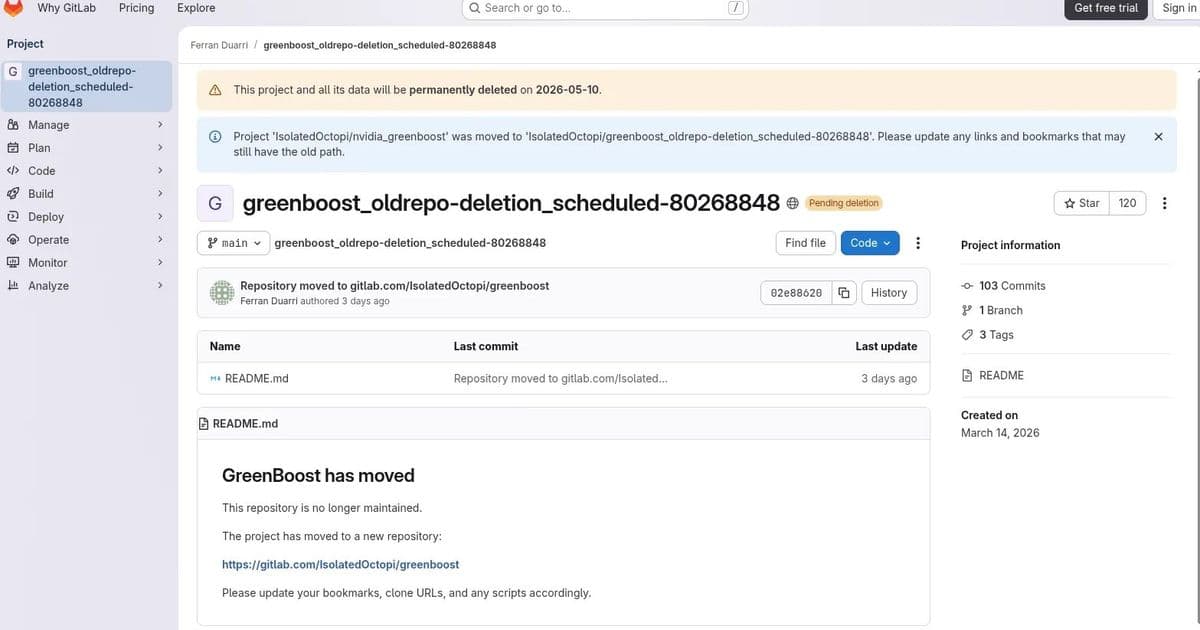
The project initially gained attention for its ability to augment NVIDIA GPU video memory using system resources, making it particularly valuable for running large language models on graphics cards with limited VRAM. However, the project faced unexpected hurdles when its original NVIDIA Forums discussion was removed and its GitLab repository had to be shut down due to trademark concerns.
The developer was forced to remove the original "nvidia_greenboost" repository to avoid infringing on NVIDIA's trademark, despite the project being entirely independent and not affiliated with or sponsored by NVIDIA. This setback led to the creation of a new "greenboost" repository on GitLab, where development continues with clearer disclaimers about the project's independent nature.
GreenBoost-Proton: Gaming Enhancement
The latest development introduces GreenBoost-Proton, a specialized variant designed specifically for Linux gaming on NVIDIA hardware. This new implementation includes a Vulkan layer that reports enhanced video RAM capacities to games by combining the actual GPU VRAM with available system memory.
For Linux gamers using NVIDIA GPUs with limited VRAM, this approach could be transformative. Games that previously struggled with memory constraints or required extensive tweaking to run smoothly on systems with smaller graphics cards may now perform better thanks to the memory tiering capabilities of GreenBoost-Proton.
The Vulkan layer integration is particularly clever, as it allows the memory orchestration to work transparently with games that query VRAM capacity, effectively presenting a larger unified memory pool to the application.
Technical Implementation
GreenBoost's core functionality revolves around creating a memory tiering system where:
- Primary storage: GPU VRAM (fastest access)
- Secondary storage: System RAM (good performance)
- Tertiary storage: NVMe storage (slower but large capacity)
This tiered approach allows the system to handle memory workloads that exceed the physical VRAM capacity of the GPU. When a game or application requests more memory than available in VRAM, GreenBoost can intelligently move data between tiers to maintain performance while enabling larger workloads.
Practical Applications
The technology has two primary use cases:
- AI/ML Workloads: Running larger language models or other AI workloads on GPUs with smaller VRAM capacities
- Gaming: Enabling games to run on systems with limited VRAM by providing additional memory resources
For the gaming community, particularly those using older or budget NVIDIA GPUs, GreenBoost-Proton could extend the useful life of their hardware by allowing them to play more demanding titles that would otherwise be incompatible.
Getting Started
Users interested in trying GreenBoost or GreenBoost-Proton can find the project at its new GitLab repository. The project maintains its open-source nature, allowing the community to contribute and improve the memory orchestration capabilities.
Installation and configuration details are available in the project documentation, though users should be aware that memory tiering solutions like this may require some technical knowledge to set up and optimize properly.
The Future of Memory Orchestration
GreenBoost represents an interesting approach to addressing the growing memory demands of modern applications and games. As VRAM capacities on consumer GPUs struggle to keep pace with increasing texture sizes, model parameters, and other memory-intensive workloads, solutions like GreenBoost could become increasingly relevant.
The project also highlights the creative ways the open-source community works around hardware limitations, developing software solutions that can significantly extend the capabilities of existing hardware.
For Linux gamers and AI enthusiasts using NVIDIA hardware, GreenBoost-Proton offers an intriguing option to maximize the potential of their systems, particularly those with GPUs that might otherwise be considered too limited for modern workloads.
Image: NVIDIA GPU architecture benefiting from memory tiering solutions
Comments
Please log in or register to join the discussion