MIT's Gordon Engineering Leadership Program equips student project teams with critical leadership skills that complement technical expertise, creating a powerful synergy between hands-on engineering challenges and professional development.
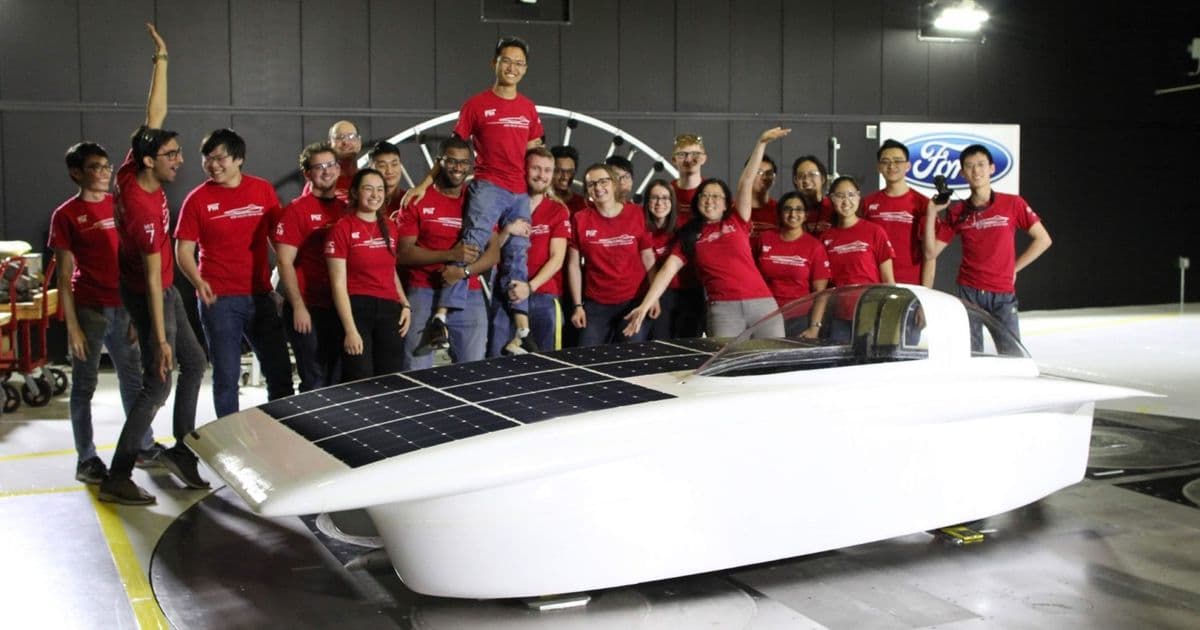
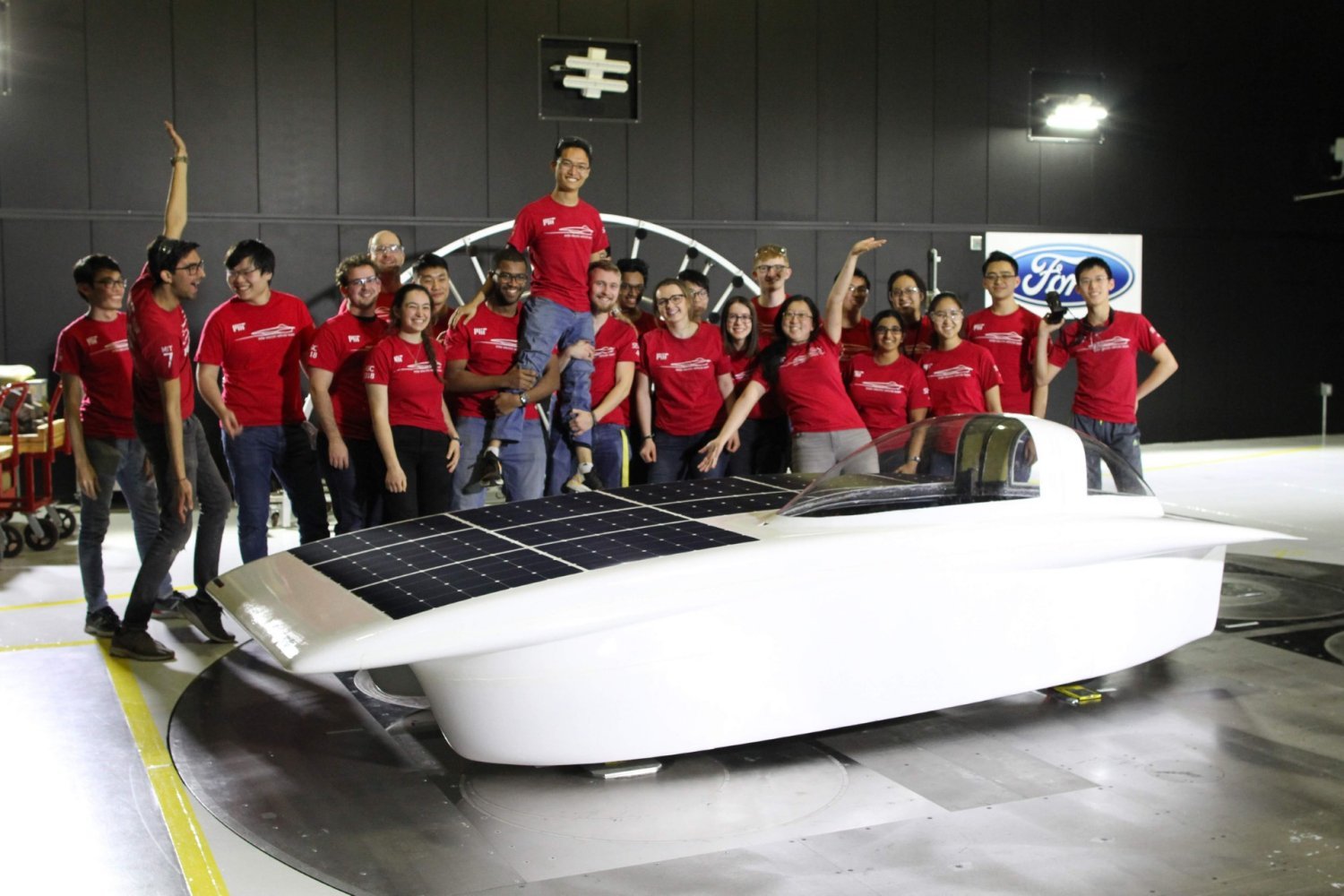
When Francis Wang '21, MEng '22 first joined the MIT Edgerton Center's Solar Electric Vehicle Team (SEVT), his approach to engineering projects was "to focus my energy and attention on a tidy problem with neat boundaries that I could completely control."
"But on Solar Car, I realized it takes a very different mindset to manage a substantial project with many moving pieces. It takes engineering leadership," he recalls.
Wang's transformation from technical specialist to confident leader exemplifies the impact of MIT's Gordon Engineering Leadership (GEL) Program on student project teams. The program, which accepts 30-40 Edgerton students annually, provides juniors and seniors with leadership, teamwork, and communication skills that complement MIT's rigorous technical education.
From Technical Expert to Engineering Leader
Before GEL, Wang saw leadership responsibilities as "a necessary evil to get to the actual interesting parts, which was the engineering." The program changed his perspective entirely.
"The GEL Program gave me an understanding of how engineering leadership is crucial, because in the real world any project worth working on is larger than the scope of an individual engineer," Wang explains.
Through GEL's courses and hands-on labs, he developed capabilities in decision-making, taking initiative, and negotiating. These skills proved invaluable when navigating the complex challenges of taking an engineering project from concept to completion.
"It was often the case that the challenges I faced on Solar Car were not solely technical, involving aspects of communication, coordination, and negotiation. From GEL, I had the framework and the language to approach them," says Wang.
A Win-Win-Win for Students and Programs
The synergy between GEL and Edgerton Center project teams creates mutual benefits. GEL gains motivated students committed to self-development, while project teams gain leaders with enhanced capabilities. Students themselves receive leadership training that extends far beyond their college years.
"It's a win-win-win. GEL gets hard-working, motivated Edgerton Program students who are intent on self-development and improvement. Edgerton project teams often perform better with leaders who are GEL-trained. And the students gain leadership, teamwork, and communication abilities that they can use beyond their project team — in their capstones, course projects, internships, and jobs after MIT," says Leo McGonagle, executive director of GEL.
Real-World Leadership Challenges
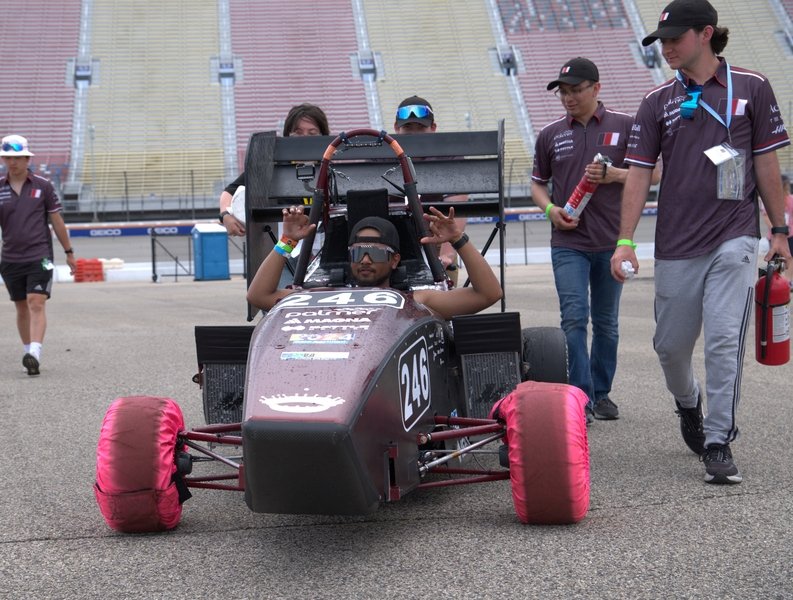
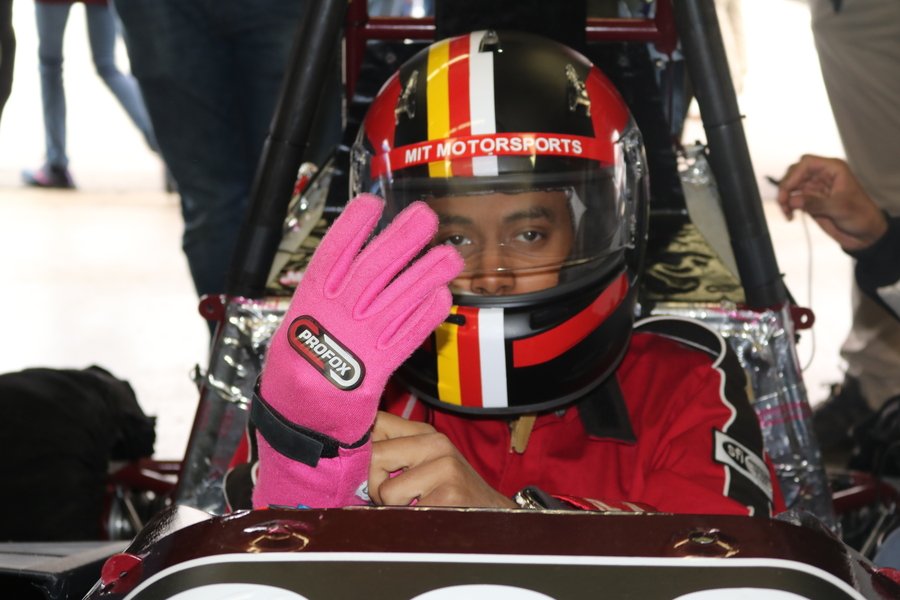
Faris Elnager '25 experienced firsthand how GEL training translated to high-stakes decision-making on the Motorsports team, which designs, manufactures, and competes with a formula-style electric race car annually.
"Making tough decisions was something that I learned in GEL. On Motorsports, I had to make high-stakes decisions about testing time that affected how we performed at a competition," he says.
Elnager found particular value in GEL's weekly Engineering Leadership Labs, where he could practice specific leadership capabilities before applying them to real project challenges.
"One of the most useful skills from GEL was evaluating your stakeholders and learning how to balance their needs. I remember thinking, we're doing this right now in the [GEL] lab, and then we're going back to the [Edgerton] shop to do this for real!" says Elnager.
The Positive Feedback Loop
GEL students discover that their project team experience enhances their leadership learning, creating a virtuous cycle of improvement.
"It's like a positive feedback loop. GEL labs make you better on project teams, and project teams make you better in GEL," Elnager observes.
This synergy has proven valuable beyond MIT. Now a startup co-founder, Elnager credits his GEL and Motorsports experience with developing critical communication skills.
"You can build the best tech in the world. If you can't pitch it to people, you're never going to raise any money. Being able to explain a technical project to anyone, whether they're an investor or someone in your industry, is something that's incredibly valuable."
Leadership Under Pressure
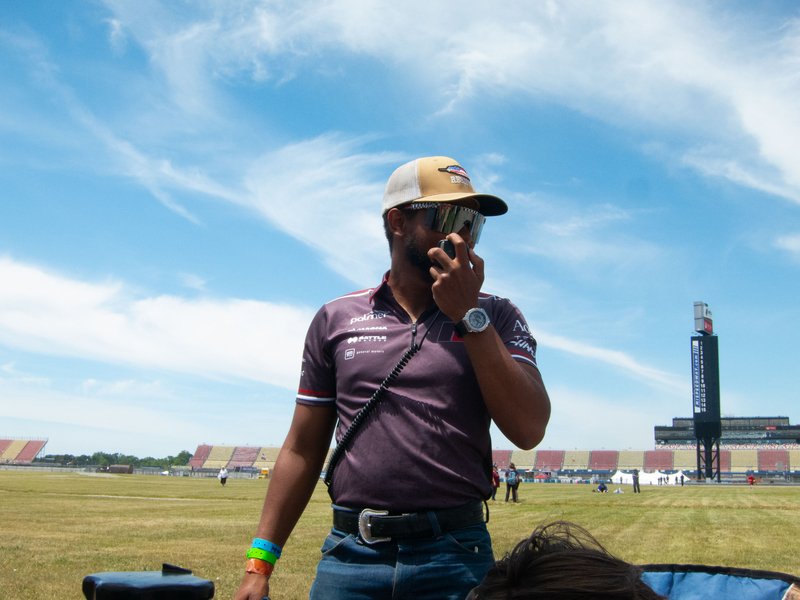
Adrienne Lai '25, who served as both mechanical lead and captain of the Solar Electric Vehicle Team, discovered how GEL training became invaluable during the chaos of competition.
"It's quite tricky to be captain of a build team, because there's no adult to tell you what to do. You have to figure it all out for yourself. When you're competing, it can be very chaotic. You are trying to maximize a score by driving more miles, but that comes with a trade-off of spending energy or ending the day in a more rural area, or with less sun, so there are a lot of trade-offs to consider. Sometimes someone just has to make a decision. I was very comfortable doing that because I had learned how to take initiative, which is one of the GEL capabilities," she explains.
Now a course assistant in GEL, Lai helps design scenarios that challenge students to become better and more resilient leaders. She particularly enjoys playing the role of an uncooperative supplier.
"We close our store randomly. We don't have what they need. We won't tell them what we have," she laughs. "Students get very frustrated. They think that we're just being mean. But from a real-world perspective, that is all very true. It simulates unpredictability, which is important not just in a job, but in life."
Career-Ready Leadership
The value of engineering leadership skills learned through GEL and honed on Edgerton project teams extends well beyond graduation. Henry Smith '25, former Motorsports mechanical lead, found that his GEL training made him immediately valuable in the job market.
"I was doing high-level management, planning, and organization on the team. Being in the GEL Program really increased my value for the team and helped me be prepared to enter the job field. When I graduated, I wasn't worried about being ready or not. It was a definite yes," says Smith.
Building the Next Generation of Engineering Leaders
As MIT's project teams continue to tackle ambitious engineering challenges, the synergy between Edgerton Center and the Gordon Engineering Leadership Program ensures that graduates are prepared not only as strong technical contributors but as confident leaders ready to tackle complex engineering problems in the real world.
The program's success demonstrates that technical excellence alone is insufficient for today's engineering challenges. The combination of hands-on project experience with structured leadership development creates engineers who can bridge the gap between technical possibility and organizational reality.
For students like Wang, Elnager, Lai, and Smith, the GEL Program provided the missing piece in their engineering education—the ability to lead teams, communicate effectively, and navigate the human elements of technical projects. As they move into industry, graduate studies, and entrepreneurial ventures, they carry with them not just technical expertise but the leadership capabilities that will define their careers.
This integrated approach to engineering education—combining technical rigor with leadership development through authentic project experience—represents a model for preparing the next generation of engineers to lead the complex, multidisciplinary projects that will shape our technological future.
Comments
Please log in or register to join the discussion