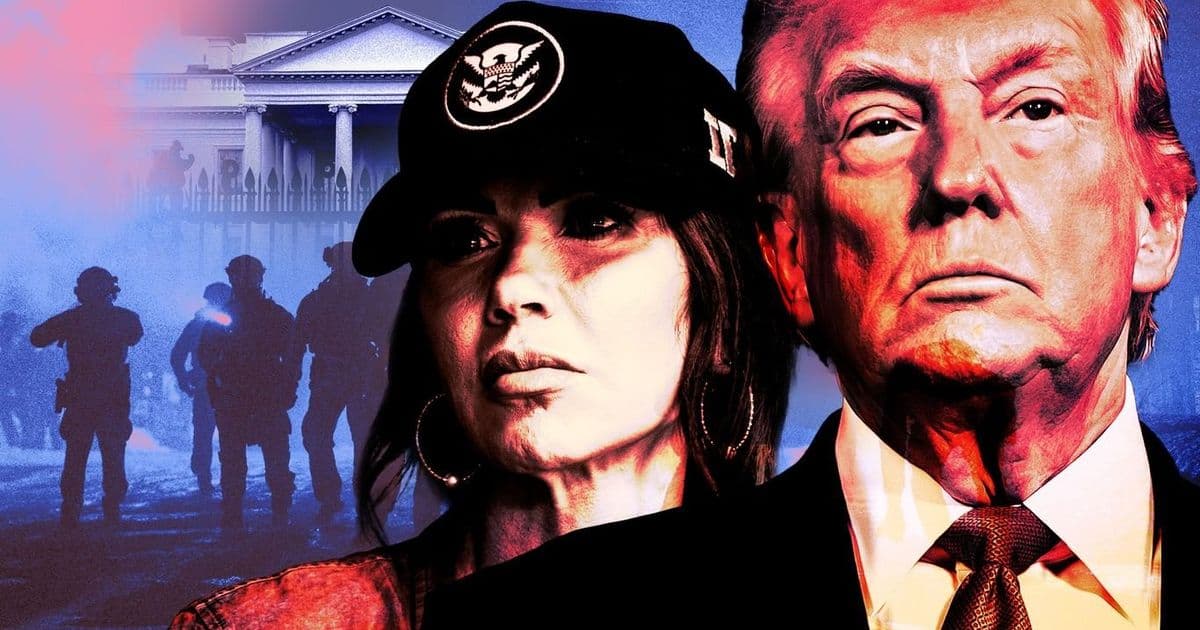
Homeland Security Secretary Kristi Noem faces mounting criticism over immigration enforcement tactics and controversial policy decisions that have eroded her political standing.
Homeland Security Secretary Kristi Noem's political standing has deteriorated significantly in recent months, with her aggressive immigration enforcement policies and controversial public statements creating a perfect storm of criticism from both political opponents and within her own party.
The breaking point came as Noem's Department of Homeland Security implemented increasingly harsh immigration enforcement measures, including expanded deportation operations and the use of federal facilities to detain migrants. The optics of federal agents conducting raids in communities across the country, combined with reports of family separations and extended detention periods, sparked widespread protests and legal challenges.
Noem's public defense of these policies has been particularly damaging. Her statements suggesting that certain immigrant communities were responsible for increased crime rates in border states were quickly fact-checked and debunked by multiple independent sources. When pressed about the human cost of her department's actions, Noem has repeatedly emphasized national security concerns while dismissing humanitarian objections as politically motivated.
The political fallout has been swift and severe. Republican lawmakers in swing districts have begun distancing themselves from Noem's policies, concerned about the impact on suburban voters who have grown increasingly uncomfortable with the administration's hardline approach. Several GOP governors have quietly pushed back against federal enforcement requests, citing resource constraints and community relations concerns.
Democratic opponents have seized on the controversy, organizing protests at DHS facilities and introducing legislation to limit the department's enforcement powers. The Congressional Hispanic Caucus has held multiple press conferences condemning Noem's approach, framing it as a betrayal of American values and a threat to immigrant communities that have long contributed to the nation's economy and culture.
The media coverage has intensified as journalists uncovered internal DHS documents suggesting that Noem's department prioritized high-profile enforcement actions over more targeted approaches recommended by career officials. Reports of inadequate medical care in detention facilities and questionable use of force incidents have further eroded public confidence in the department's leadership.
Noem's attempts to shift the narrative have largely failed. Her social media posts defending the administration's policies have been met with widespread criticism, with fact-checkers repeatedly flagging misleading claims about immigration statistics and border security. Even traditionally supportive conservative media outlets have begun questioning whether her approach is politically sustainable.
The institutional impact extends beyond Noem's personal standing. Morale within DHS has reportedly declined as career officials express frustration with what they see as politically motivated decision-making that undermines the department's core mission. Several high-ranking officials have resigned or announced plans to retire, citing concerns about the direction of immigration policy under Noem's leadership.
The controversy has also affected DHS's ability to carry out other critical functions. Cybersecurity initiatives have been delayed as resources are redirected to immigration enforcement, and disaster response capabilities have been strained by the reallocation of personnel and funding. Border communities report that the heightened enforcement atmosphere has made it more difficult for law enforcement to maintain trust with immigrant populations, potentially compromising public safety efforts.
Looking ahead, Noem faces an increasingly difficult political landscape. With midterm elections approaching, her party's candidates are being forced to address her policies on the campaign trail, often to the frustration of their own campaign teams. Democratic strategists have identified immigration policy as a potential wedge issue, particularly in districts with growing immigrant populations.
The administration has so far stood by Noem, praising her commitment to enforcing immigration laws and defending her against what they characterize as politically motivated attacks. However, behind the scenes, there are reportedly discussions about whether a change in leadership at DHS might help the administration reset its approach to immigration ahead of the next election cycle.
Noem's situation represents a broader challenge for the administration as it attempts to balance its immigration enforcement priorities with growing public concern about the human impact of those policies. The controversy surrounding her leadership has become a focal point for debates about the proper role of federal immigration enforcement and the values that should guide American immigration policy.
As the political temperature continues to rise, Noem's ability to maintain her position and advance her policy agenda appears increasingly uncertain. The ice that once seemed solid beneath her feet has developed significant cracks, and the question now is whether she can navigate the treacherous political waters ahead or whether she will ultimately be forced to step aside in the face of mounting opposition.
Comments
Please log in or register to join the discussion