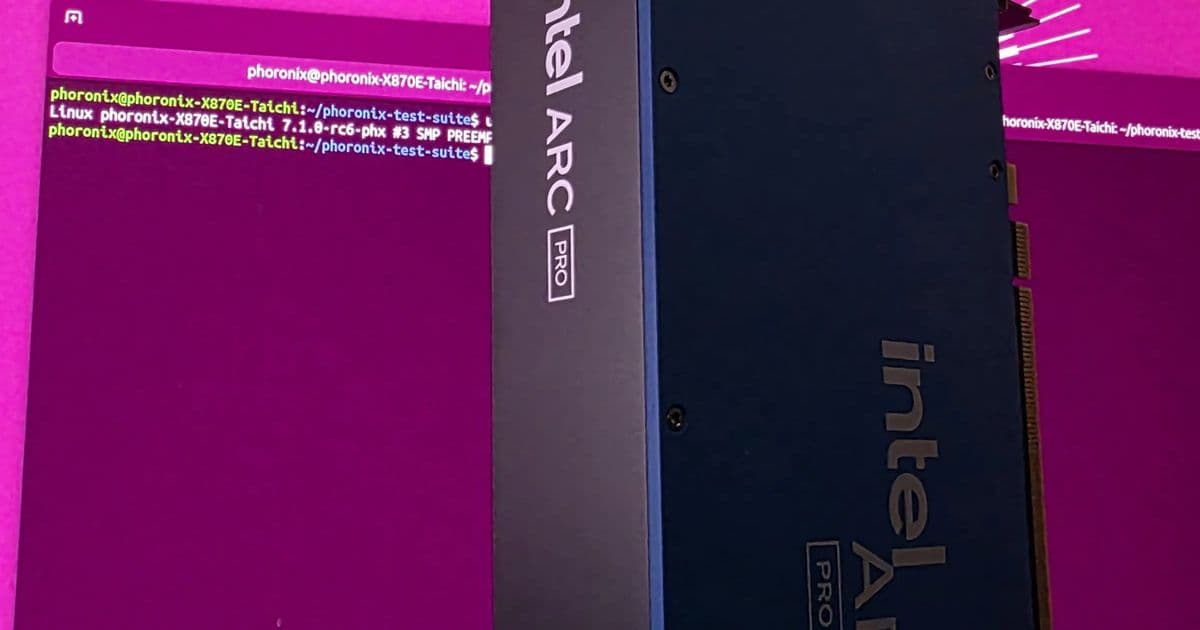
Intel's flagship Arc Pro B70 workstation card is following the consumer B580 in posting measurable gains on the near-final Linux 7.1 kernel, with the same Xe2 "Battlemage" driver work lifting compute and graphics throughput without a single hardware change.
Intel's BMG-G31 silicon keeps getting faster on Linux, and this time the gains land on the professional side of the lineup. Phoronix's Michael Larabel followed up his consumer Arc B580 testing by putting the Arc Pro B70 workstation card through the same Linux 7.0 versus Linux 7.1 comparison, and the short version is that the kernel jump alone is worth real throughput on the same hardware.
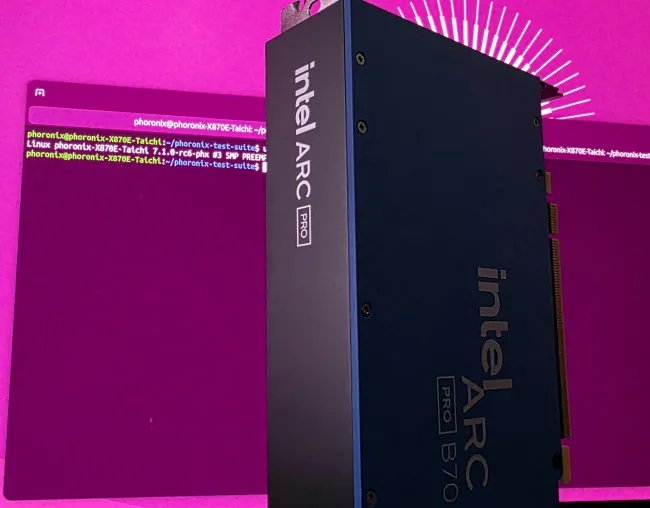
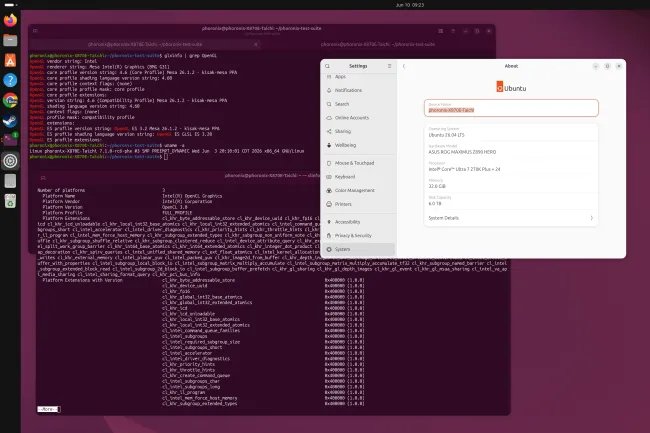
This is the kind of result that makes kernel upgrades the cheapest performance tuning a homelab operator can do. No new silicon, no firmware swap, no overclock. You compile a newer kernel, keep the rest of the stack identical, and the card does more work per watt. That is exactly the test methodology used here: Ubuntu 26.04 LTS on both runs, Mesa 26.1.2 held constant, the same Intel Compute Runtime and SYCL support in place, and a matched Kconfig between Linux 7.0 and a near-final Linux 7.1 Git build. The only variable that moves is the kernel itself, which is the right way to isolate where the gains come from.
What the Arc Pro B70 actually is
The Arc Pro B70 is the workstation-class member of the Battlemage family, built on the BMG-G31 die rather than the smaller BMG-G21 that powers the B580. The headline spec for compute and content workloads is the 32GB of memory, which is double what the consumer B580 carries. That capacity is the whole reason this card exists as a separate product. It is aimed at people running larger frame buffers, professional viewport workloads, and increasingly local GPU compute through oneAPI and SYCL where dataset size pushes past what a 12GB consumer card can hold.
For anyone evaluating it as a compute card in a server or workstation chassis, the relevant questions are always the same three: how fast does it run the workloads you care about, how much power does it pull doing it, and does the software stack actually support it cleanly. Linux 7.1 moves the needle on the first question, and because the gains arrive at the same power envelope, it quietly improves the second.
Why the kernel matters for Xe2
Battlemage runs on Intel's xe kernel driver, the newer replacement for the older i915 path. The xe driver is still maturing relative to the decade-plus of tuning behind i915, which is precisely why each kernel cycle keeps surfacing performance changes for Arc cards. When Larabel saw the consumer B580 improve on Linux 7.1, the open question was whether those changes were specific to the smaller BMG-G21 part or whether they reflected broader Xe2 driver work that the larger BMG-G31 would inherit too.
The B70 results answer that. The improvements are showing up on the workstation die as well, which points to the gains living in shared Xe2 driver and scheduling code rather than a narrow fix for one SKU. That distinction matters if you are planning a fleet, because it means the whole Battlemage range tracks together as the driver matures instead of each card needing its own separate round of tuning.
Reading the benchmark spread
The full benchmark run spans multiple pages of results across graphics and compute workloads relevant to the workstation part. The pattern to watch for in this kind of data is consistency: a couple of wins in cherry-picked tests can be noise or a single optimized code path, but a gain that shows up across a spread of unrelated workloads indicates the kernel is doing something structurally better with scheduling, power management, or memory handling.
{{IMAGE:4}}
When you evaluate results like these for your own builds, normalize for power before you celebrate. A 5 percent throughput gain that comes with a 5 percent power increase is just the card running closer to its limit, not free efficiency. The interesting wins are the ones where performance climbs while the board power stays flat, because that is genuine work-per-watt improvement from the driver, and it is the metric that actually changes your electricity bill and your thermal headroom in a dense chassis.
Build recommendations
If you already own an Arc Pro B70 or are running Battlemage hardware in a Linux box, the practical takeaway is straightforward. Move to Linux 7.1 once it ships stable, or test it from Git now if you have a non-production node to validate against. Keep Mesa and the Intel Compute Runtime current alongside it, since the userspace stack and the kernel driver advance together and mismatched versions can leave performance on the table. The Intel Compute Runtime lives on GitHub and is the component to watch if SYCL or oneAPI compute is your primary use case.
For anyone speccing a new workstation or compute node, the B70's 32GB of memory remains its strongest argument against the consumer cards, and the steady kernel-driven gains make the Xe2 platform a more comfortable bet than it looked a few kernel cycles ago. The card you buy today keeps getting faster on the same hardware as the xe driver matures, which is the opposite of the usual story where performance is frozen at purchase. Validate your specific workloads on your own hardware before committing a fleet, measure power alongside throughput, and treat the kernel version as a tunable parameter rather than a fixed cost.
The full multi-page benchmark breakdown is available at Phoronix, which remains the most consistent source for this style of kernel-versus-kernel Linux GPU testing.
Comments
Please log in or register to join the discussion