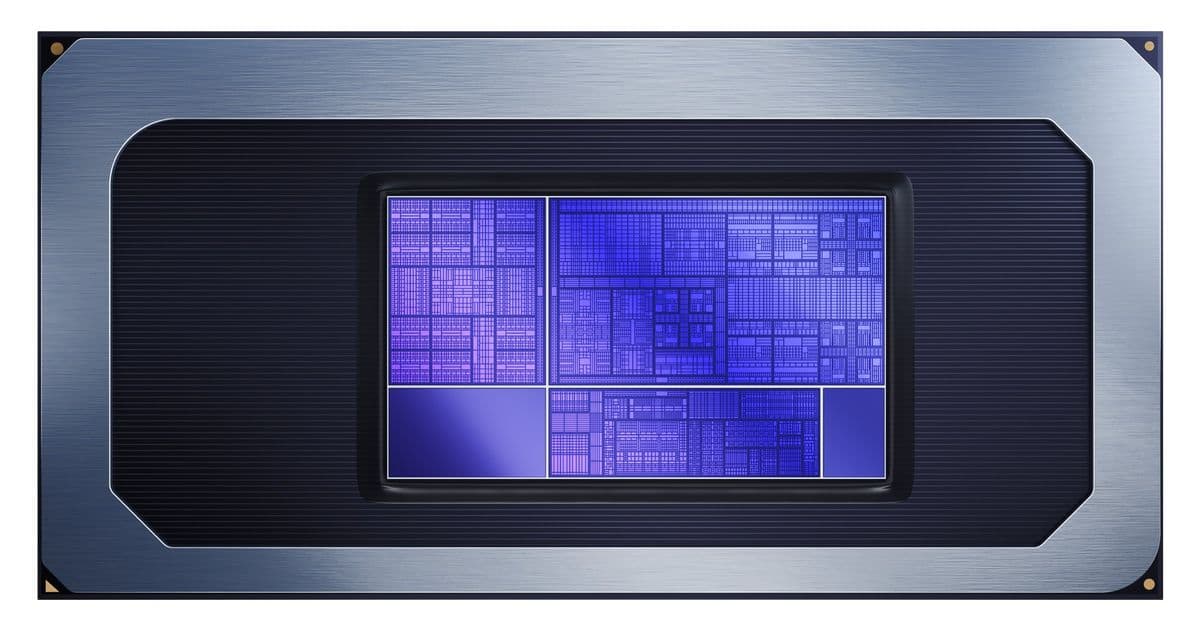
Intel launches its Core Ultra Series 3 mobile processors at CES 2026, featuring the Panther Lake architecture built on the Intel 18A process node, marking a strategic consolidation of mobile platforms and significant efficiency gains.
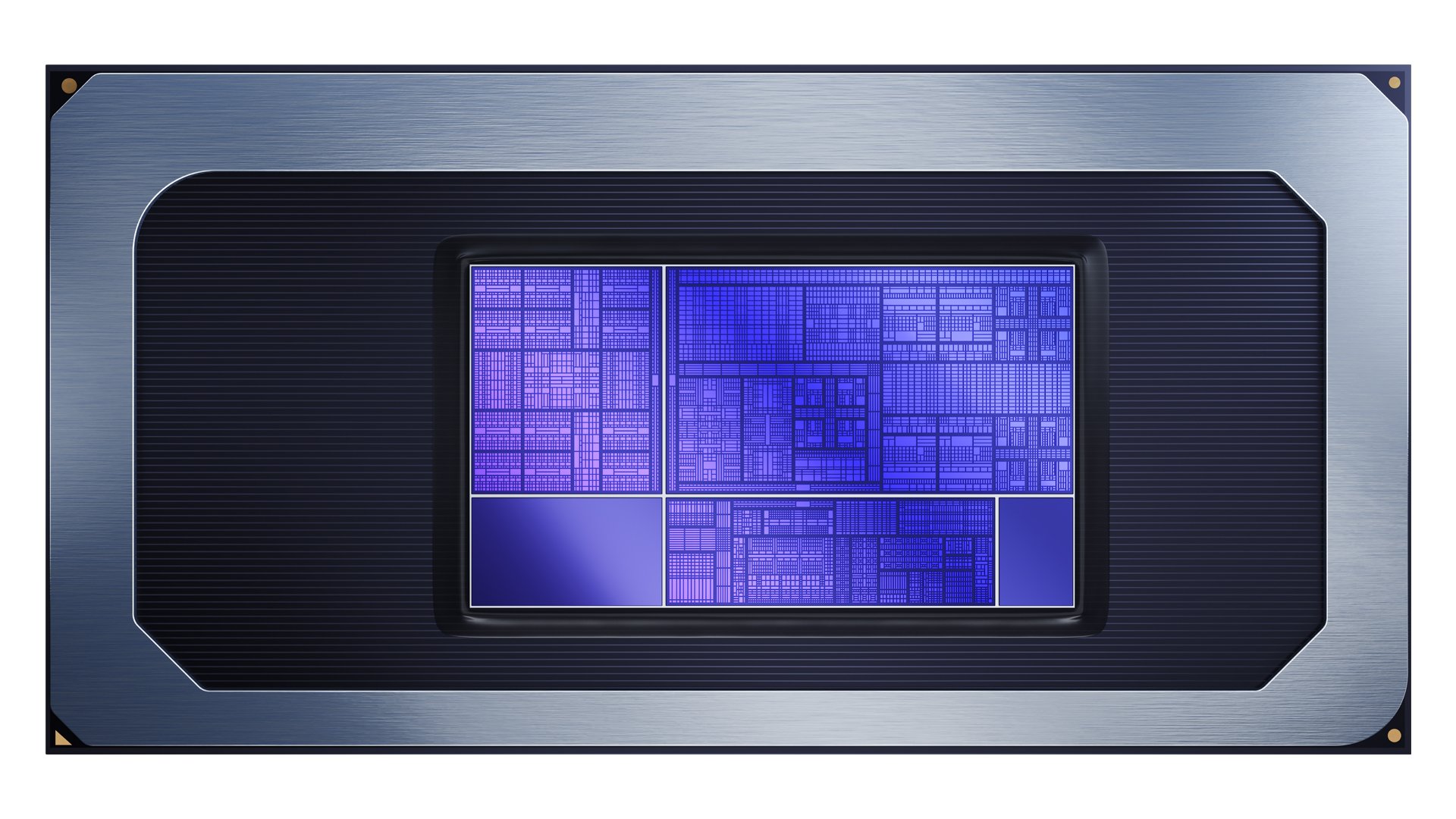
Intel's Core Ultra Series 3 mobile processors, codenamed Panther Lake, represent a pivotal moment for the company's client computing division. Announced at CES 2026, this generation serves dual critical purposes: showcasing Intel's first high-volume implementation of its Intel 18A manufacturing process and consolidating mobile platforms after the bifurcated Lunar Lake (low-power) and Arrow Lake (high-performance) approach of Series 2. With AMD not countering with new mobile silicon this quarter, Intel gains a crucial window to reclaim market share through architectural improvements and power efficiency.
Platform Strategy and Availability
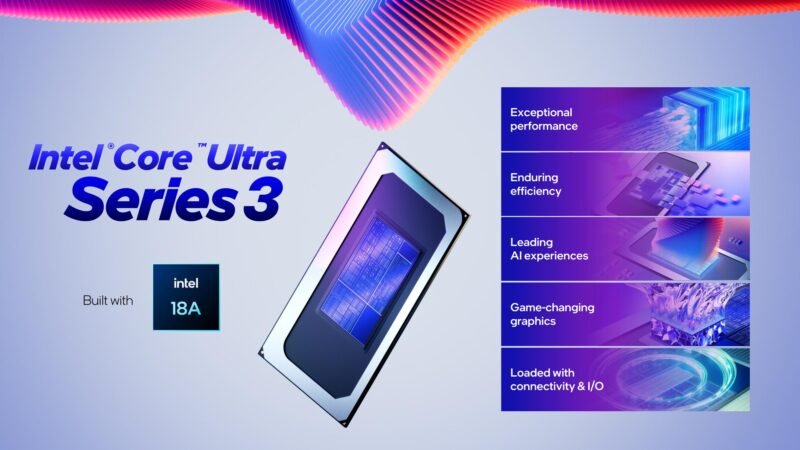
The Core Ultra Series 3 launches exclusively for mobile devices, with desktop systems continuing to utilize Arrow Lake-based Core Ultra 2 chips. Fourteen initial SKUs will hit the market on January 27, spanning configurations from ultraportables to mobile workstations. Additional non-Ultra Core Series 3 chips will follow later in 2026, ensuring coverage across price segments. This mobile-first strategy prioritizes Intel's highest-volume segment while leveraging Panther Lake's efficiency-focused design.
Architectural Advancements
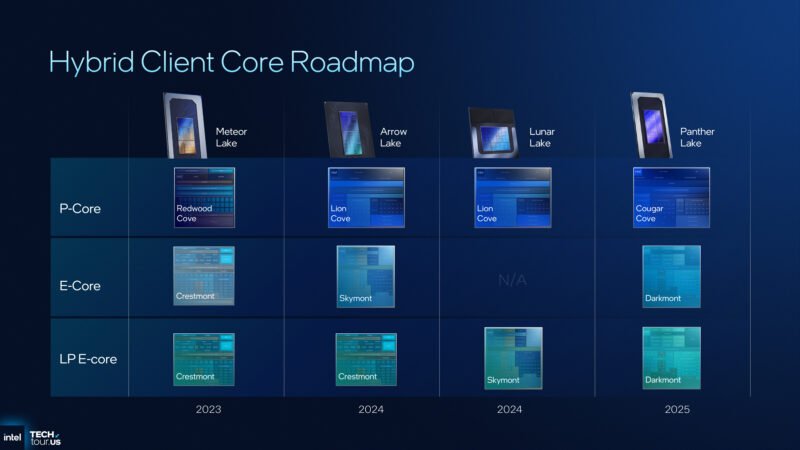
Panther Lake introduces new microarchitectures across nearly every major subsystem:
- CPU: Revised Performance (P) and Efficient (E) cores deliver IPC gains, with Intel claiming a 12-18% generational performance uplift over Arrow Lake in mobile workloads. The E-core cluster now integrates Low Power Efficiency (LPE) cores for background tasks.
- GPU: The Xe-LPG+ architecture boosts execution units by 50% in top configurations (12 Xe-cores vs. 8 in Series 2), targeting 30% higher gaming performance.
- NPU: A redesigned neural processing unit doubles TOPS performance for local AI inference, supporting Windows 12's expanded on-device AI features.
- Connectivity: Integrated Wi-Fi 7 and Thunderbolt 5 provide 40Gbps+ I/O bandwidth.
Power efficiency sees major gains through Intel 18A's backside power delivery and gate-all-around transistors, reducing SoC power consumption by up to 40% at idle states compared to Lunar Lake.
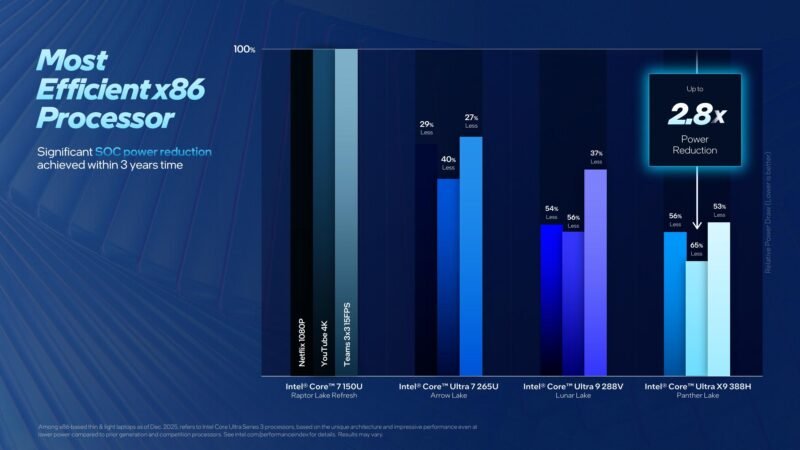
Unified Platform Design
A significant shift from Series 2 is the return to a single mobile platform architecture. Panther Lake consolidates Lunar Lake's efficiency and Arrow Lake's performance tiers into one scalable design. This simplifies OEM integration while addressing Series 2's inconsistent power profiles. The platform achieves this through configurable tile combinations:
| Tile Type | Function | Manufacturing Process |
|---|---|---|
| Compute | P/E/LPE cores, memory controller | Intel 18A |
| GPU | Xe-LPG+ graphics | Intel 3 (4-core) / TSMC N3E (12-core) |
| Platform Controller | I/O, Thunderbolt, PCIe 5.0 | TSMC N6 |
Physical Implementation
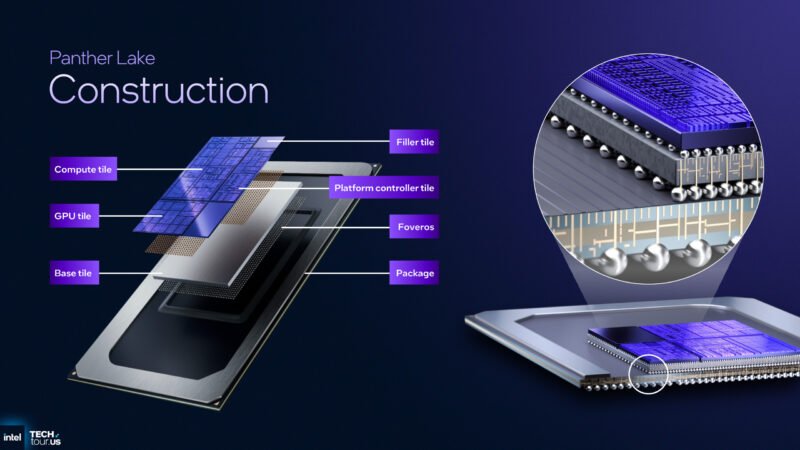
Panther Lake utilizes Intel's Foveros 2.5D packaging with three primary tiles instead of Series 2's four. The Compute tile houses all CPU cores and DDR5/LPDDR5X memory controllers. The GPU tile operates as a semi-discrete unit with dedicated memory pathways. The Platform Controller tile consolidates I/O functions traditionally handled by a PCH.
Intel offers two variants per tile:
- Compute Tile:
- Small: 4P + 4LPE cores
- Large: 4P + 8E + 4LPE cores
- GPU Tile: 4 Xe-cores (Intel 3) or 12 Xe-cores (TSMC N3E)
- Platform Tile: Basic I/O or enhanced Thunderbolt/Wi-Fi
Three combinations will ship:
- Small Compute + Small GPU + Basic Platform (15W TDP)
- Large Compute + Small GPU + Enhanced Platform (28W)
- Large Compute + Large GPU + Basic Platform (45W)
This modularity allows OEMs to mix components without redesigning motherboards. All packages share a 50mm x 25mm footprint with uniform pinouts.
Manufacturing Implications
The Compute tile's production on Intel 18A—the company's most advanced node—marks a strategic win for Intel Foundry after outsourcing Lunar Lake's compute die to TSMC. Intel 18A's 18Å (1.8nm) features RibbonFET transistors and PowerVia backside power delivery, enabling higher frequencies at lower voltages. External foundry reliance remains for I/O-heavy tiles, reflecting Intel's pragmatic hybrid manufacturing strategy.
Performance Projections
Early benchmarks provided by Intel indicate notable gains:
| Workload | Core Ultra Series 3 vs. Series 2 Improvement |
|---|---|
| Cinebench R24 Multi-Core | 14% (45W config) |
| 3DMark Time Spy Graphics | 28% (12 Xe-core variant) |
| ResNet-50 Inference | 2.1x NPU throughput |
| PCMark 10 Battery Life | +22% (video playback) |
These improvements stem from architectural refinements rather than core count increases—top SKUs retain 16-core designs (4P+8E+4LPE). The efficiency focus is evident in thermal metrics: the 28W large-compute configuration matches or exceeds Arrow Lake's 45W parts in sustained workloads.
Market Impact
With no competing mobile CPU launches until late Q2 2026, Panther Lake gives Intel clear runway to regain momentum. OEMs including Dell, Lenovo, and ASUS have committed to Series 3 designs shipping in Q1, spanning business and gaming segments. The architecture's scalability also positions Intel favorably for next-generation handheld gaming devices, where the 15W configuration's 4.5W gaming TDP enables Switch-like form factors.
Intel's Panther Lake represents a convergence of technical milestones: a unified mobile architecture, competitive process leadership, and measurable efficiency gains. If real-world testing validates Intel's claims, Series 3 could shift the mobile performance landscape for 2026.
Comments
Please log in or register to join the discussion