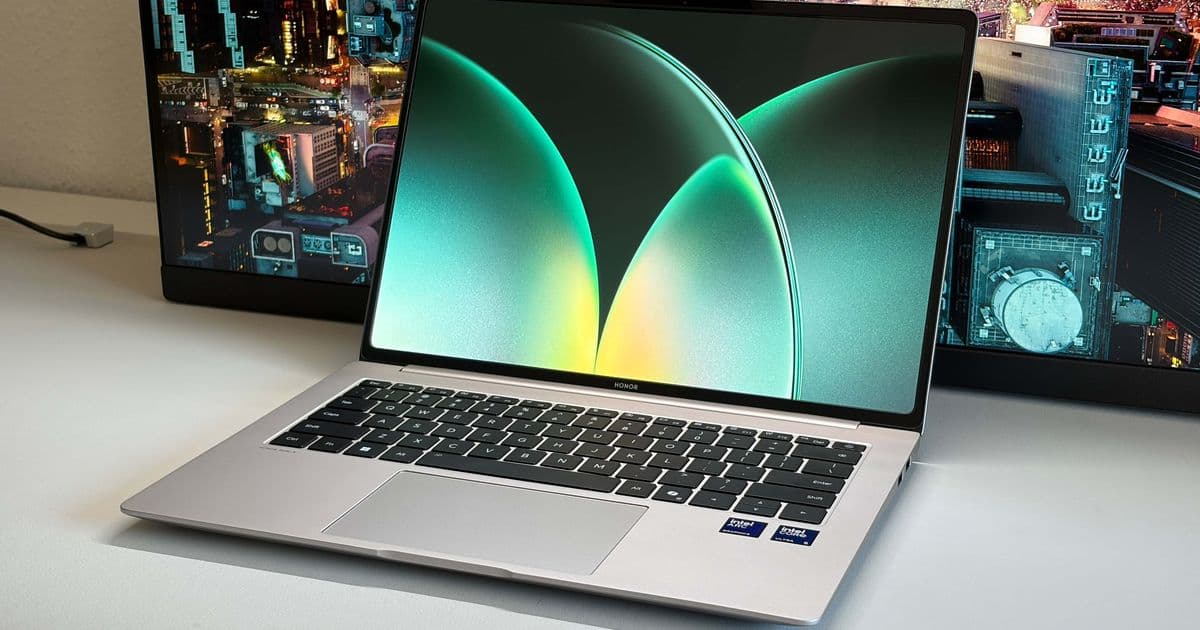
Despite having fewer Xe cores, the Arc B370 GPU in Honor's MagicBook Pro 14 delivers nearly identical gaming performance to Dell's XPS 14 with Arc B390, thanks to superior cooling and sustained power delivery.
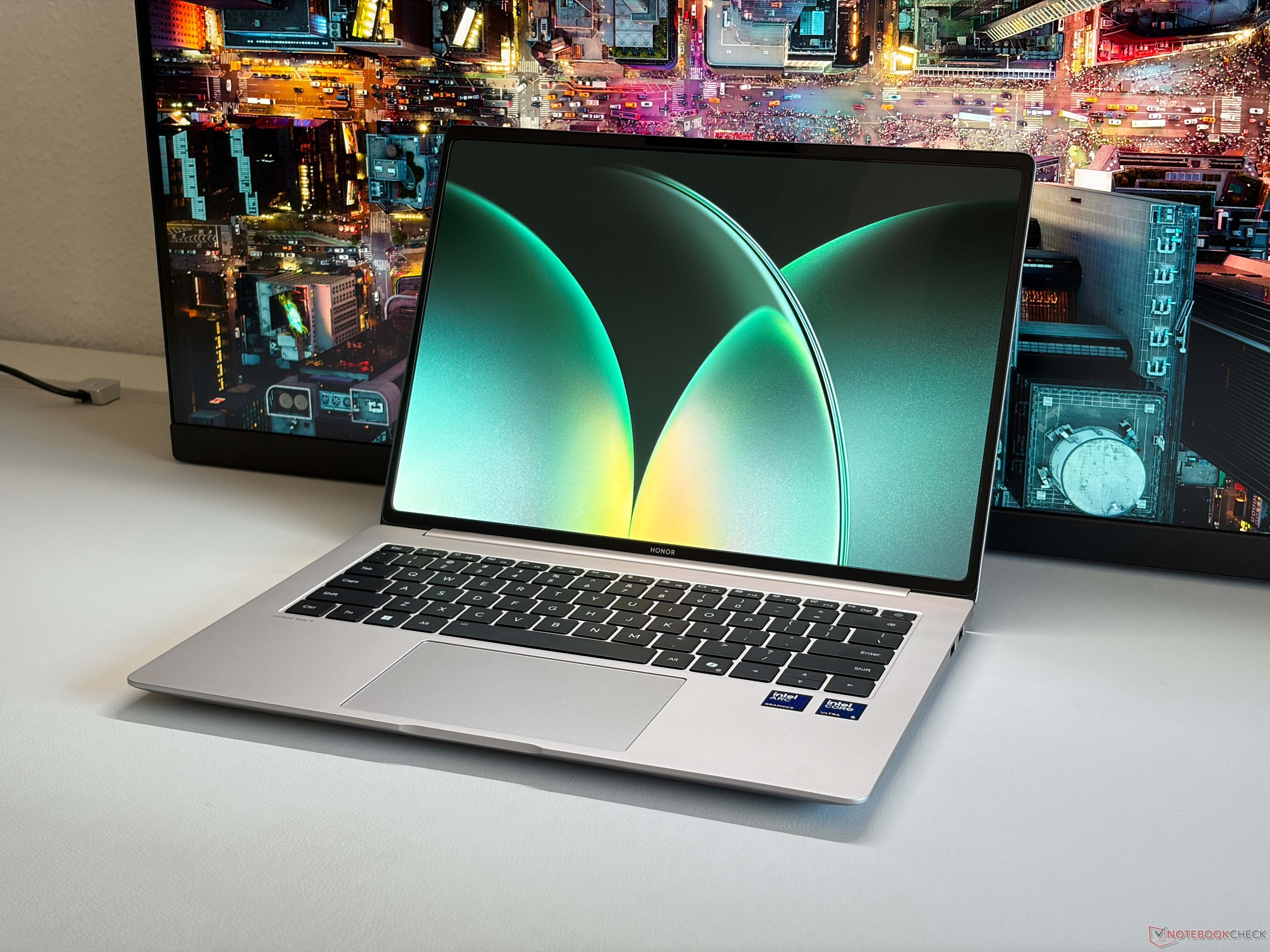
Intel's new Arc B370 GPU in the Honor MagicBook Pro 14 2026 delivers a surprising performance revelation that challenges conventional wisdom about GPU core counts. While the Arc B390 in Dell's XPS 14 boasts 12 Xe cores compared to the Arc B370's 10 cores, real-world gaming tests reveal these GPUs perform almost identically when cooling solutions and sustained power delivery are factored in.
Core Count vs. Sustained Performance
The synthetic benchmarks tell a straightforward story: the Arc B390 with its additional 2 Xe cores maintains approximately 15% higher performance in 3DMark tests. However, this advantage evaporates when games are played for extended periods. The Honor MagicBook Pro 14's superior cooling solution, with power limits specified at 65/50 Watts, enables the Arc B370 to maintain consistent performance levels that match the Dell XPS 14's Arc B390, which operates at 67/30 Watts.
This performance parity becomes evident in our gaming benchmarks. Across titles like Cyberpunk 2077, Baldur's Gate 3, GTA V, and Final Fantasy XV, the Arc B370 trails the Arc B390 by a mere 3% in default benchmarks. More tellingly, our 30-minute Cyberpunk 2077 stress test reveals that while the XPS 14 initially pulls ahead, both systems converge to identical frame rates as thermal throttling sets in.
The Cooling Factor
The performance comparison underscores a critical lesson for laptop buyers: cooling solutions matter as much as raw specifications. The Honor MagicBook Pro 14's robust thermal design allows it to sustain higher power delivery to the GPU over extended gaming sessions, effectively neutralizing the Arc B390's core count advantage.
This finding has significant implications for the new Honor MagicBook Pro 14. Consumers considering the model with the Core Ultra 5 338H and Arc B370 GPU can expect gaming performance that rivals systems equipped with the more expensive Core Ultra X7 358H and Arc B390 combination. The only scenario where the B390 maintains a clear advantage is in synthetic benchmarks and potentially in very short, bursty workloads where sustained cooling isn't a factor.
High-End Option Available
For users seeking maximum performance, Honor offers the MagicBook Pro 14 with the Core Ultra X9 388H processor paired with the Arc B390 GPU. Unlike the XPS 14, which appears to throttle the B390 due to thermal constraints, the MagicBook Pro 14 can fully utilize the high-end GPU's capabilities when configured with the X9 chip.
This flexibility makes the Honor MagicBook Pro 14 an intriguing option in the premium laptop segment, where cooling efficiency and sustained performance often prove more valuable than peak benchmark numbers. The laptop's ability to extract near-identical gaming performance from a lower-tier GPU through superior thermal management represents a compelling value proposition for gamers and content creators alike.
The full review of the Honor MagicBook Pro 14 provides additional insights into this impressive OLED-equipped all-rounder, which combines strong performance with thoughtful design choices that prioritize real-world usability over spec-sheet supremacy.
Comments
Please log in or register to join the discussion