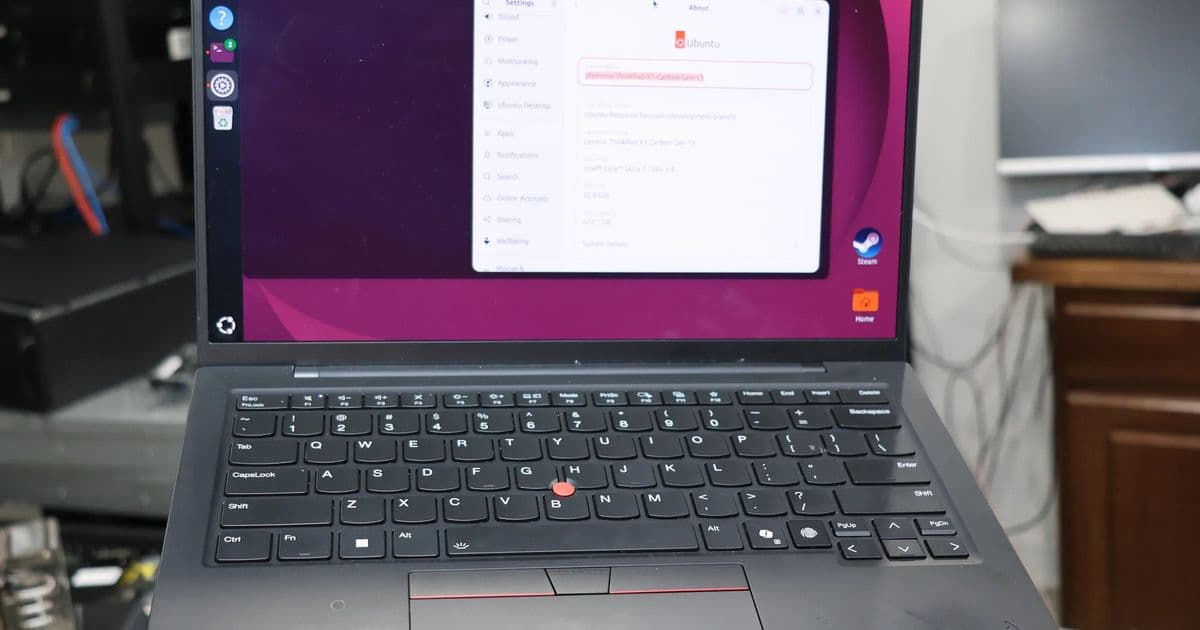
Intel's Xe2 Lunar Lake integrated graphics show significant performance gains on Linux, with Ubuntu 26.04 delivering ~17% better performance compared to Ubuntu 25.04 through driver and kernel improvements.
Intel's Xe2 graphics architecture in Lunar Lake has shown impressive progress on Linux over the past year, with performance improvements that should excite Linux enthusiasts and developers alike. Testing conducted on a Lenovo ThinkPad X1 Carbon Gen 13 Aura Edition laptop with the Intel Core Ultra 7 258V processor reveals substantial gains in graphics performance between Ubuntu 25.04 and the upcoming Ubuntu 26.04 LTS release.
Test Configuration and Methodology
The comparison uses identical hardware—the Lenovo ThinkPad X1 Carbon Gen 13 featuring the Intel Core Ultra 7 258V Lunar Lake SoC. This processor combines 8 CPU cores with the Arc 140V integrated GPU, which includes 8 Xe cores capable of reaching a maximum dynamic frequency of 1.95GHz.
For the baseline measurements, Ubuntu 25.04 was used with Linux kernel 6.14 and Mesa 25.0.3 graphics drivers. The current testing employs Ubuntu 26.04 in its near-final state, featuring Linux kernel 7.0 and Mesa 26.0.3 drivers for both Intel ANV (Vulkan) and Iris Gallium3D (OpenGL) implementations.
This one-year comparison provides valuable insight into how Intel's Linux graphics stack has matured, particularly for users considering Lunar Lake hardware for Linux deployments.
Performance Improvements
The headline result shows approximately 17% improvement in graphics performance when moving from Ubuntu 25.04 to Ubuntu 26.04. This gain comes from several areas of optimization:
- Kernel improvements: Linux 7.0 includes better scheduler awareness for the Xe2 architecture and improved power management
- Mesa driver enhancements: The Mesa 26.0.3 release brings numerous bug fixes and performance optimizations for Xe2
- Memory management: Better integration between the integrated GPU and system memory controllers
- Power optimization: More efficient clock scaling and thermal management
Real-World Impact
For Linux users, these improvements translate to tangible benefits:
- Better gaming performance: Games running on Proton/Wine or native Linux titles will see smoother framerates
- Improved video playback: 4K video decoding and rendering become more efficient
- Enhanced productivity: Graphics-intensive applications like Blender or GIMP will operate more responsively
- Lower power consumption: The performance gains often come with reduced power draw, extending battery life
Comparison to Other Platforms
Intel's progress with Xe2 on Linux is particularly noteworthy when compared to the Windows driver experience. While Intel's Windows drivers have traditionally been more mature, the Linux ecosystem has shown remarkable improvement in closing this gap. The ~17% year-over-year improvement suggests Intel is investing heavily in Linux support for its latest architectures.
Looking Ahead
With Ubuntu 26.04 LTS approaching release, users of Lunar Lake systems can expect a significantly improved graphics experience out of the box. The combination of hardware capabilities and software optimization positions Intel's Xe2 as a compelling option for Linux users who want integrated graphics without sacrificing performance.
For developers and enthusiasts, this progress demonstrates the strength of open-source graphics development. The collaborative efforts between Intel, the Linux kernel community, and Mesa developers have yielded measurable improvements in a relatively short timeframe.
Image: 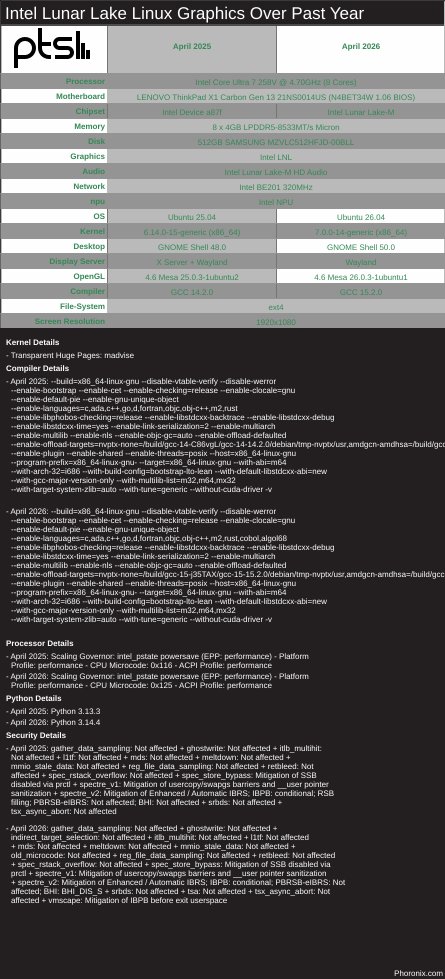
Intel Lunar Lake Linux Graphics Performance Over Past Year
Image: 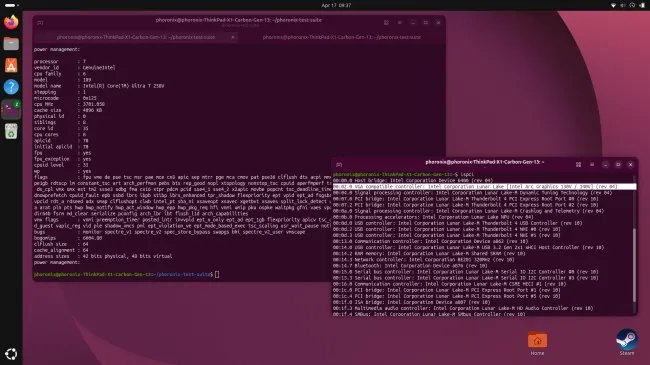
Lenovo ThinkPad X1 Carbon G13 with Intel Core Ultra 7 258V running Ubuntu Linux 26.04
Image: 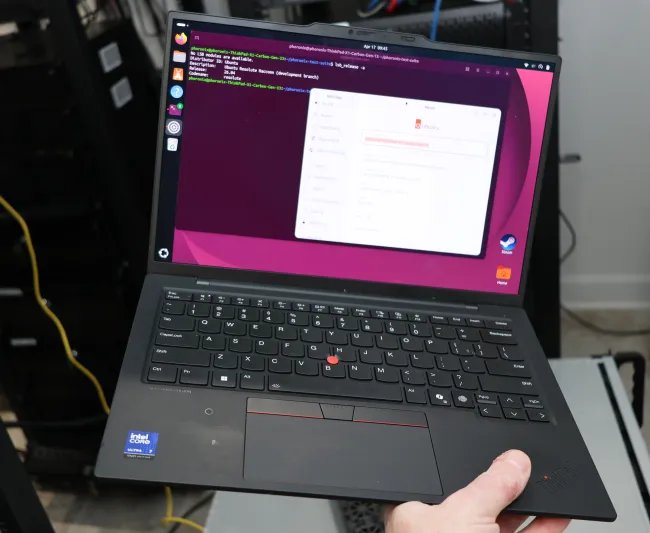
Close-up of the Intel Core Ultra 7 258V Lunar Lake SoC in the ThinkPad X1 Carbon G13
The full benchmark results across multiple pages provide detailed performance data across various graphics workloads, showing consistent improvements across the board. For Linux users invested in the Intel ecosystem, these results validate the choice of Lunar Lake hardware and demonstrate the rapid pace of improvement in open-source graphics drivers.
Comments
Please log in or register to join the discussion