
Leaked Geekbench scores reveal the iPhone 17e's A19 chip delivers only 4-5% performance boost over the 17, with GPU performance taking a 20% hit.
The iPhone 17e's performance credentials have been revealed through leaked Geekbench results, showing a device that treads carefully between affordability and capability. The budget iPhone scores 3,459 in single-core and 8,811 in multi-core tests, representing only a 4-5% improvement over the standard iPhone 17's 3,627 and 9,249 points respectively.
The modest performance gains come despite the A19 chip featuring one fewer GPU core than its full-fat counterpart. While the CPU configuration remains identical between the two models, the 17e's 4-core GPU setup represents a 20% reduction in graphics capabilities compared to the 5-core configuration in the standard iPhone 17.
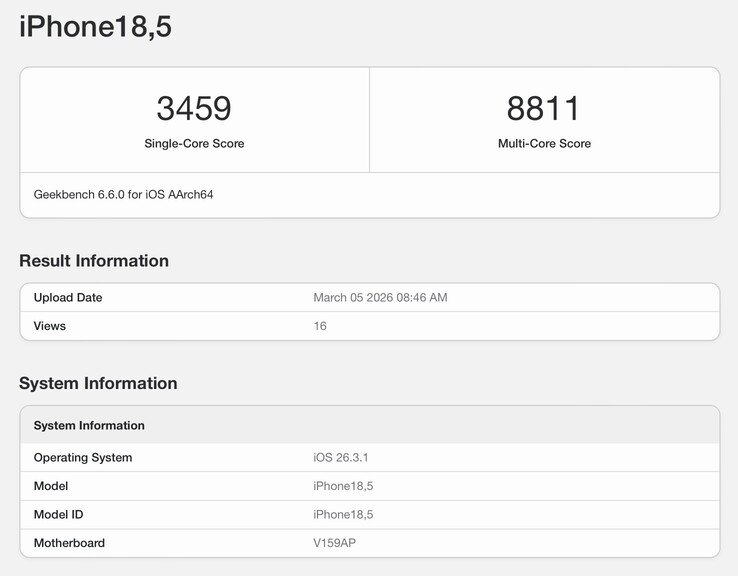
This GPU limitation becomes particularly relevant when considering the iPhone 17e's target market. Budget-conscious consumers often rely on their devices for gaming and media consumption, areas where graphics performance directly impacts user experience. The 20% reduction may not seem dramatic on paper, but it could manifest as lower frame rates in demanding games or reduced visual fidelity in graphics-intensive applications.
When compared to its immediate predecessor, the iPhone 16e, the performance story becomes even more nuanced. The 17e shows approximately 10.4% improvement in multi-core performance and 6% in single-core operations. These gains, while measurable, fall well short of the generational leaps typically expected from new iPhone releases.
The competitive landscape adds another layer of complexity to the iPhone 17e's positioning. Samsung's Galaxy S25 FE, frequently available on Amazon for around $612, presents a compelling alternative. While the Galaxy model offers additional features that the iPhone 17e lacks, it comes with substantially inferior performance characteristics. This creates a classic trade-off scenario for budget smartphone shoppers: prioritize raw performance or feature set.
Apple's decision to use a slightly de-tuned version of the A19 chip in the 17e reflects a broader strategy in the smartphone market. By reusing core silicon across multiple product tiers, manufacturers can achieve economies of scale while still differentiating products through targeted component adjustments. The single GPU core reduction in the 17e represents a calculated compromise that allows Apple to maintain performance leadership in the budget segment while protecting the value proposition of its higher-end models.
For users considering the iPhone 17e, the benchmark results suggest a device that will handle everyday tasks with ease but may struggle with more demanding applications compared to its more expensive siblings. The performance differential, while present, is unlikely to be noticeable during typical usage scenarios like web browsing, social media, or video streaming.
The iPhone 17e's performance story ultimately mirrors its overall positioning: a device that makes strategic compromises to hit a specific price point while maintaining core competencies. The modest benchmark improvements over both its predecessor and the standard iPhone 17 reflect a product designed for users who prioritize the iOS ecosystem and Apple's software experience over cutting-edge hardware specifications.
As smartphone innovation continues to mature, we're seeing more devices like the iPhone 17e that prioritize balanced performance over headline-grabbing specifications. The question for consumers becomes whether these modest improvements justify an upgrade from older models or whether the competitive Android alternatives offer better value propositions for their specific needs.
Comments
Please log in or register to join the discussion