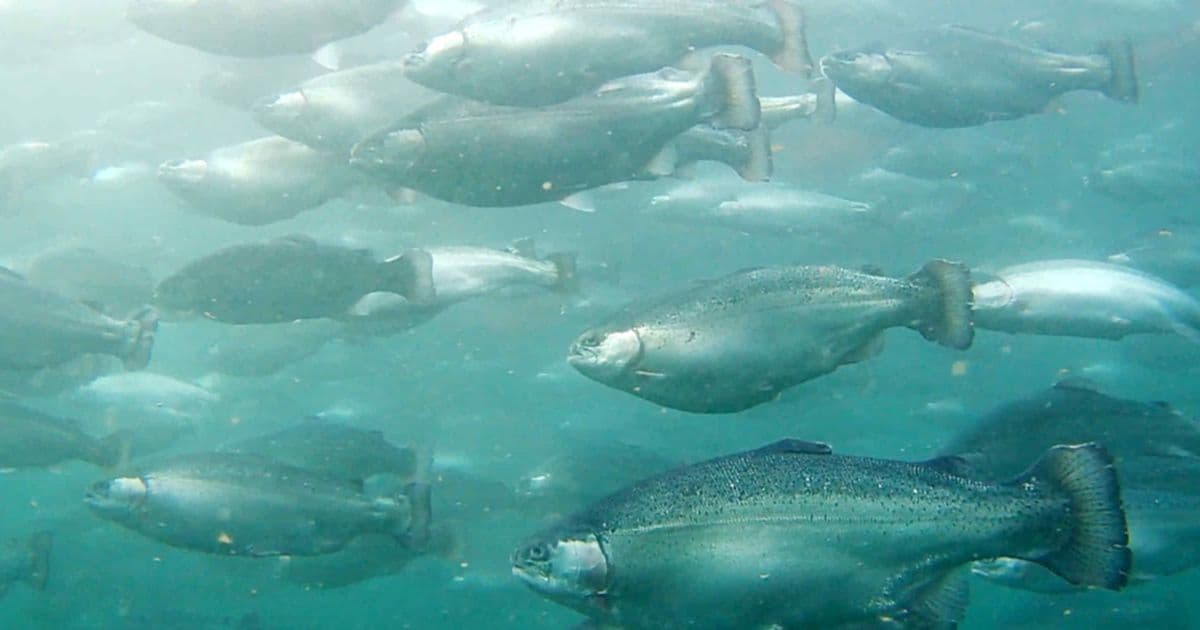
Japan’s aquaculture sector is expanding rapidly, with farmed salmon production projected to hit a record 115,000 tonnes in 2026 – a 10% year‑on‑year increase. Strong domestic consumption, rising popularity of Japanese cuisine across Asia, and government support for offshore cages are driving growth, while export logistics and feed cost pressures pose challenges.
Business news
Japan’s farmed salmon output is set to reach 115,000 tonnes in 2026, up 10 % from 2025, according to the Ministry of Agriculture, Forestry and Fisheries. The increase comes as the number of aquaculture sites climbs to roughly 150 locations nationwide, a sharp rise from just 85 sites a decade ago. Major producers in the northern prefectures of Hokkaido and Aomori are expanding offshore cage systems in the Tsugaru Strait, where water temperatures and currents favour fast growth.
Market context
- Domestic consumption: Retail sales of fresh salmon in Japan grew 7 % year‑on‑year in the first quarter of 2026, driven by higher per‑capita intake of sushi‑grade fish and a broader acceptance of salmon in home‑cooked meals. The Japanese Food Safety Commission estimates that per‑capita salmon consumption has risen from 5.2 kg in 2020 to 6.1 kg in 2026.
- Export outlook: While Japan still imports most of its salmon (about 80 % of total supply comes from Norway and Chile), the government’s “Blue Economy” policy aims to increase the share of domestically produced salmon in export markets to 15 % by 2028. Preliminary shipments to South Korea and Taiwan have already shown a 12 % price premium over Norwegian imports, reflecting a “Japanese‑grown” branding advantage.
- Feed cost dynamics: The sector is confronting a 15 % rise in fish‑meal prices after global supply constraints, prompting several firms to trial insect‑based protein and algae‑derived omega‑3 oils. Early trials report comparable growth rates with a 10 % reduction in feed conversion ratio.
- Capital investment: Over the past 12 months, Japanese salmon farms have secured ¥120 billion (≈ US$770 million) in financing, split between domestic banks and overseas investors. The bulk of this funding is earmarked for offshore cage upgrades, automated feeding systems, and water‑quality monitoring IoT platforms.
What it means
- Revenue diversification for traditional fisheries – Coastal trawlers, which have seen catch volumes fall by 18 % since 2022 due to declining wild stocks, are increasingly partnering with aquaculture firms to supply juvenile smolt and to lease processing facilities. This creates a new income stream and helps stabilize rural economies in Hokkaido and the Tohoku region.
- Strategic positioning against imports – By scaling domestic production, Japan can reduce its reliance on volatile foreign supply chains, especially as geopolitical tensions affect Norwegian and Chilean shipments. A stronger home‑grown base also gives the government leverage in trade negotiations with the EU and the United States over seafood tariffs.
- Innovation spillovers – The push for alternative feeds is accelerating R&D in the biotech sector. Companies such as InsectaFeed Japan and AlgaeCo are attracting venture capital, which could catalyze broader applications of sustainable protein across livestock and pet food markets.
- Export branding opportunities – Early success in South Korean premium sushi bars suggests that “Japanese‑farm‑raised salmon” can command a price premium of ¥300–¥400 per kilogram over standard imports. If the export share reaches the 15 % target, the sector could add ¥45 billion in export revenue by 2028.
- Regulatory risk – The Ministry’s recent tightening of offshore cage density limits, aimed at protecting marine biodiversity, may constrain expansion in the most productive straits. Firms will need to invest in environmental monitoring technologies to demonstrate compliance, adding to capital expenditures.
Overall, the Japanese farmed salmon industry is transitioning from a niche supplement to a core pillar of the nation’s seafood economy. Continued investment in sustainable feed, offshore infrastructure, and export branding will be essential to convert the current production surge into lasting profitability.
Comments
Please log in or register to join the discussion