
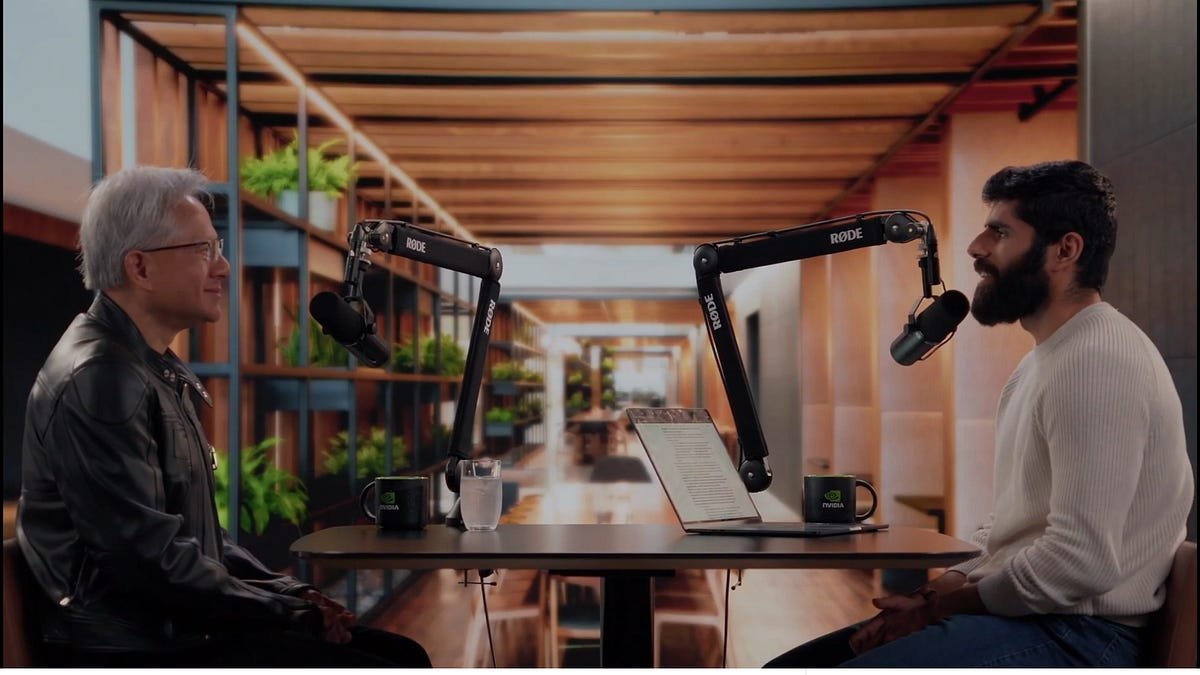
A deep dive into Dwarkesh Patel's interview with Nvidia CEO Jensen Huang, analyzing his claims about Nvidia's competitive advantages, chip sales to China, and the broader AI hardware landscape.
Zvi Mowshowitz's breakdown of Dwarkesh Patel's interview with Jensen Huang offers a fascinating window into how Nvidia's CEO thinks about his company's position in the AI chip market. The conversation touches on Nvidia's supposed moat, their strategy for China, and the broader competitive landscape.
Nvidia's Moat: Technical Depth or Market Momentum?
Huang makes the case that Nvidia's advantage isn't just about having the best chips today, but about the entire ecosystem they've built. He points to CUDA, their software platform, as a key differentiator that would take competitors years to replicate. The argument is that developers are locked into Nvidia's ecosystem through years of optimization and tooling.
But there's a tension here. Huang acknowledges that competitors like AMD and Intel are making progress, and that custom silicon from cloud providers poses a real threat. The question isn't whether Nvidia has a moat, but how wide and deep it actually is. The software ecosystem argument is compelling, but history shows that dominant platforms can be disrupted when the underlying technology shifts enough.
The China Question
On China, Huang takes a pragmatic stance. He argues that restricting chip sales to China doesn't actually prevent them from developing AI capabilities—it just means they'll develop their own alternatives. He points to companies like Huawei and Biren as evidence that China is already building competitive chips.
The implication is that export controls might actually accelerate China's semiconductor independence rather than contain it. This is a nuanced take that cuts against the more hawkish positions in Washington. Huang seems to be saying that the real competition isn't about who can sell chips to China, but who can build the best technology globally.
The Competitive Landscape
What's striking about Huang's perspective is how he frames the competition. It's not just about AMD or Intel anymore—it's about whether the entire model of general-purpose AI accelerators makes sense. He acknowledges that for certain workloads, specialized chips might be better, and that cloud providers building their own silicon could capture significant market share. The interview reveals a CEO who's thinking several moves ahead. He's not just defending Nvidia's current position but positioning the company for a future where the AI hardware landscape looks very different. The emphasis on software, the acknowledgment of China's capabilities, and the recognition of specialized alternatives all suggest a company preparing for disruption rather than one that believes it's invincible.
The Reality Check
While Huang's vision is compelling, there are reasons to be skeptical. The CUDA ecosystem, while powerful, isn't unassailable. Open standards like ROCm are improving, and the pain of vendor lock-in is real for many organizations. The China strategy might be pragmatic, but it also means Nvidia is helping build up competitors.
More fundamentally, the entire premise of massive AI accelerators might be temporary. If AI models become more efficient, or if new architectures emerge, today's moat could evaporate quickly. Huang's confidence is impressive, but in the fast-moving world of AI hardware, confidence alone doesn't guarantee survival.
The interview is worth watching not because Huang has all the answers, but because it shows how one of tech's most influential CEOs thinks about the challenges ahead. Whether Nvidia maintains its dominance or gets disrupted, the conversation reveals the strategic thinking that will shape the next phase of the AI revolution.
Comments
Please log in or register to join the discussion