Comprehensive Linux 7.0 file-system benchmarks reveal XFS leading performance across multiple workloads, with Btrfs showing significant gains when copy-on-write is disabled.
Linux 7.0 brings substantial file-system improvements that are now ready for real-world performance evaluation. With optimizations in both Linux 6.19 and the latest 7.0 development kernel, it's time to examine how the major file-systems stack up against each other on cutting-edge hardware.
Test Configuration and Methodology
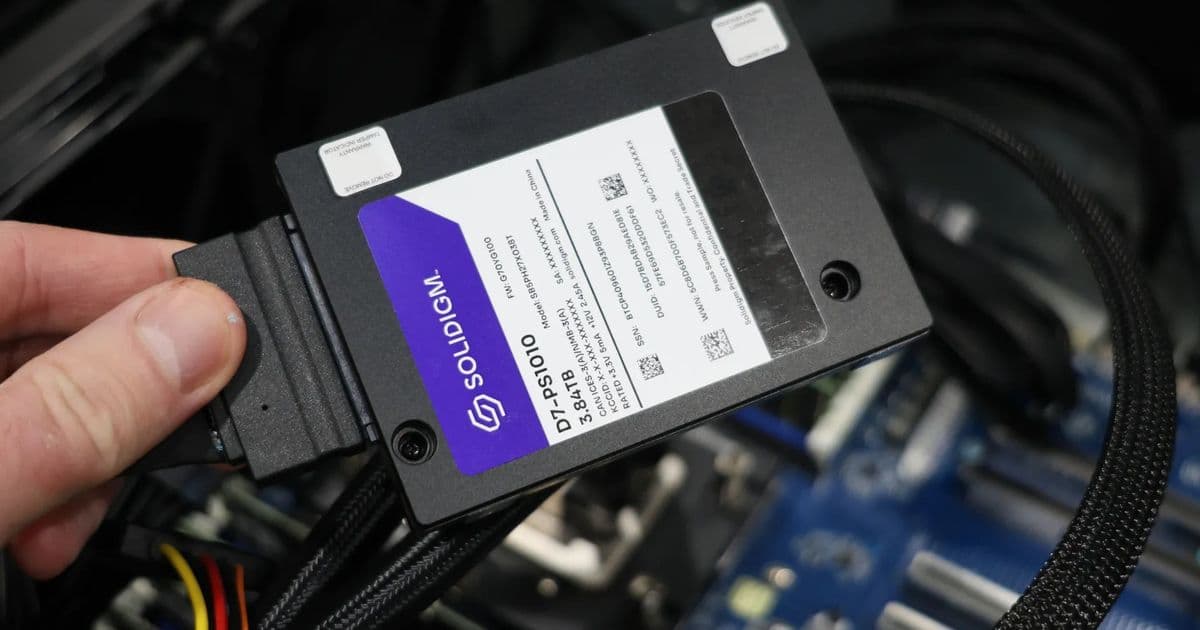
The benchmarks were conducted on an AMD EPYC 9745 server paired with a Solidigm D7-PS1010 PCIe 5.0 NVMe SSD (SB5PH27X038T), providing a high-performance platform to stress-test file-system capabilities. The testing covered Btrfs, EXT4, F2FS, and XFS, all running at their default configurations with the latest upstream code in Linux 7.0.
For Btrfs specifically, tests were run both with default settings and with copy-on-write (COW) functionality disabled, offering insight into how this feature impacts performance. All file-systems were freshly formatted before testing to ensure clean, consistent results.
Key Findings
XFS emerged as the clear leader across multiple benchmark categories, demonstrating superior performance in both sequential and random I/O operations. The file-system's mature design and optimization for high-performance storage showed through in the benchmark results.
Btrfs showed interesting behavior when copy-on-write was disabled. While COW provides important data integrity benefits, disabling it yielded significant performance improvements in certain workloads, particularly those involving large file operations and database operations.
EXT4, the long-standing workhorse of Linux file-systems, performed reliably but didn't match the throughput of XFS on this high-end hardware. F2FS, optimized for flash storage, showed competitive performance but was ultimately outperformed by XFS in most scenarios.
Benchmark Results Overview
The comprehensive testing included multiple workload types:
- FIO benchmarks tested raw I/O performance with various patterns and sizes
- Dbench simulated NFS server workloads with multiple clients
- Database workloads using CockroachDB, ClickHouse, MariaDB, and PostgreSQL
- Analytical workloads with DuckDB and TigerBeetle
Across these diverse scenarios, XFS consistently delivered the highest throughput and lowest latency, particularly in multi-threaded and concurrent access patterns.
Hardware Impact
The Solidigm D7-PS1010 PCIe 5.0 NVMe SSD proved to be a capable performer, capable of saturating multiple CPU cores with I/O requests. This high-bandwidth storage environment highlighted the differences between file-system implementations, with XFS scaling particularly well to the available hardware resources.
Future Testing Plans
OpenZFS and Bcachefs were originally planned for inclusion but weren't compatible with the Linux 7.0 Git state at the time of testing. Once these file-systems achieve compatibility with the latest kernel, they will be evaluated in a follow-up article to provide a more complete picture of the Linux file-system landscape.
Performance Implications
For users running the latest Linux 7.0 kernel on high-performance hardware, XFS appears to be the optimal choice for workloads demanding maximum throughput and low latency. However, the performance gains from disabling Btrfs COW suggest that users might want to evaluate their specific workload requirements when choosing a file-system.
Database workloads, analytical processing, and high-concurrency scenarios particularly benefit from XFS's superior performance characteristics. Meanwhile, users prioritizing data integrity features like snapshots and checksums might still prefer Btrfs despite the performance trade-offs.
The benchmarks demonstrate that file-system choice remains a critical consideration for system performance, even with modern hardware and kernel optimizations. As Linux 7.0 matures toward its final release, these performance characteristics will help users make informed decisions about their storage stack configuration.
Comments
Please log in or register to join the discussion