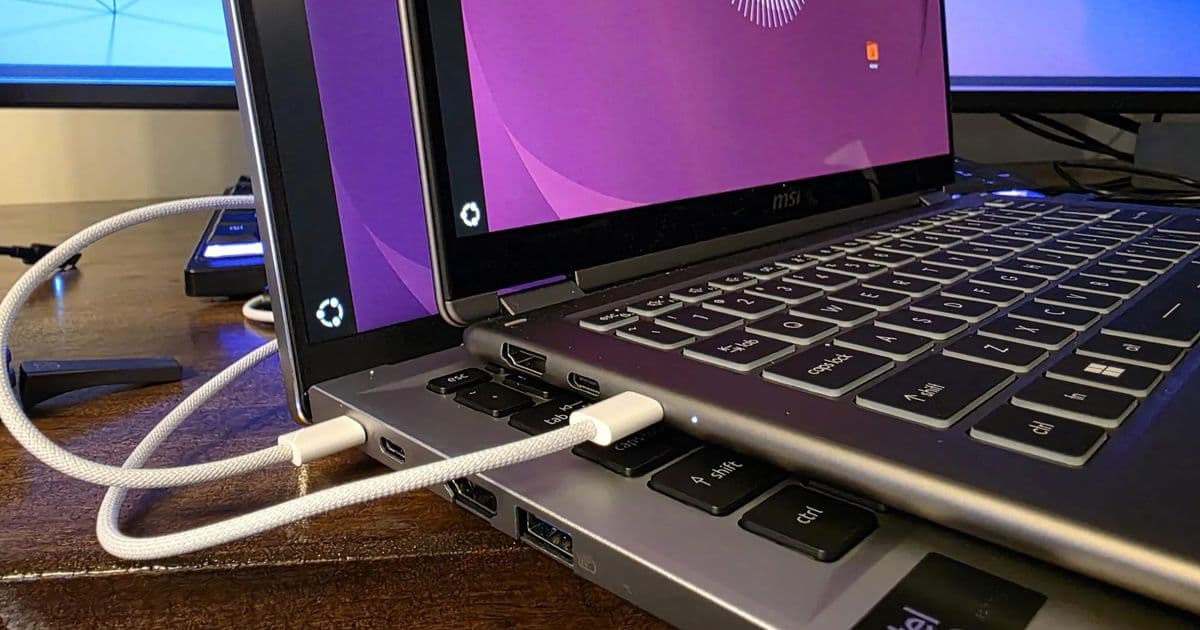
The Linux 7.2 merge window opens right after 7.1 tags this Sunday, and the feature list reads like a wishlist for anyone running mixed AMD/Intel hardware in a rack. Cache Aware Scheduling, initial HDMI 2.1 FRL in AMDGPU, USB4STREAM, and the long-awaited AMD ISP4 camera driver all look set to merge, and 7.2 will ship as the default kernel for Ubuntu 26.10 and Fedora 45.
Linux 7.1 stable is expected this Sunday, and the moment Linus Torvalds tags it, the Linux 7.2 merge window opens for roughly two weeks of feature dumping. Michael Larabel's monitoring of the mailing lists and the various -next branches gives a solid preview of what is queued. Nothing is final until Torvalds actually pulls each branch, but the shape of 7.2 is already clear, and for anyone running a homelab with a spread of AMD and Intel silicon, this is one of the more interesting cycles in a while.
{{IMAGE:2}}
The scheduling change that matters for everyone
The headline for me is Cache Aware Scheduling. This is the kind of change that shows up in benchmarks without you touching a single config file. Modern AMD Zen and Intel hybrid parts both pay a real penalty when the scheduler bounces a thread across cache domains, whether that is a CCX boundary on Ryzen/EPYC or a P-core/E-core split on Intel. Cache aware scheduling teaches the kernel to keep cooperating tasks parked on cores that share an L2 or L3 slice, cutting cross-domain cache misses and the latency that comes with them.
If you have ever benchmarked a multi-CCD EPYC part and watched throughput jump when you manually pinned threads with taskset or numactl, this is the kernel finally doing some of that work for you. I expect the gains to be workload-dependent: latency-sensitive and lightly-threaded workloads should see the most benefit, while embarrassingly parallel jobs that already saturate every core will see less. The real test comes when 7.2 hits and the benchmark numbers start landing. I will be running my usual suite (compile times on a 7950X, Redis latency, and a few database transaction tests) across the cache-aware and legacy schedulers to see where the deltas actually fall.
Alongside this, the default DRM scheduler priority is being set to "fair", a quieter change that affects GPU workload arbitration.
AMD graphics: HDMI 2.1 FRL at long last
The open-source AMD stack has been missing a complete HDMI 2.1 implementation for years, a frustration for anyone trying to drive a 4K120 or 8K display off an AMD card on Linux. Linux 7.2 brings initial HDMI 2.1 FRL (Fixed Rate Link) support into AMDGPU. This is the signaling mode that pushes past the old TMDS bandwidth ceiling, and it is the foundation the rest of the HDMI 2.1 feature set sits on. "Initial" is the operative word here, do not expect full feature parity yet, but the bring-up has to start somewhere and this is the somewhere.
AMD is also adding the AMDGPU DC Power Module to bring display power management behavior closer to what Radeon does on Windows. For an always-on system this is the difference between an idle display path that sips power and one that does not, and it is the kind of thing I measure at the wall with a meter rather than trust a datasheet on. There is also enablement of next-gen AMD graphics hardware IP, though the block-by-block versioning makes it impossible to map to a specific product right now.
One nice cross-platform note: AMDGPU is getting fixes for POWER and ARM systems running non-4K page size kernels. If you have tried running a Radeon card on a 64K-page ARM server, you know why that matters.
Storage and filesystems
Btrfs picks up general performance improvements plus huge folios support, which reduces per-page memory management overhead on large files by letting the kernel manage memory in bigger contiguous chunks. On large sequential I/O this cuts CPU time spent in the memory management layer, and on a NAS pushing big media files that overhead is not nothing. F2FS gains FSERROR reporting, useful for the flash-backed setups where F2FS earns its keep.
On the host controller side, the UFS host controller PCI driver gains AMD support for some unspecified AMD hardware, and Switchtec PCIe Gen6 switches are now supported, which is forward-looking plumbing for the next generation of high-lane-count storage and accelerator fabrics.
Thunderbolt, USB, and networking
Intel is contributing USB4STREAM, a new framework for Thunderbolt/USB4 use cases. The Thunderbolt subsystem keeps getting more capable, and for homelab builders using Thunderbolt for external GPUs, fast networking, or storage enclosures, every bit of upstream attention helps.
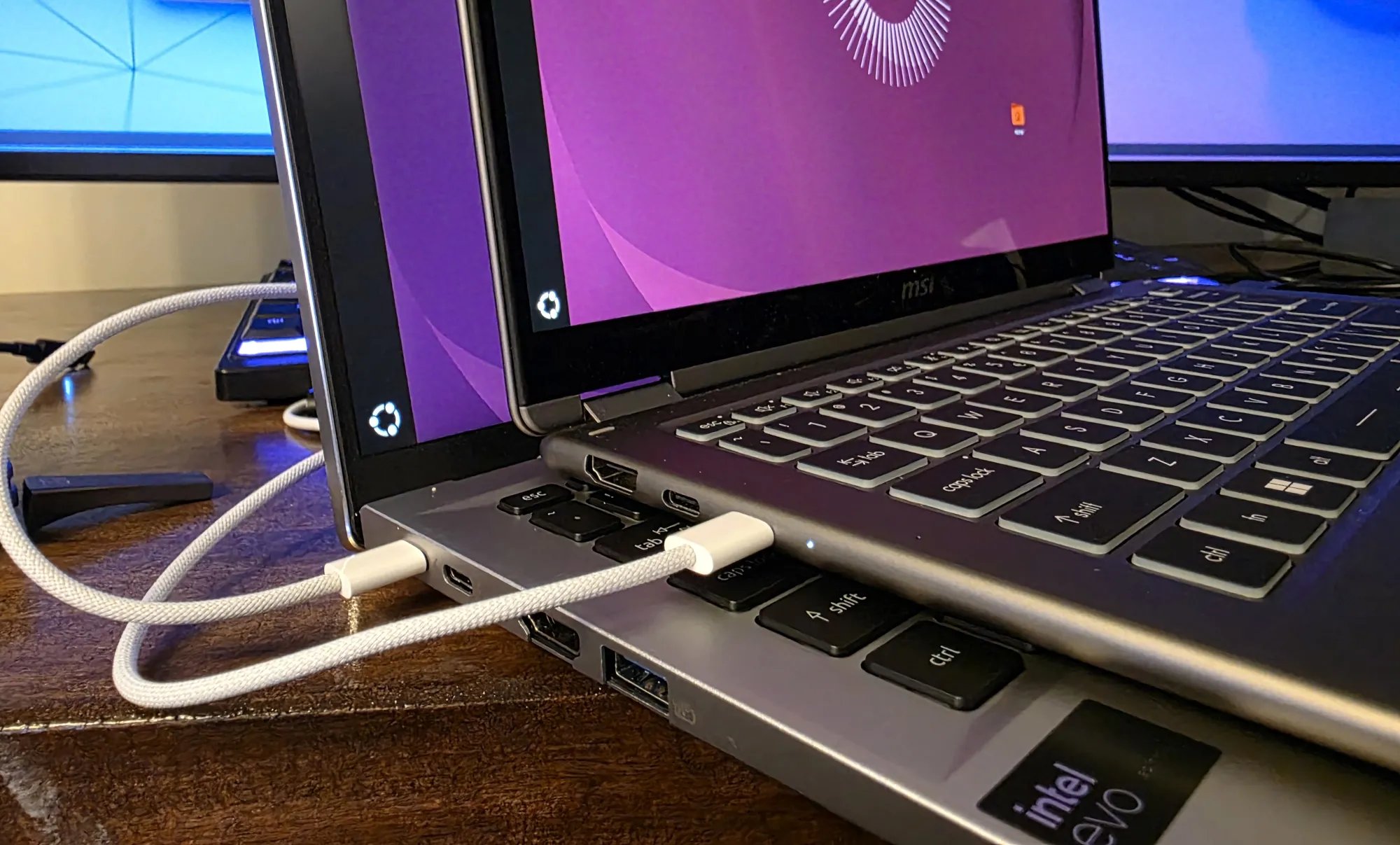
Networking sees a healthy round of new hardware. The Airoha AN8801R Gigabit Ethernet PHY driver arrives, and more notably for the 10GbE crowd, Realtek RTL8159 10GbE USB Ethernet support lands. A 10GbE USB adapter that works out of the box on a mainline kernel is genuinely handy for retrofitting faster uplinks onto machines without a free PCIe slot, the small form factor boxes and laptops that end up doing service in a lab. On the wireless side, Intel WiFi 8 UHR preparations are going into the IWLWIFI driver ahead of that next-gen spec.
Server and confidential computing
A few server-focused items stand out. Intel TDX Runtime updates look set to land, which should reduce the number of reboots required on TDX confidential-computing hosts, a real operational win if you run trusted-domain VMs. Preparations for APX support in KVM VMs are ongoing, Intel Key Protection Technology (KPT) arrives for next-gen QAT accelerators, and the Intel Diamond Rapids EDAC driver gets changes for memory error reporting on that upcoming platform. ACPI CPPC v4 support, contributed by NVIDIA engineers, improves the firmware-driven performance scaling interface.
NVIDIA's own driver work continues on two fronts: the Nova driver moves toward Blackwell and Hopper enablement, and Nouveau gains GA100 support, though user-space for that compute accelerator is still limited.
Security hardening
Two changes here. OPENAT2_REGULAR is a new flag for openat2() that helps secure programs avoid being tricked into opening special files when they only meant to touch regular files, closing off a class of path-confusion tricks. And AF_ALG is being deprecated because of its large attack surface. AF_ALG exposed the kernel crypto API to user space via sockets, and it has been a recurring source of security concern, so retiring it is a sensible trade even if a few niche users have to adjust.
Old hardware gets retired
Every cycle prunes some history, and 7.2 prunes a lot. TSC becomes a hard requirement for x86 CPUs, which follows from the i486 kernel support being stripped out. Since the Time Stamp Counter has been present on essentially every relevant x86 part for decades, the practical impact is nil while it enables some code cleanup. AMD K5 support is retired, AMD Elan SoCs are dropped, and AMD Geode is orphaned. ARCnet support for old ISA and PCMCIA hardware is removed, along with an ISA speech synthesizer driver. None of this affects anything you would actually rack today, but it is a reminder of how much legacy the kernel carries.
RISC-V keeps maturing
The RISC-V side continues its steady climb toward usability. ESWIN SoC support lands in the RISC-V defconfig by default, working WiFi arrives for the BeagleV Ahead and Lichee Pi 4a boards, and more SpacemiT K1 and K3 support is upstreamed. For anyone tinkering with RISC-V single-board computers in a lab, working wireless on real boards is the difference between a curiosity and something you can actually deploy on a shelf.
The fun stuff and the rest
A grab bag rounds out the cycle. The AMD ISP4 driver is finally getting upstreamed, enabling the webcam on the HP ZBook Ultra G1a and future high-end Ryzen laptops. The OneXPlayer configuration driver looks ready for mainline, benefiting OneXPlayer handheld gaming devices. The ARCTIC Fan Controller USB driver arrives for a seemingly unreleased ARCTIC controller, and voltage inputs get exposed for Raspberry Pi SBCs, which is exactly the kind of sensor data a measure-everything builder wants in their monitoring stack. On the NPU front, the AMDXDNA driver gains expandable heap support and more AIE4 NPU hardware enablement for Ryzen AI parts, while both AMD and Intel NPU drivers pick up new power features. Intel graphics also gets Background Color Property support, Panel Replay Tunneling, SR-IOV for Nova Lake Xe3P graphics, multi-SKU prep for Crescent Island accelerators, and a fix for ancient Sandy Bridge integrated graphics.
Why this release matters
Linux 7.2 is slated to be the default kernel for Ubuntu 26.10 and Fedora 45, which means whatever lands in this merge window is what a huge swath of users will be running by this autumn. That raises the stakes on the scheduling and AMDGPU changes in particular, since those touch the most systems.
The merge window runs about two weeks, and last-minute pull rejections are always possible. Once it closes, the real work begins: pulling 7.2-rc1 onto test hardware and running the benchmark suite to see whether Cache Aware Scheduling delivers on modern Ryzen and Intel parts, what the AMDGPU power module does to idle draw at the wall, and how huge folios in Btrfs shift large-file throughput. Datasheets and changelogs tell you what changed. The meter and the benchmark log tell you what it cost or saved. I will have numbers once rc1 is in hand.
Comments
Please log in or register to join the discussion