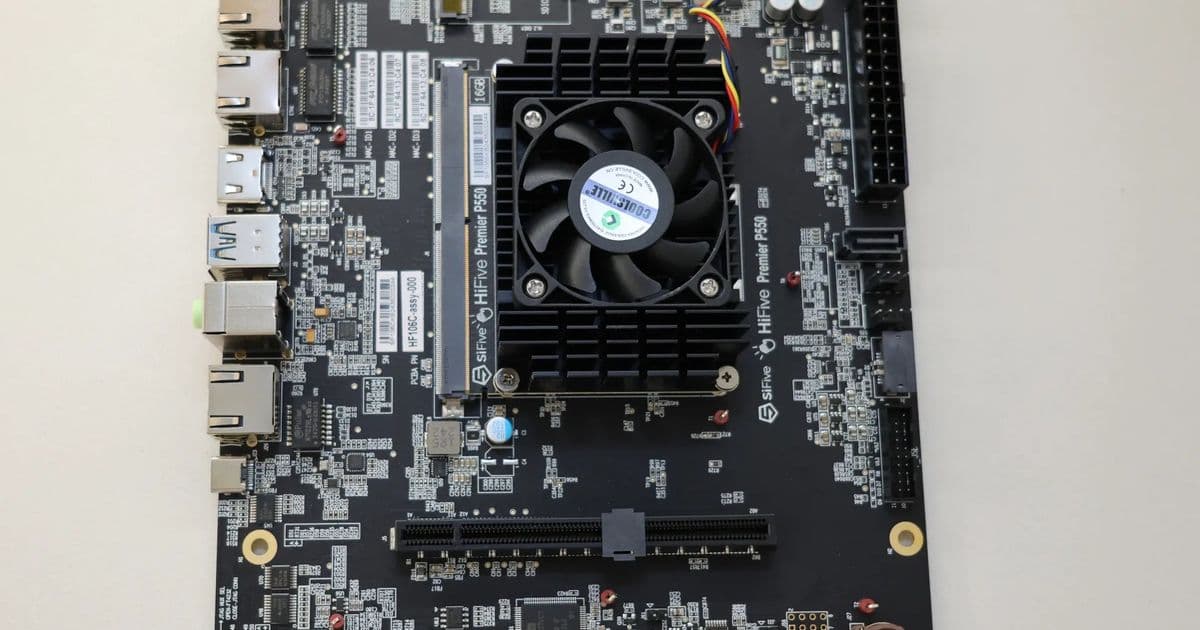
Thirteen months after the first snapshot, Red Hat has refreshed its RISC-V developer preview to RHEL 10.2, with the SiFive HiFive Premier P550 still serving as the reference board and community reports trickling in from StarFive and UltraRISC silicon.
Red Hat just published a second developer preview of Red Hat Enterprise Linux for RISC-V, and it lands a full thirteen months after the original snapshot that accompanied the RHEL 10.0 launch. The new build is based on RHEL 10.2, which means it pulls in more than a year of upstream churn across the kernel, glibc, and the broader toolchain that the 64-bit RISC-V (rv64gc) target depends on. For anyone running a homelab board on the bench, this is the first time the RHEL side of the RISC-V story has moved since launch day.
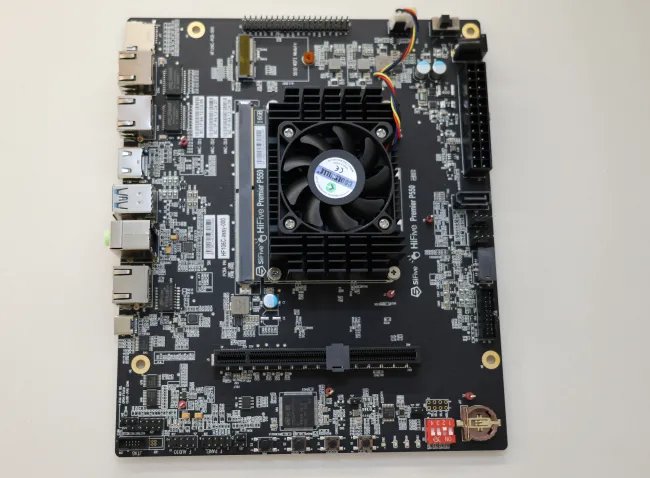
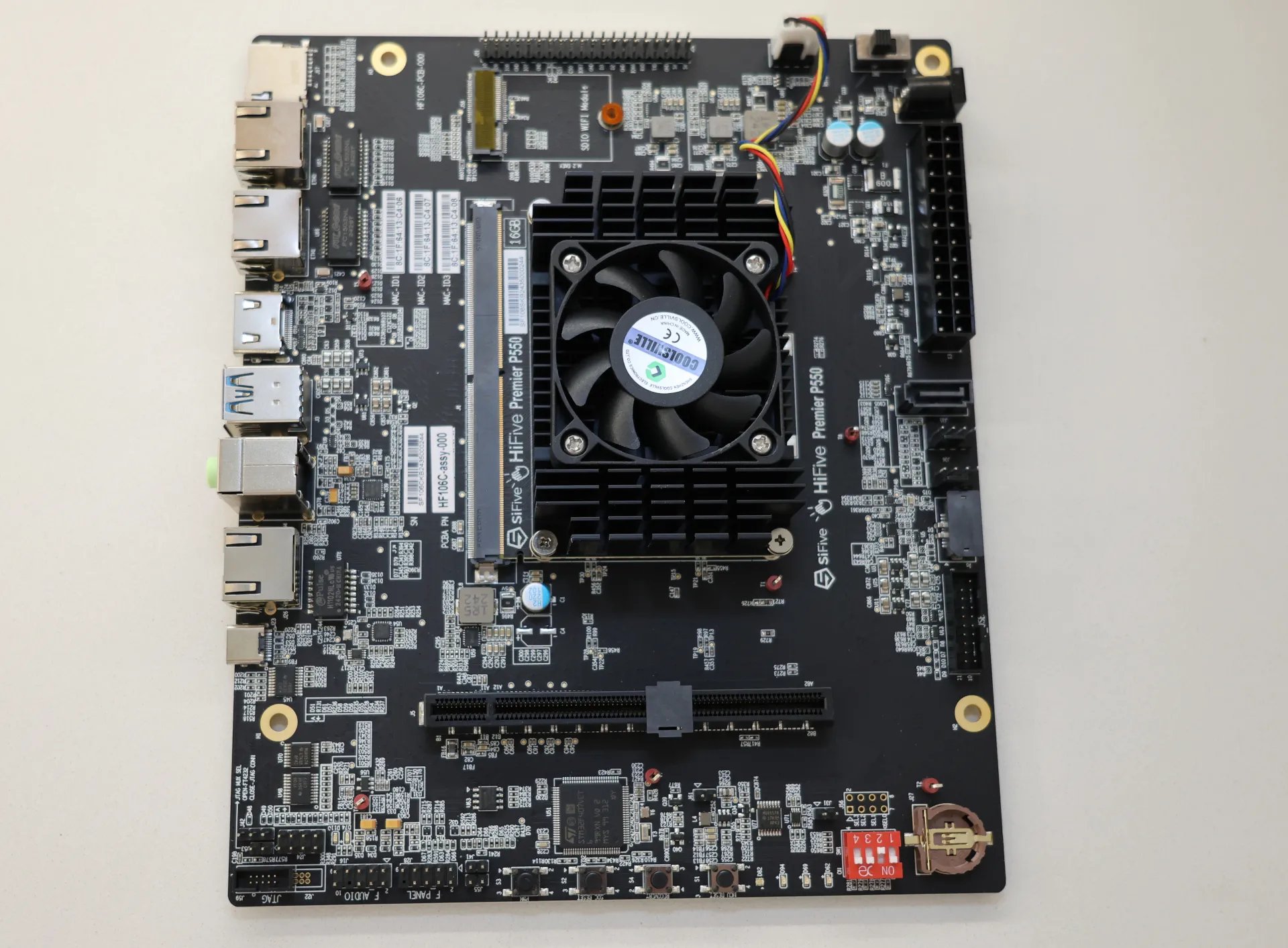
The headline hardware remains the SiFive HiFive Premier P550. That board is Red Hat's primary test vehicle, and the second preview specifically folds in additional upstream code to benefit it. If you have been tracking RISC-V single-board and developer hardware, the P550 sits in a different class than the cheap microcontroller-adjacent boards. It pairs the SiFive Performance P550 core complex with a more conventional mini-ITX form factor, which is exactly why it makes a sane reference platform for an enterprise distribution.
What's actually in the box
Red Hat is being characteristically quiet about specifics, but the shape of this release is clear. The preview is a snapshot rebased from 10.0 to 10.2, so you inherit the same lifecycle of fixes that x86_64 and aarch64 users already received. The RISC-V-relevant pieces are the parts that matter for the homelab crowd: kernel support for the P550's interrupt controller and PCIe, plus the incremental platform enablement that keeps the userspace from falling over on a still-maturing architecture.
The interesting detail is hardware breadth. While the P550 is the only officially exercised board, community members are reporting success on two other targets:
| Platform | SoC | Notes |
|---|---|---|
| SiFive HiFive Premier P550 | SiFive P550 (4x performance cores) | Official Red Hat reference board |
| StarFive VisionFive 2 / boards | StarFive JH7110 (4x U74, 1.5 GHz) | Community-reported working |
| UltraRISC DP1000 boards | UltraRISC DP1000 | Community-reported working |
QEMU virt machine |
Emulated rv64 | Works for kicking the tires without hardware |
The QEMU path is the one I'd point most readers at first. You do not need to buy a P550 to evaluate the image. Spinning up the qemu-system-riscv64 virt machine with a handful of cores and a few gigabytes of RAM gets you a bootable RHEL 10.2 RISC-V userspace, and it costs nothing but a few minutes of host CPU time. It is the cheapest way to see whether your container images and build scripts survive an architecture port before you commit to silicon.
Why the JH7110 reports matter
The StarFive JH7110 showing up as community-validated is the quietly significant part. The JH7110 is the SoC behind the VisionFive 2 and a pile of derivative boards, and it is one of the most widely deployed RISC-V application processors in hobbyist hands. Four SiFive U74 cores at 1.5 GHz is not going to win any benchmark fight against a modern Arm or x86 part, but it is enough to host services, run a CI runner, or act as a low-power always-on node.
That distinction matters because RISC-V performance today is not about raw throughput. The U74 is an in-order core, and the P550 moves to an out-of-order design, which is a meaningful step up in instructions-per-clock for branch-heavy and pointer-chasing workloads. If you are choosing between these for a homelab role, the mental model is straightforward: JH7110 for low-power background services where idle power draw dominates, P550 for anything where you actually wait on the CPU to finish a job. Neither is replacing your Ryzen build server, and the value here is having an enterprise-grade, long-support-window distribution available on the architecture at all.
The promotion question
The part Red Hat will not answer is when RISC-V graduates from "developer preview" to a supported architecture. The official line is unchanged: "Red Hat continues to monitor and support the growth of the RISC-V ecosystem." Developer preview status means no production support, no guarantees, and no commitment to a stable update cadence, which is exactly why thirteen months passed between snapshots.
Reading the tea leaves, the most plausible window for promotion is RHEL 11. A major version bump is the natural place to add a new primary architecture, and by the time RHEL 11 ships, the RISC-V profile (ratified vector extensions, the RVA23 application profile, and broader board availability) will be considerably more settled than it is today. RVA23 in particular is the thing to watch, because it standardizes the baseline feature set that distributions can target, and that is the kind of stable contract an enterprise vendor needs before it puts its name on a support SLA.
Build recommendations
If you want to try this now, here is the practical ordering. Start with QEMU on whatever x86 or Arm host you already own, confirm your workload's container images have rv64 builds, and only then decide whether a physical board earns a slot in the rack. For real hardware, the P550 is the board Red Hat actually tests, so it carries the lowest risk of hitting an enablement gap. A JH7110 board is the budget entry point if your goal is light always-on services and you are comfortable being on the community-validated side of the support line.
The broader takeaway is that RISC-V is grinding its way up the stack from embedded curiosity toward something an enterprise distribution will eventually stand behind. A second preview after a long silence is not a dramatic event, but it is the kind of steady, unglamorous enablement work that turns an architecture from a hobby target into a deployable one. The Phoronix coverage of the announcement frames the P550 as the test vehicle, and that is the right way to think about this release: not a product yet, but a reference platform that is slowly getting good enough to build on.
Comments
Please log in or register to join the discussion