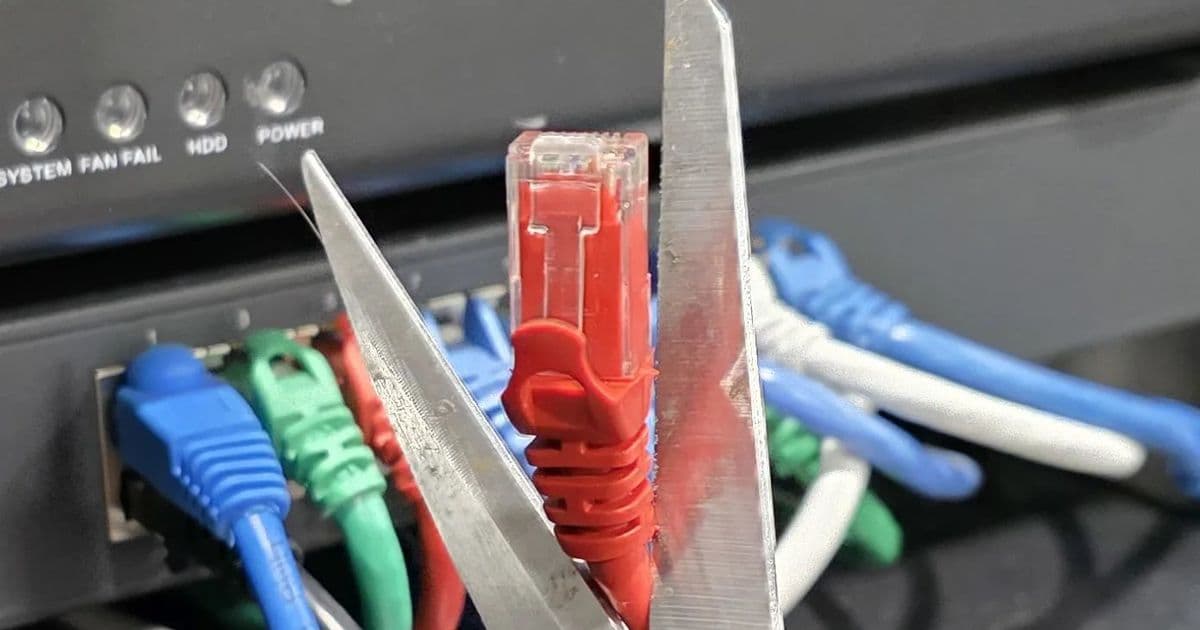
Linux kernel developers are considering removing decades-old network drivers due to the maintenance burden caused by AI-generated bug reports and fuzzing tools, with Andrew Lunn proposing to drop 27.6k lines of ISA and PCMCIA Ethernet driver code.
The Linux kernel's legendary commitment to hardware compatibility is facing an unexpected challenge from the very tools meant to improve its quality. AI-driven bug detection and fuzzing have become so effective that they're uncovering defects in ancient network drivers that likely have no real users, creating a maintenance burden that developers are now considering eliminating entirely.
Andrew Lunn, a Linux kernel maintainer, has proposed a patch series to remove a collection of ISA and PCMCIA era network drivers from the kernel. These drivers, dating back to the last century with a couple from 2001-2002, include support for 3com, AMD, SMSC, Cirrus, Fujitsu, Xircom, and 8390 Ethernet devices. The total reduction would be 27.6k lines of code - a significant cleanup that would also reduce the attack surface for security researchers and fuzzing tools to probe.
The maintenance burden has shifted dramatically in recent years. Where these old drivers once sat quietly in the kernel with minimal attention, the rise of AI coding assistants and automated fuzzing has changed the equation. New developers using AI tools are discovering bugs in code paths that haven't been exercised in years, if ever. Each bug report requires investigation, even if the driver in question hasn't been used on actual hardware in decades.
Lunn's approach is pragmatic: remove the drivers one patch at a time so they can be restored if someone emerges with the actual hardware who wants to maintain them. This acknowledges the reality that while Linux has historically maintained support for old hardware, there's a difference between preserving functionality for active users and maintaining code that exists only as a historical artifact.
The timing is particularly interesting given the current state of hardware support in Linux. Modern network drivers are increasingly complex, supporting advanced features like multi-queue networking, hardware offloading, and sophisticated power management. Maintaining these drivers requires significant expertise and ongoing effort. The contrast with decades-old ISA drivers, which were relatively simple by comparison, highlights how the kernel's maintenance burden has evolved.
This isn't just about code cleanup - it's about resource allocation. Linux kernel developers are volunteers and professionals who contribute their time to the project. Every hour spent investigating a bug in a driver for hardware that hasn't been manufactured in 20 years is an hour not spent improving modern hardware support or developing new features. The AI-driven bug reports, while well-intentioned, are creating noise that obscures more important issues.
The broader question this raises is whether other kernel subsystems will follow suit. If network drivers are being pruned due to AI-generated bug reports, what about old sound card drivers, graphics drivers, or storage controllers? The kernel has always maintained a delicate balance between supporting legacy hardware and keeping the codebase manageable. AI tools have tipped that balance in an unexpected direction.
There's also a philosophical question about what constitutes "support" in the Linux ecosystem. Is it enough to have code in the kernel, or does there need to be an active community of users and maintainers? The current situation suggests that without active maintenance, even code that's present in the kernel may not provide reliable functionality - especially when discovered bugs go unfixed.
The irony isn't lost on the community that AI tools designed to improve code quality are potentially leading to the removal of code that has worked perfectly well for years. But this reflects a broader truth about software maintenance: code that isn't exercised regularly tends to decay, and maintaining it requires ongoing investment that may not be justified by actual usage.
For system administrators and hardware enthusiasts, this change serves as a reminder that Linux's legendary hardware support isn't guaranteed forever. If you're running ancient hardware with these drivers, now might be the time to consider migration plans. The kernel developers are sending a clear signal: if you want support for these devices to continue, you'll need to step up and maintain them yourself.
The 27.6k lines being removed represent more than just code - they represent a shift in how the Linux kernel community thinks about maintenance burden in the age of AI. It's a recognition that unlimited hardware support comes at a cost, and that cost needs to be justified by actual usage. As AI tools become more prevalent in software development, we may see more of these pragmatic decisions about what code is worth maintaining.
This change also highlights the importance of community involvement in open source projects. The Linux kernel's strength has always been its community of developers and users who care enough to maintain support for diverse hardware. If these drivers are to survive, it will require someone to step forward and take responsibility for them. Otherwise, they'll become another casualty of progress, removed not because they don't work, but because maintaining them no longer makes sense in a world of AI-driven bug reports and limited developer resources.
Comments
Please log in or register to join the discussion