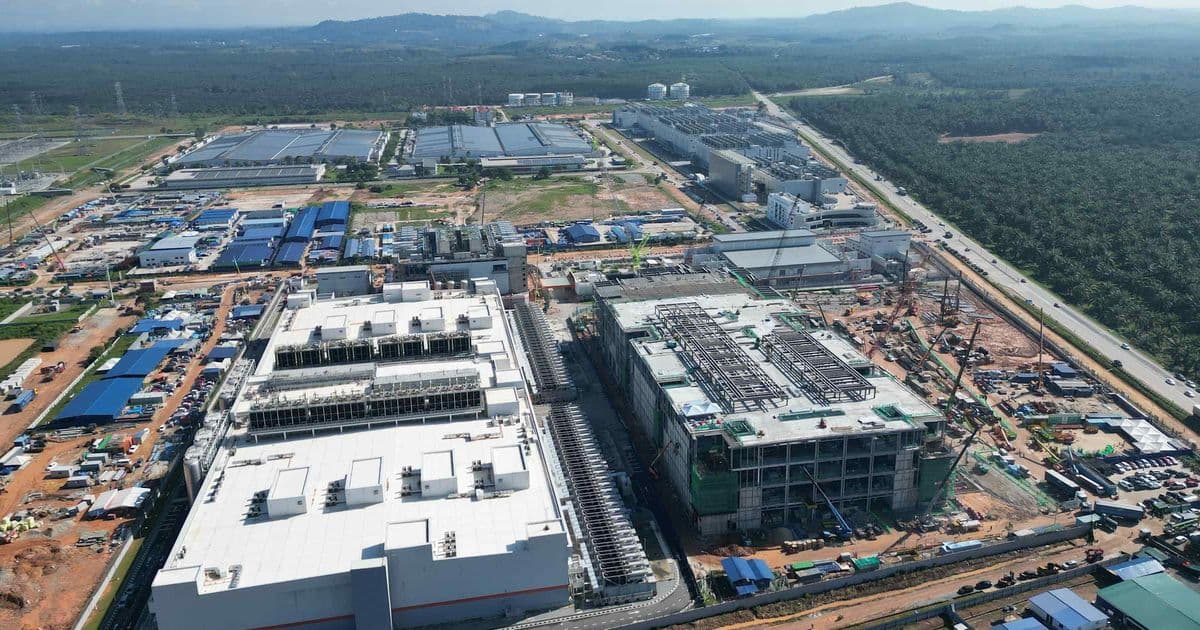
Jones Lang LaSalle projects Malaysia's operational data center capacity to increase from ~1,025 MW at the end of 2025 to ~2,100 MW by the end of 2026
Malaysia is emerging as a major data center hub in Southeast Asia, with Jones Lang LaSalle (JLL) projecting the country's operational data center capacity to more than double from approximately 1,025 megawatts (MW) at the end of 2025 to around 2,100 MW by the end of 2026.
This significant expansion reflects Malaysia's growing appeal to global technology companies and cloud service providers seeking strategic locations for their infrastructure in the Asia-Pacific region.
Strategic Location and Infrastructure Advantages
Malaysia's geographic position makes it an attractive destination for data center development. The country sits at the crossroads of major submarine cable routes connecting Asia, the Middle East, and Europe, providing excellent connectivity for international data traffic.
Key factors driving this growth include:
- Favorable climate conditions: Malaysia's tropical climate, while challenging, has prompted innovative cooling solutions and energy-efficient designs
- Government support: The Malaysian government has implemented policies to attract data center investments, including tax incentives and streamlined permitting processes
- Existing infrastructure: Well-developed telecommunications networks and power grids provide a solid foundation for large-scale data center operations
- Cost advantages: Competitive land and labor costs compared to neighboring Singapore make Malaysia an economically attractive option
Regional Competition and Market Dynamics
The data center expansion in Malaysia is part of a broader trend across Southeast Asia, as countries compete to become regional technology hubs. Singapore, traditionally the dominant player in the region, has implemented a moratorium on new data center developments due to land scarcity and energy consumption concerns.
This regulatory constraint has opened opportunities for neighboring countries like Malaysia, Indonesia, and Thailand to capture market share. Malaysia's proximity to Singapore, combined with its more abundant land resources and lower operational costs, positions it well to benefit from this regional shift.
Investment and Development Pipeline
The projected capacity increase suggests a robust pipeline of data center projects in various stages of development. Major cloud providers and technology companies are likely to be key drivers of this expansion, though specific details about individual projects and investors were not disclosed in the JLL report.
Industry analysts note that the doubling of capacity within a single year represents an aggressive growth trajectory that will require significant capital investment and careful coordination with local utilities to ensure adequate power supply.
Challenges and Considerations
While the growth outlook is positive, Malaysia faces several challenges in accommodating this rapid expansion:
- Power infrastructure: Ensuring sufficient and reliable power supply to support the increased load will be critical
- Environmental concerns: Data centers are significant energy consumers, and their environmental impact will need to be addressed
- Skilled workforce: Developing a local talent pool capable of supporting advanced data center operations
- Regulatory framework: Establishing clear guidelines for data sovereignty, security, and cross-border data flows
Global Context
The Malaysia data center boom occurs against the backdrop of global digital transformation and increasing demand for cloud services, AI computing, and data storage. As businesses worldwide accelerate their digital initiatives, the need for robust, geographically distributed data center infrastructure continues to grow.
The projected expansion in Malaysia reflects the country's strategic importance in the global digital economy and its potential to serve as a gateway for technology companies looking to establish a presence in Southeast Asia.
The doubling of data center capacity within a year also highlights the rapid pace of infrastructure development required to support the region's digital growth, positioning Malaysia as a key player in the evolving landscape of global technology infrastructure.
Comments
Please log in or register to join the discussion