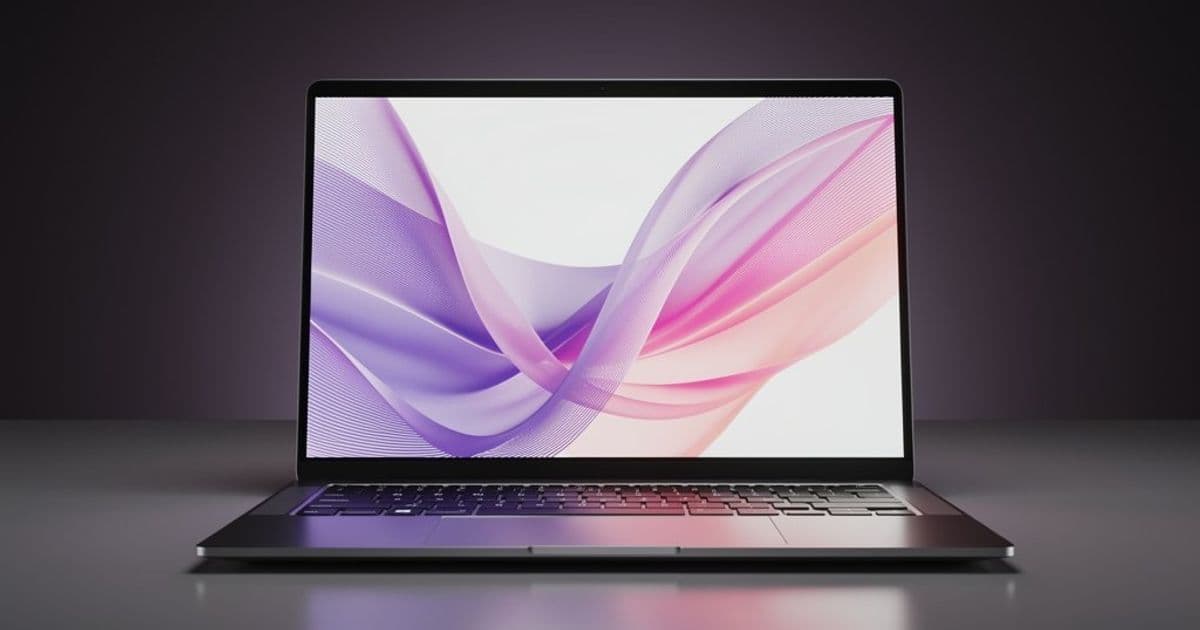
Microsoft's Surface division outlines how its Copilot+ PCs will drive organizational AI fluency by 2026, positioning them as essential tools for businesses transitioning into AI-powered Frontier Firms.

Sandra Andrews, Global GM of Surface Marketing, recently projected how Microsoft's Surface Copilot+ PCs will serve as foundational tools for enterprise AI fluency by 2026. This strategic vision positions these devices not merely as hardware upgrades but as catalysts for organizational transformation into what Microsoft terms 'Frontier Firms' – businesses leveraging AI pervasively across operations. The announcement signals Microsoft's intensified focus on embedding AI capabilities directly into endpoint devices rather than relying solely on cloud-based solutions.
The AI PC Shift: Beyond Conventional Computing
Surface Copilot+ PCs integrate neural processing units (NPUs) capable of over 40 TOPS (trillion operations per second), enabling on-device execution of AI workloads that previously required cloud connectivity. This architectural shift reduces latency for real-time applications like live translation, content generation, and predictive analytics while addressing data residency concerns. Unlike traditional PCs that serve primarily as access points to cloud resources, these devices process sensitive data locally while intelligently offloading complex tasks to Azure when appropriate. The hybrid approach creates a seamless workflow where AI assistance becomes ambient rather than interruptive.
Competitive Landscape Analysis
When comparing AI PC strategies:
- Apple's M-series focuses on power efficiency and media processing but lacks equivalent system-level AI integration like Windows Copilot's semantic indexing across applications
- Google Chromebooks leverage cloud-centric AI but lack robust local processing for offline scenarios
- Qualcomm-powered Windows devices compete on raw NPU performance but without Microsoft's deep OS integration
Microsoft's advantage lies in coupling hardware with proprietary AI frameworks like DirectML and Phi-3 models optimized for local execution. Pricing reflects this premium positioning, with Copilot+ PCs commanding approximately 15-25% higher costs than standard business laptops – though enterprises report ROI through productivity gains exceeding 30% in pilot deployments according to Microsoft's internal studies.
Business Transformation Implications
For enterprises planning migration:
- Workflow reinvention: AI-accelerated devices enable real-time document analysis during meetings and predictive maintenance in field operations
- Security recalibration: Local processing reduces cloud data transfer but requires new protocols for on-device model governance
- Infrastructure optimization: Reduced cloud dependency lowers bandwidth costs while increasing edge computing significance
- Skills transition: Upskilling programs must shift from basic AI literacy to prompt engineering and hybrid AI workflow design
Organizations adopting these devices report 40% faster content creation cycles and 25% reduction in repetitive tasks. However, successful implementation requires reassessing application compatibility, as legacy software may not leverage NPU capabilities without optimization. Microsoft mitigates this through tools like Copilot Runtime, allowing developers to integrate AI features via API calls without low-level coding.
Strategic Considerations for 2026
As enterprises evaluate AI PC roadmaps:
- Prioritize use cases where latency matters (e.g., manufacturing sensors, financial trading)
- Assess hybrid models balancing local processing with Azure AI services
- Budget for transitional costs including device refreshes and retraining
- Monitor competing ecosystems like Apple Intelligence integration
The full strategy overview details Microsoft's enterprise deployment frameworks. Organizations pursuing Frontier Firm status should evaluate Copilot+ PCs not as isolated hardware but as components in an evolving AI-fluent architecture where devices, cloud services, and human workflows form a cohesive intelligence layer.
Comments
Please log in or register to join the discussion