
MIT scientists have developed a new mathematical formulation that uses classical physics principles to exactly describe quantum phenomena, potentially simplifying quantum computing and physics research.
MIT scientists have discovered that the strange behavior of subatomic particles can be understood through everyday classical physics principles, creating an exact mathematical bridge between the quantum and classical worlds.
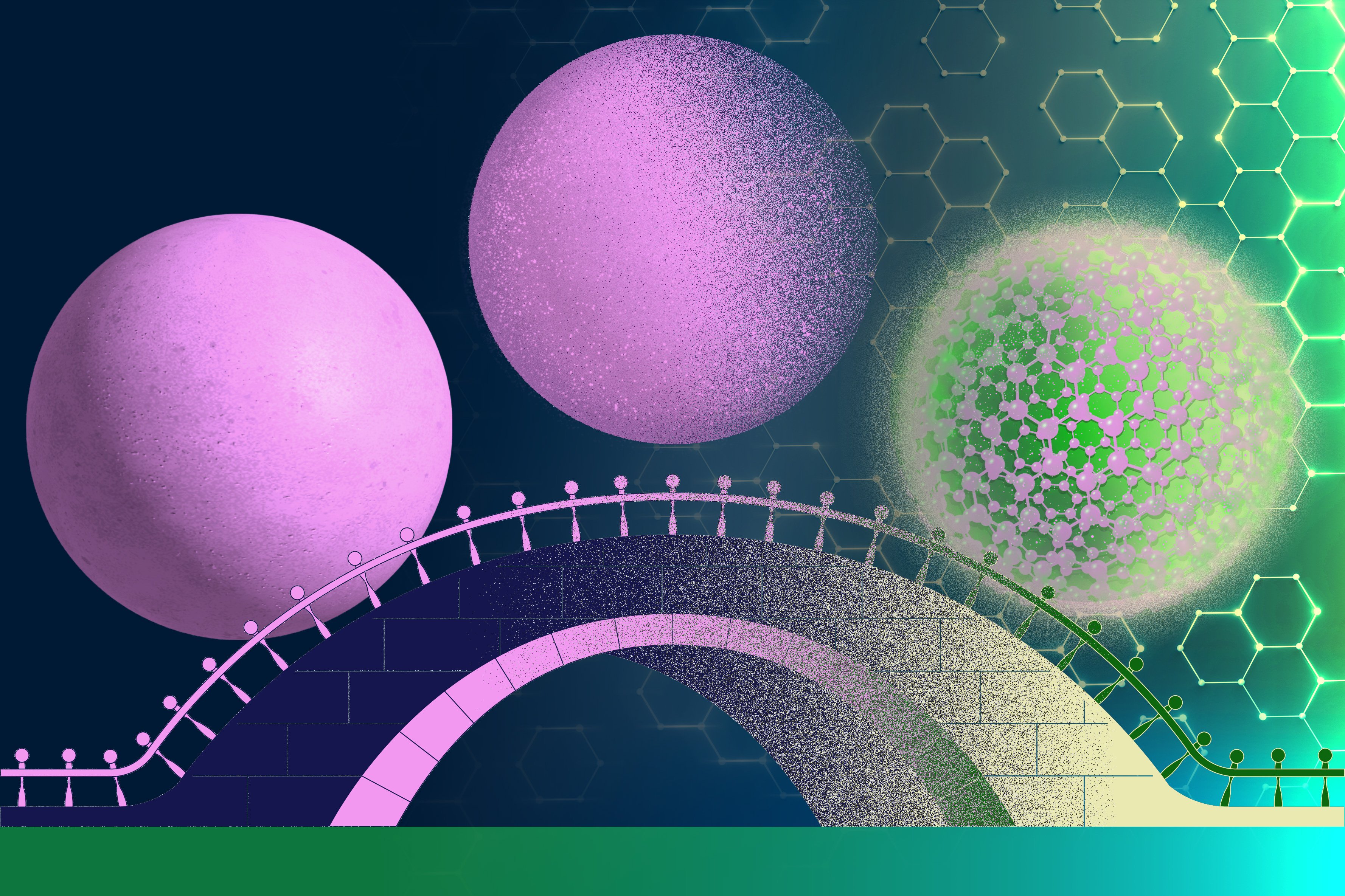
When you throw a ball in the air, classical physics equations precisely predict its path, landing time, and location. But shrink that ball to atomic size, and it behaves in ways classical physics cannot explain. Or at least, that's what we've believed until now.
In a paper published today in the journal Proceedings of the Royal Society, MIT researchers demonstrate that certain mathematical concepts from classical physics can describe quantum behavior at the subatomic scale. Their approach uses the principle of "least action" from classical mechanics to arrive at exactly the same solutions as the Schrödinger equation—the fundamental equation of quantum mechanics.
From Classical to Quantum: The Mathematical Bridge
The breakthrough came while researchers Winfried Lohmiller and Jean-Jacques Slotine were working on classical mechanics problems in MIT's Nonlinear Systems Laboratory. They were applying the Hamilton-Jacobi equation—a major formulation of classical mechanics related to Newton's laws of motion—to predict system behaviors in robotics, aircraft control, neuroscience, and machine learning.
The Hamilton-Jacobi equation represents motion as minimizing a quantity called "action," which is the sum over time of the difference between an object's kinetic and potential energy. For a ball thrown from point A to point B, the equation states that the actual path taken minimizes this action at every point along the trajectory.
Solving the Double-Slit Mystery
The researchers realized this classical framework could solve the famous double-slit experiment—a quantum phenomenon that has puzzled physicists since its discovery. In this experiment, two slits are cut in a metal wall, and single photons are fired toward it. Classical physics predicts a single spot of light on the other side, but experiments show alternating bright and dark stripes.
This pattern occurs because photons behave as waves, passing through both slits simultaneously and interfering with themselves. Previous attempts to explain this using classical physics required calculating an infinite number of possible zigzag paths—a mathematical impossibility that even Richard Feynman considered insurmountable.
Slotine and Lohmiller's insight was to allow classical physics to mathematically entertain the notion of multiple paths, similar to quantum superposition. Instead of calculating infinite zigzag paths, they found that considering just two classical "least action" paths through the slits produced the exact same quantum result.
The Role of Density
The key addition to their formulation was incorporating "density"—essentially a probability that a given path is taken. "We think of density in terms of fluid dynamics," Lohmiller explains. "Imagine pumping a hose toward the wall. Most water hits the center, but some droplets go toward the sides. A high density at the center means there's a high probability of finding a droplet along that path."
By adding density terms to the Hamilton-Jacobi equation and considering multiple least action paths, the researchers derived a wave function that exactly matched predictions from the Schrödinger equation.
Beyond the Double-Slit
The team demonstrated their formulation's power by successfully predicting other quantum phenomena:
- Quantum tunneling: Particles passing through energy barriers that classical physics says should be impossible
- Electron wave functions: They could derive the exact quantum wave of an electron in a hydrogen atom from the classical orbit of a planet
- Quantum entanglement: They revisited the famous Einstein-Podolsky-Rosen experiment from this new perspective
Implications for Science and Technology
"We're not saying there's anything wrong with quantum mechanics," emphasizes Slotine, a professor of mechanical engineering and information sciences. "We're just showing a different way to compute quantum mechanics, which is based on well-known classical ideas that we put together in a simple way."
The researchers envision several practical applications:
- Quantum computing: Simplifying calculations for quantum bits with nonlinear energies
- Unified physics: Better understanding problems involving both quantum physics and general relativity
- Educational tools: Providing a more intuitive approach to teaching quantum mechanics
"Before, there was a very tenuous bridge that worked only for reasonably large [quantum] particles," says Lohmiller. "Now we have a strong bridge—a common way to describe quantum mechanics, classical mechanics, and relativity, that holds at all scales."
This work doesn't change our understanding of quantum phenomena but provides a powerful new computational tool. By showing that quantum behavior can be computed with simple classical tools, the researchers have made the quantum world less mysterious and more accessible to scientists and engineers across disciplines.
The research was supported by the Air Force Office of Scientific Research, the Army Research Office, and the Office of Naval Research.
Comments
Please log in or register to join the discussion