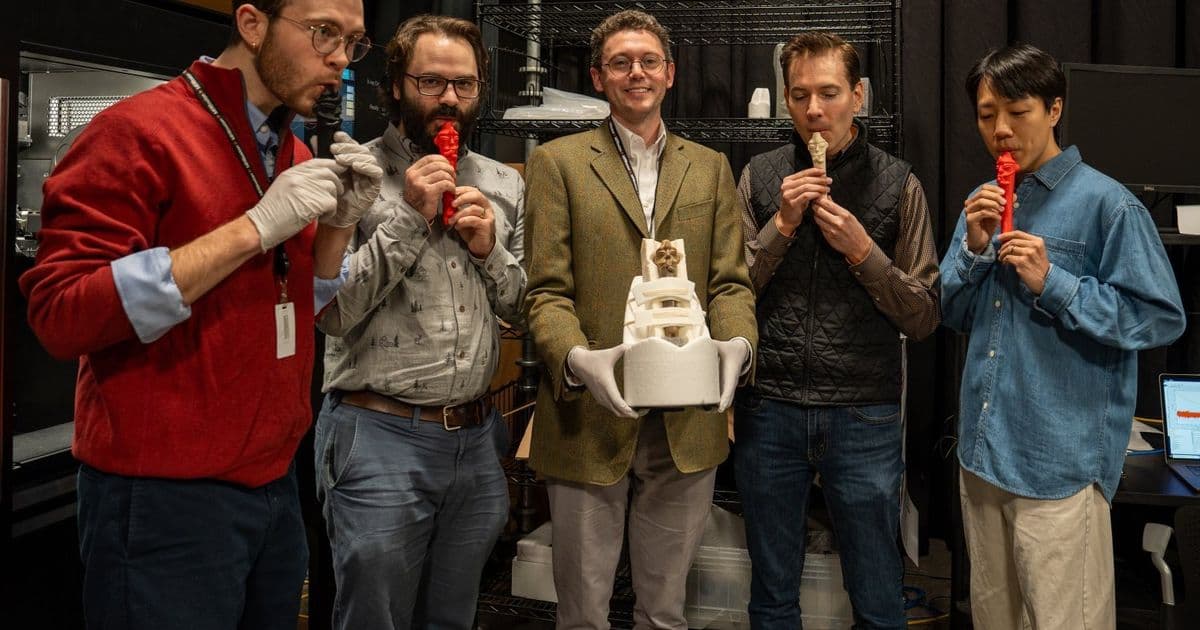
MIT and MFA Boston researchers are using CT scanning and 3D printing to create playable replicas of ancient musical instruments, combining materials science, acoustics, and archaeology to preserve and study historical sounds.
What if you could hear the exact sounds of instruments that haven't been played in centuries? A team of MIT researchers is making this possible through an innovative collaboration with the Museum of Fine Arts, Boston, using cutting-edge imaging technology to recreate ancient musical instruments both physically and digitally.
From Museum Display to Musical Performance
The project began when MIT postdoc Benjamin Sabatini reached out to Professor Eran Egozy with a simple question: could modern technology create accurate replicas of ancient instruments that could actually be played? This sparked a collaboration between MIT's Center for Materials Research in Archeology and Ethnology (CMRAE) and the School of Humanities, Arts, and Social Sciences (SHASS) with the MFA's musical instrument collection.
Mark Rau, a newly hired MIT professor in music technology and electrical engineering, joined the effort after sharing Sabatini's vision. "My biggest qualm is often there are no accompanying audio examples," Rau explains. "I want to hear these instruments; I want to play these instruments."
Jared Katz, the Pappalardo Curator of Musical Instruments at the MFA, brought crucial expertise in ancient musical practices and 3D scanning techniques. The MFA's collection, which began in 1917 and now contains over 1,450 instruments from six continents dating back to 1550 BCE, proved to be an ideal resource for the project.
The Technology Behind the Music
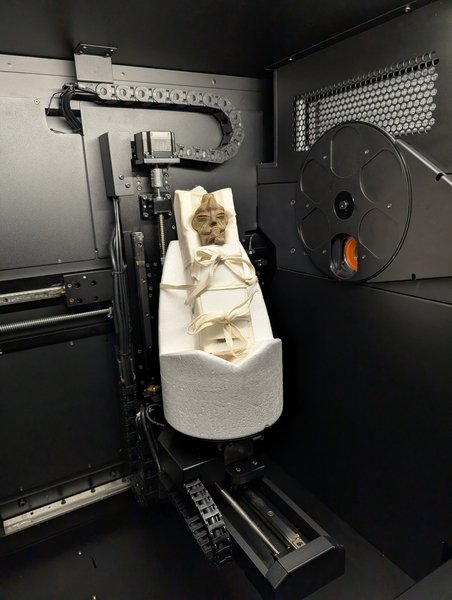
The team uses a CT scanner from Lumafield, a company founded by MIT alumni, to capture both internal and external dimensions of each instrument. This non-destructive approach allows researchers to study instruments without risking damage to the originals.
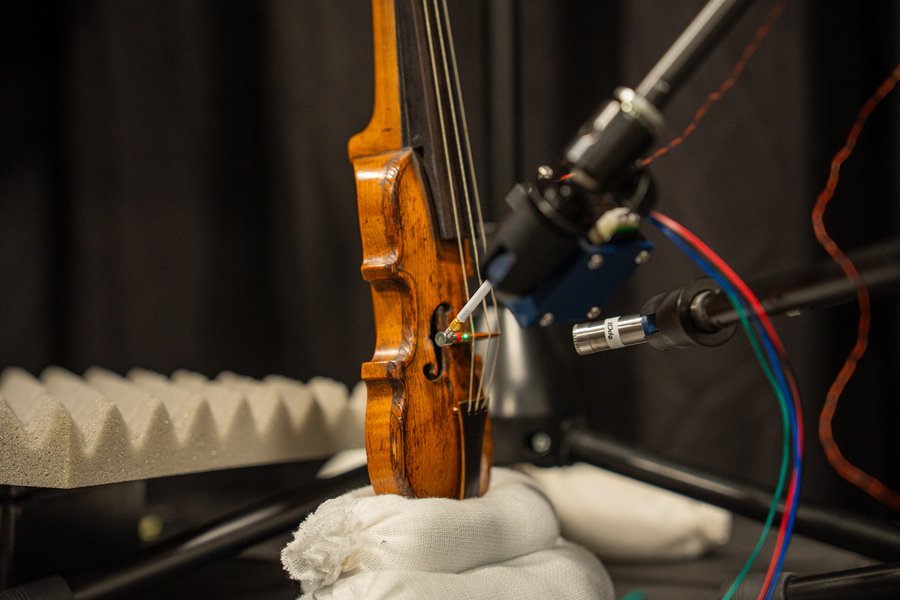
For acoustic measurements, the researchers employ sophisticated techniques. "If we're trying to recreate a violin, we can use an impact hammer — a very small hammer with a transducer in it — so we're imparting a known force signal into the instrument, and then measure the resulting vibrations with a laser Doppler vibrometer," Rau explains.
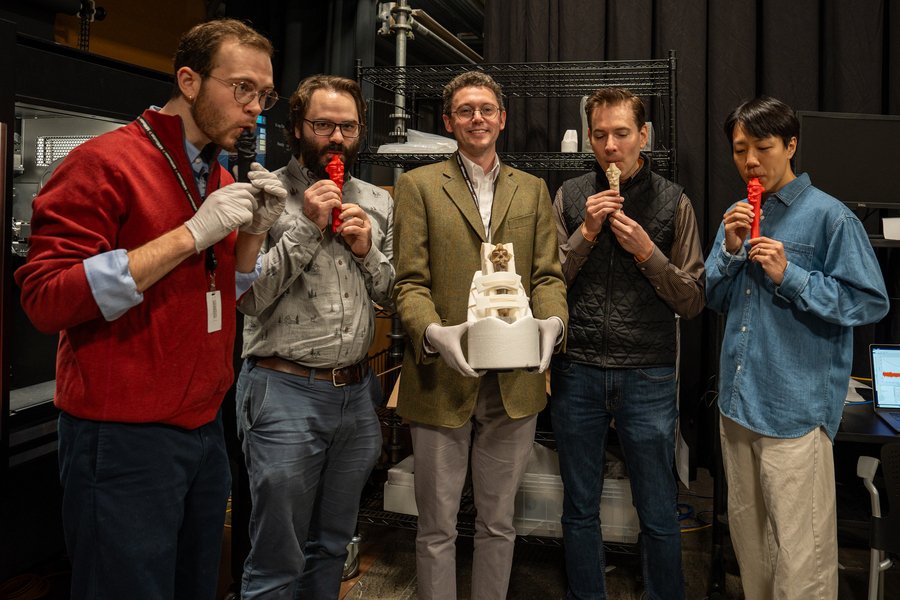
These measurements, combined with numerical simulations, enable the team to digitally replicate the instruments' sound with remarkable accuracy. The process goes beyond simple 3D printing: the team creates plaster mold negatives from 3D-printed copies, which are then cast using slip to produce ceramic replicas like the Paracas whistle from Peru (600-175 BCE).
Materials Science Meets Musical Heritage
Sabatini, who works with CMRAE, emphasizes the project's humanistic implications. "From our perspective, we want to understand the people who made these instruments through both the materials that they're made of, but also the sound that they have."
Undergraduate researchers have joined the effort through MIT's Undergraduate Research Opportunities Program (UROP). Victoria Pham, a second-year materials science and engineering student, is using finite element modeling to study a Veracruz poly-glabular flute from 500-900 CE. "Contributing to the new, budding field of music technology scratches an itch in my brain," Pham says, "and I hope that my work inspires others to get interested in archaeology, material science, or music technology."
Alexander Mazurenko, a second-year student majoring in music and mathematics, sees the project as the perfect intersection of his passions. "The opportunity to participate in this UROP with Professor Rau was the perfect chance to begin to work in the intersection of my passions."
Preserving History Through Sound
The project's goals extend beyond academic research. Katz emphasizes the potential for outreach and community engagement, noting that "it shows how powerful it can be when art and science come together to create new understandings and to help us reactivate these instruments in exciting ways."
So far, the team has scanned approximately 30 instruments from the MFA's collection, with plans to scan at least 100 over the project's duration. The data will be documented and made available for future study, creating a valuable resource for researchers and musicians alike.
Beyond Replication: Understanding Ancient Cultures
The project represents a unique convergence of disciplines. By combining materials science, acoustics, archaeology, and music technology, the researchers are not just recreating instruments—they're unlocking windows into ancient cultures and their musical traditions.
As Katz notes, "They're both visually beautiful and striking objects, but they are meant to be heard." The team's work ensures that these instruments can be experienced as their creators intended, bridging the gap between museum display and musical performance.
The project demonstrates how modern technology can serve as a powerful tool for cultural preservation, allowing us to hear the sounds that shaped human history thousands of years ago. Through this innovative approach, ancient instruments are no longer silent artifacts but living voices from the past, ready to be played and appreciated by new generations.
Comments
Please log in or register to join the discussion