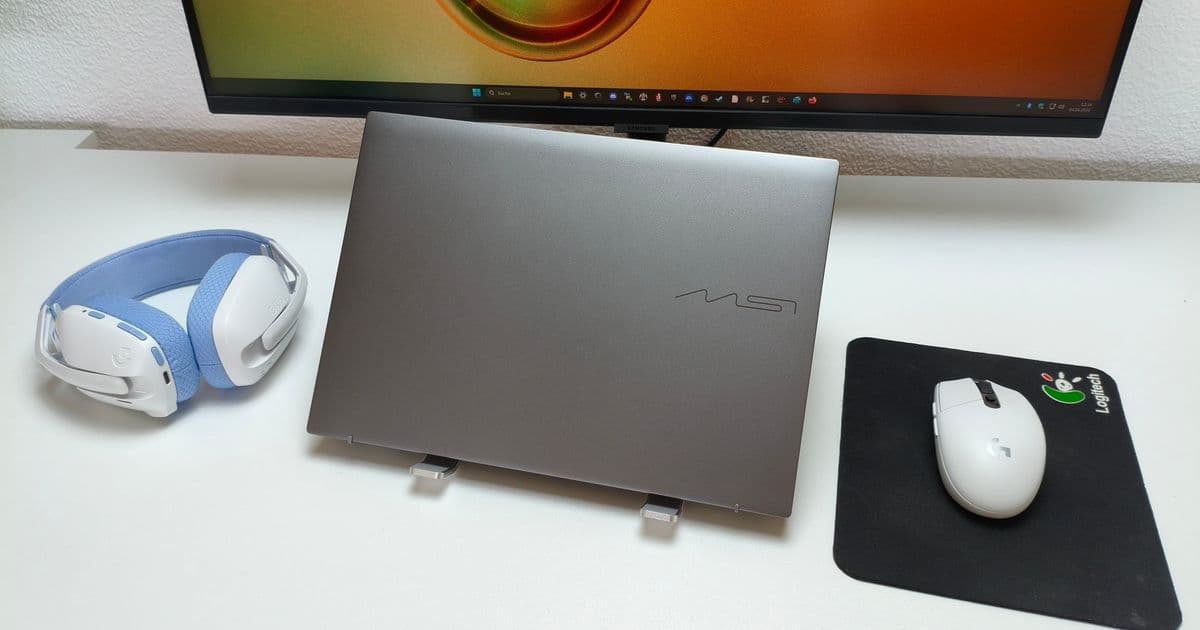
MSI's Prestige 13 AI+ tips the scales at just 900 grams yet carries dual Thunderbolt 4 ports and Intel's Panther Lake Core Ultra 9 386H. The trade-off is a smaller battery, but for buyers who measure laptops by what they carry rather than what they plug in, it's an easy compromise to live with.
MSI's Prestige line has always chased the sweet spot between portability and capability, and the new Prestige 13 AI+ pushes harder on the portability side than almost anything in its class. At roughly 900 grams, this 13-inch subnotebook weighs less than a liter of water, yet it refuses to behave like a featherweight when you actually start working on it. After spending time with it across productivity tasks, light gaming, and real-world battery drains, the picture that emerges is a machine that earns its premium price by getting the fundamentals right.
What's new
The headline change is silicon. The Prestige 13 AI+ ships with Intel's Panther Lake-based Core Ultra 9 386H, paired with the integrated Graphics 4 Xe3 GPU. This is Intel's latest mobile architecture, and the emphasis here is squarely on efficiency rather than raw clock-speed bragging rights. Panther Lake's moderate power draw is the quiet hero of this design, because it allows MSI to build a chassis this thin and light while still delivering around 12 hours of battery life in Wi-Fi testing.
{{IMAGE:2}}
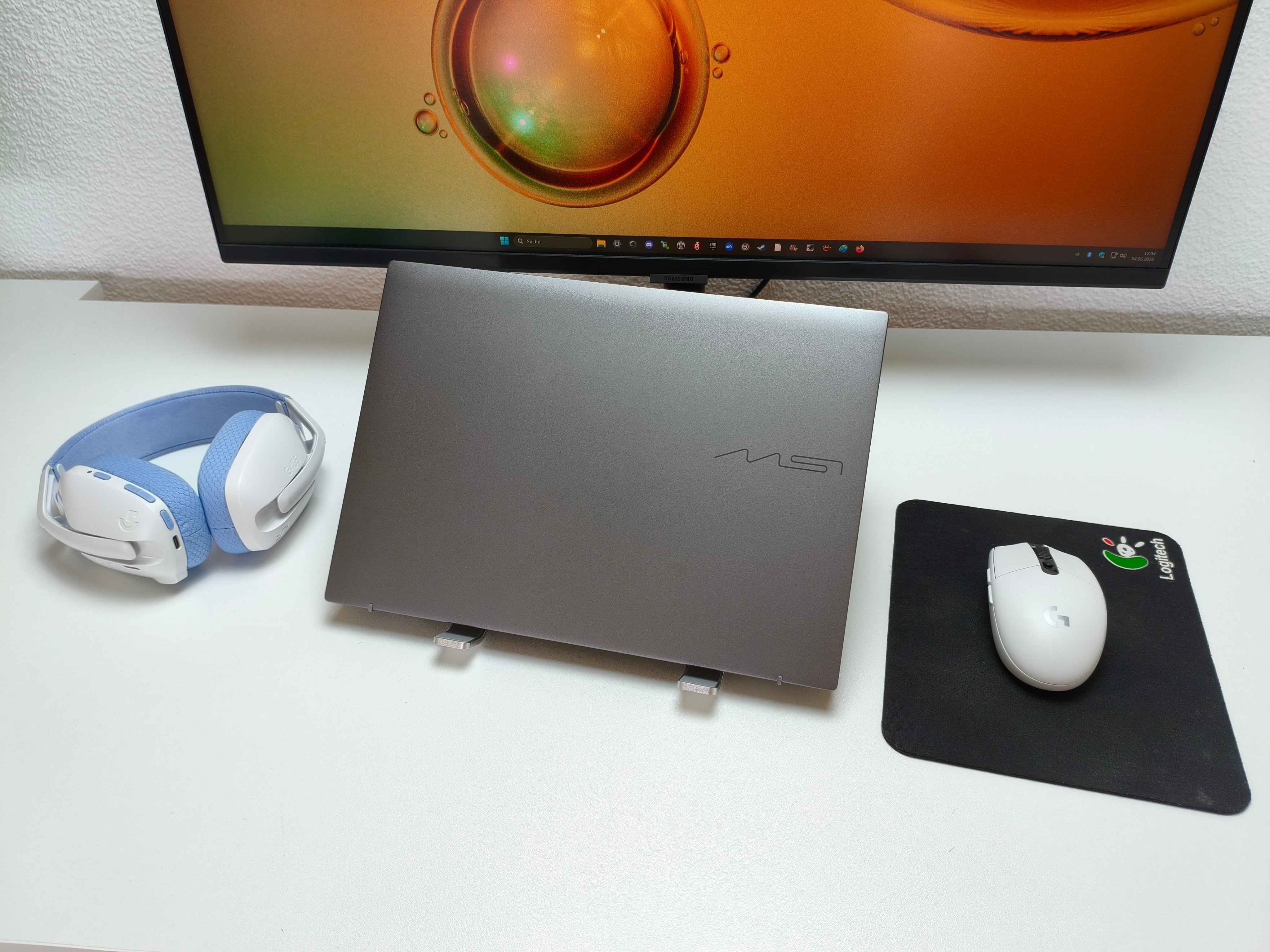
The port selection is where MSI deserves genuine credit. Plenty of ultraportables in this weight class strip connectivity down to one or two USB-C holes and call it a day. The Prestige 13 AI+ instead offers two Thunderbolt 4 ports, the current standard rather than an older USB4 implementation, which means full 40 Gbps throughput, external GPU support, and the ability to drive multiple high-resolution displays from a single cable. For a notebook you could mistake for a tablet when it's closed, the I/O reads like that of a larger machine.
The 54 Wh battery is the most obvious concession to the thin-and-light formula. Competing 14-inch models pack anywhere from 60 to 92 Wh, so MSI is working with a noticeably smaller fuel tank. That it still reaches roughly 12 hours says more about Panther Lake's appetite than about the cell itself. A bigger battery would have unlocked more endurance, but it would also have meant more weight, and weight is clearly the metric MSI optimized for here.
How it compares
The Core Ultra 9 386H is a capable chip, but it does not top its category. In Notebookcheck's CPU performance rating, the Prestige 13 AI+ lands at 72 points. That puts it behind the Honor MagicBook Pro 14 2026 with its Core Ultra 5 338H at 81.8 points and behind the Asus Zenbook A14 running Qualcomm's Snapdragon X2 Elite at 76.6 points. It does, however, edge out the Asus ZenBook 14 OLED with AMD's Ryzen AI 7 350, which sits at 68.8 points, and it comfortably clears the Lenovo Yoga Slim 7 Ultra and the IdeaPad 5i 2-in-1. In practical terms, CPU output is roughly on par with the Ryzen AI 7 350, so you're getting competitive mainstream performance rather than class-leading numbers.
{{IMAGE:3}}
Graphics tell a similar story. The Graphics 4 Xe3 iGPU performs at about the level of AMD's Radeon 860M, which makes it a solid integrated solution but not a gaming powerhouse. In Cyberpunk 2077 at 1080p on the Low preset with FSR off, the Prestige 13 AI+ managed 37.3 fps, almost identical to the Ryzen AI 7 350 system's 37 fps and the average for this Xe3 GPU class. Stepping up to the Medium preset dropped it to 28.8 fps. For context, the Honor MagicBook Pro 14, which carries a more potent Arc B370 graphics configuration, nearly doubled those figures at 72.7 and 57.7 fps respectively. The takeaway is straightforward: this is a chip built for fluid desktop work, media, and occasional light gaming, not for sustained AAA sessions.
Where the Prestige genuinely separates itself is on the scale. It weighs significantly less than most of its rivals, and that difference is felt every time you slide it into a bag or hold it one-handed during a meeting. The competition trades that portability for larger batteries and, in some cases, stronger GPUs. MSI made the opposite bet.
{{IMAGE:4}}
Who it's for
The Prestige 13 AI+ is aimed at the buyer who treats portability as a non-negotiable feature rather than a nice-to-have. If you commute, travel frequently, or simply resent the weight of a typical 14-inch notebook in your bag, the 900-gram chassis is the entire pitch, and it's a convincing one. You get a genuinely premium feel, modern Thunderbolt 4 connectivity that most ultralights skip, and battery life that holds up through a full workday despite the modest cell.
It's a harder sell for anyone who needs the absolute fastest CPU in this bracket or who games regularly on the road. The Honor MagicBook Pro 14 offers more compute and far stronger graphics, and several rivals carry batteries large enough to outlast the Prestige on paper. Those machines also weigh more, which is exactly the point.
MSI has built an ultraportable with almost no compromises in the areas that matter day to day, accepting a smaller battery and mid-pack benchmark scores as the cost of getting under a kilogram. For a 13-inch notebook designed to disappear into a bag, that's a trade worth making, and it's one MSI executed with unusual discipline.
Comments
Please log in or register to join the discussion