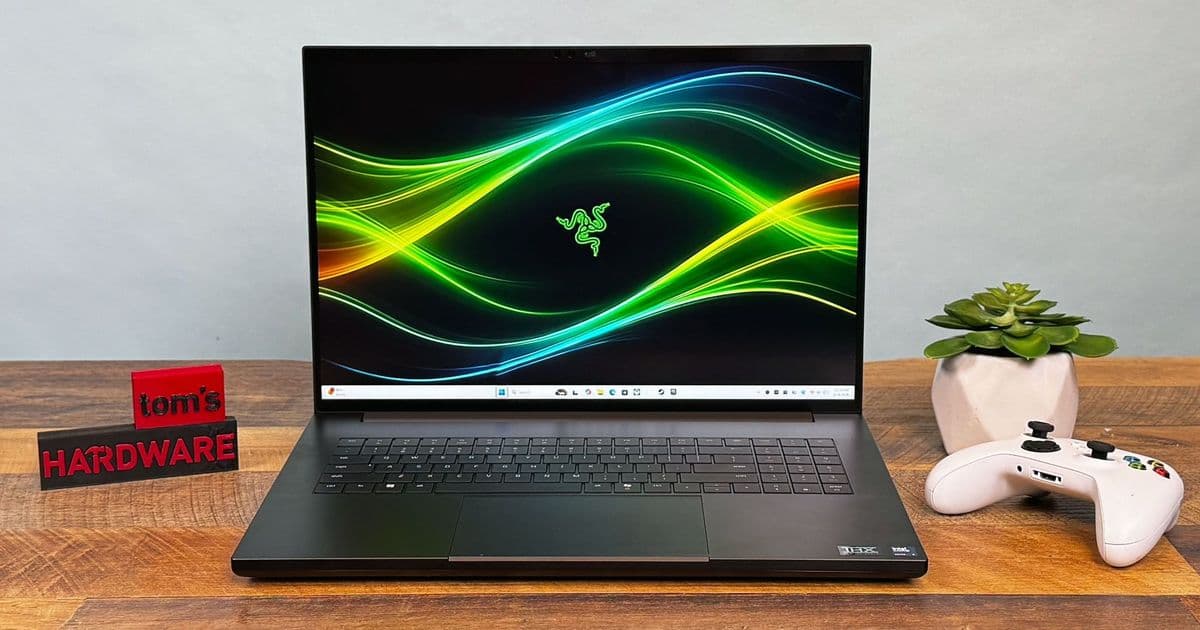
Razer's $5,399 flagship pairs Intel's Core Ultra 9 290HX Plus with a 175W RTX 5090 Laptop GPU and 24GB of GDDR7, yet benchmarks land within a few percent of last year's model. The interesting story is what the components reveal about where mobile chip performance has plateaued, and why a $5,000 machine still ships a PCIe Gen 4 SSD when the board supports Gen 5.
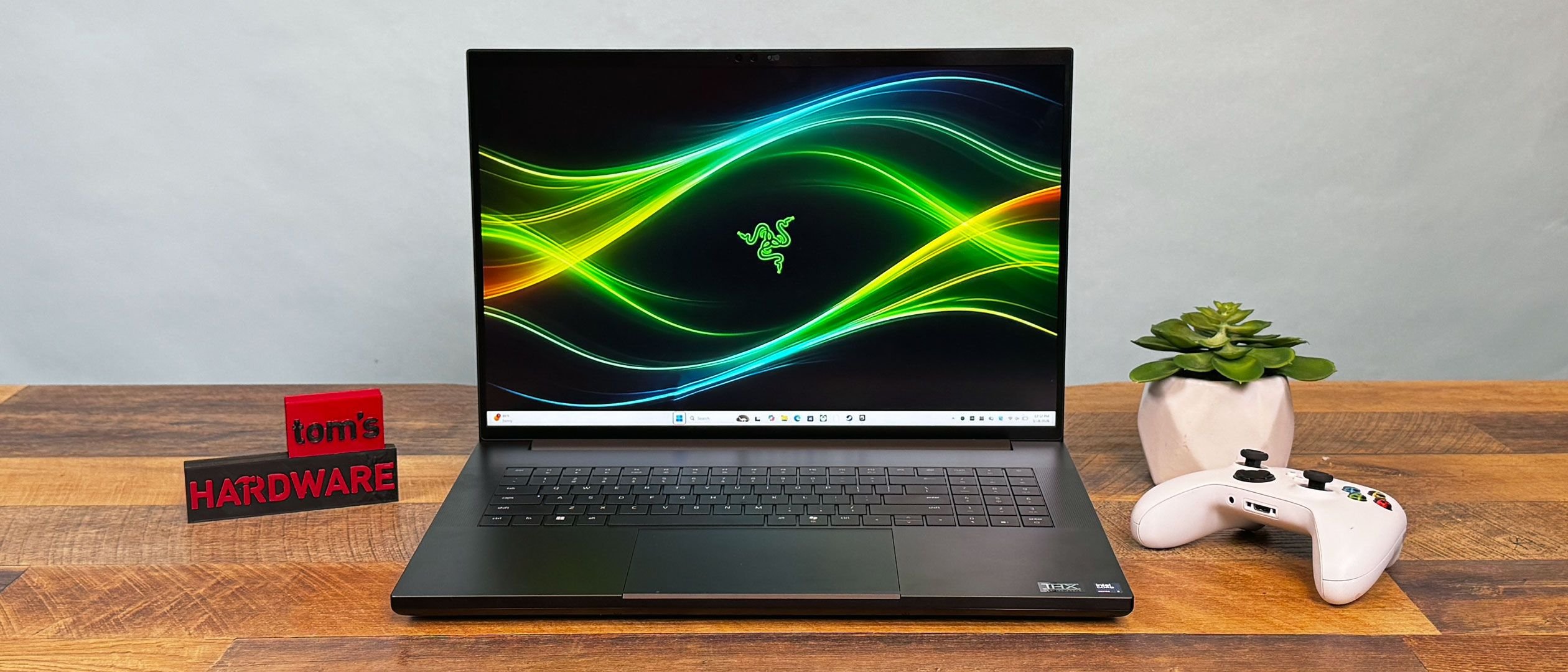
The Razer Blade 18 (2026) arrives at $5,399.99 as configured, $500 above its predecessor, and the spec sheet reads like a parts list assembled to win an argument about who can put the most thermal load into a 7.06-pound aluminum chassis. The headline silicon is an Intel Core Ultra 9 290HX Plus paired with an Nvidia GeForce RTX 5090 Laptop GPU carrying 24GB of GDDR7 at a 175W maximum graphics power. What the benchmarks show, though, is a machine running into the same wall every high-end mobile system hit this cycle: the components are excellent, and the year-over-year gain is close to a rounding error.
The processors, and what "Plus" actually buys
The Core Ultra 9 290HX Plus sits on Intel's Arrow Lake-HX platform, a refresh of the 275HX that powered last year's Blade 18. On Geekbench 6, the 290HX Plus posted a single-core score of 3,170 and a multi-core score of 20,166. Last year's 275HX-based unit, configured with 64GB of memory rather than this year's 32GB, was within a handful of points on both. The multi-core figure actually came in slightly lower. Two competing machines using the identical 290HX Plus, the Alienware 16 Area-51 and the MSI Raider 16 Max HX, edged ahead on both single and multi-core runs, which tells you the chip's ceiling is being set by chassis thermals and firmware tuning rather than by the part number.
That plateau is the real data point. Intel's hybrid core layout here ran its performance cores at an average of 5.14 GHz and its efficiency cores at 2 GHz during a sustained Metro Exodus loop. Those are healthy sustained clocks, but the architecture-to-architecture jump from 275HX to 290HX Plus is small enough that buyers are paying the $500 premium largely for a brighter panel and a slightly faster GPU profile, not for compute.
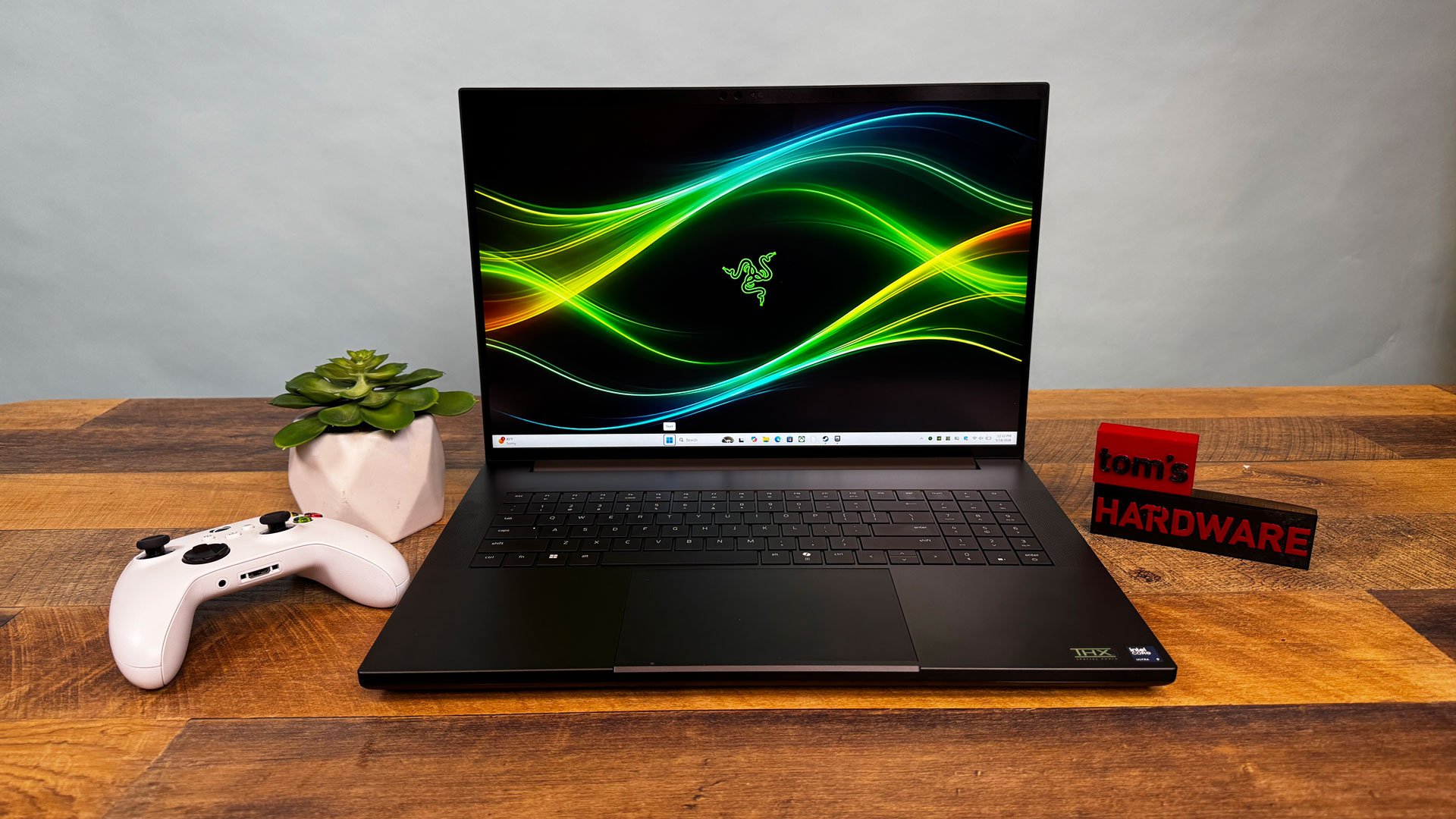
Blackwell mobile: 24GB of GDDR7 at 175W
The RTX 5090 Laptop GPU is the more consequential piece of silicon. Nvidia's Blackwell mobile part runs at a 1,597 MHz graphics clock here and is fed by 24GB of GDDR7, a meaningful capacity step for a laptop and the reason Razer can pitch the top configuration at AI developers. Under the 15-run Metro Exodus stress test, the GPU averaged 1,986.32 MHz and the system held 146.03 FPS, with performance peaking after three runs once the cooling stabilized and never sagging afterward. Sustained-clock stability like that is the metric that separates a workstation-grade thermal design from a marketing slide.
The memory choice matters for the workloads Razer is courting. GDDR7 raises per-pin bandwidth over the GDDR6X generation it replaces, and 24GB of frame buffer is enough to keep larger local models and high-resolution assets resident without spilling to system DRAM. The system memory itself is 32GB of DDR5-6400, with a 128GB option reserved for the $6,999.99 SKU clearly aimed at on-device AI work.
Real gameplay exposed where the bottleneck moves. In Resident Evil Requiem at 3840 x 2400 with path tracing enabled, the Blade held 30 to 37 FPS, dropping to 28 during a heavily occluded chase sequence. Dropping to 2560 x 1440 lifted that to a steady 49 to 57 FPS. The wrinkle is the display pipeline rather than the GPU: the 4K mode forced a 60 Hz refresh ceiling during gameplay, so the path to high frame rates runs through the panel's lower-resolution mode, where the same boss fight cleared 90 FPS.
The dual-mode panel as an engineering compromise
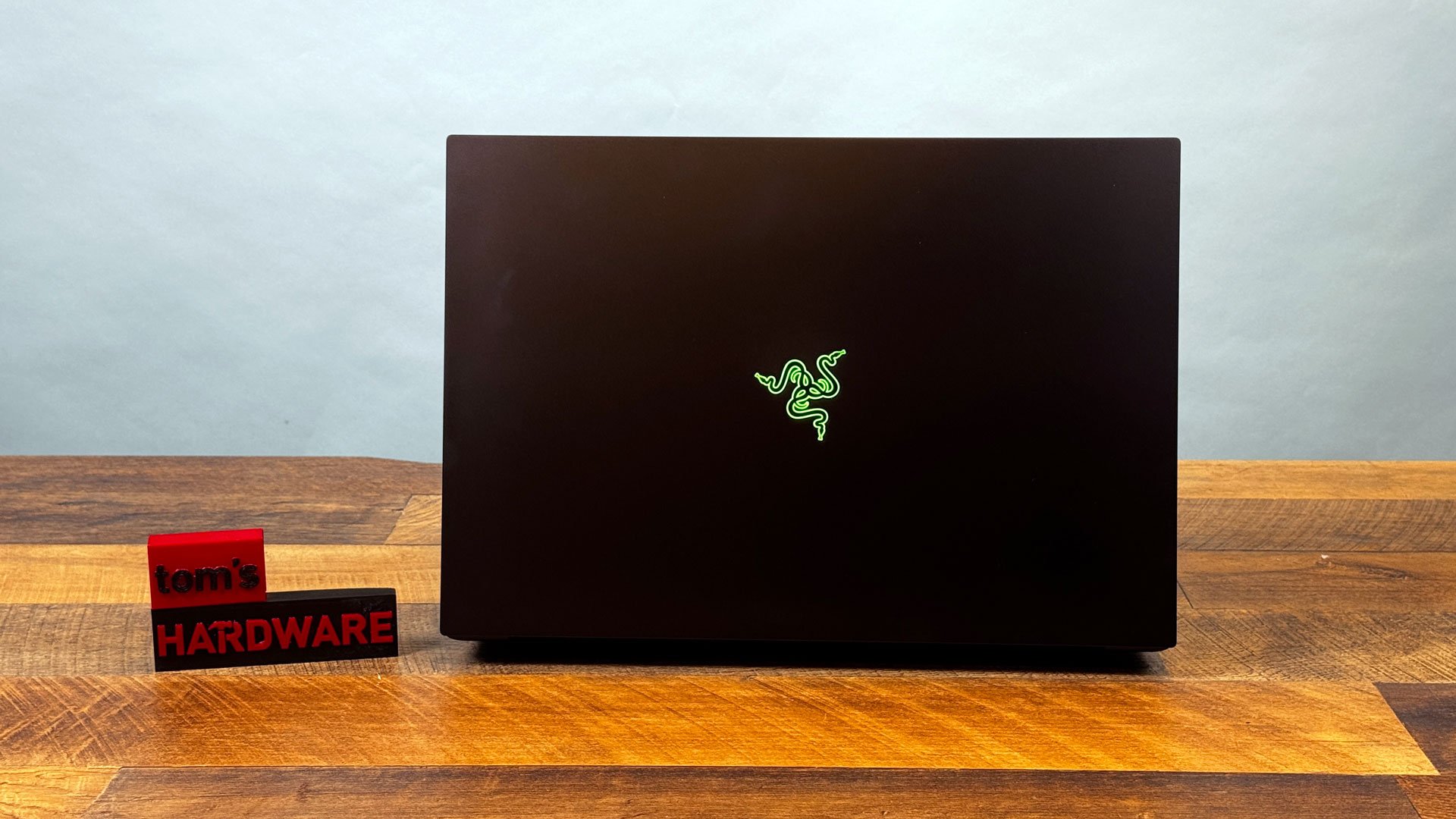
The 18-inch display switches between 3840 x 2400 at 240 Hz and 1920 x 1200 at 440 Hz, a dual-mode arrangement that trades the contrast of OLED for resolution and refresh flexibility. Razer's reasoning is supply-driven: 18-inch OLED panels effectively do not exist in the volume a shipping product needs, so a dual-mode LCD becomes the practical alternative to Mini LED. Brightness climbed to 538 nits, up from 467.6 nits last year and ahead of both the Alienware and MSI competitors. Color volume held steady at 80.8% DCI-P3 and 114.1% sRGB, which is where the LCD compromise shows against the Alienware's OLED.
Storage: the Gen 5 slot Razer left empty
The sharpest criticism is a supply and bill-of-materials decision, not a silicon limitation. The board carries two M.2 slots, one of which supports PCIe Gen 5, yet the review unit shipped a 2TB PCIe Gen 4 NVMe drive. The 25GB file copy ran at 1,670.53 MBps, enough to beat the MSI Raider but far behind the Alienware's Gen 5 SSD. On a machine clearing $5,000, populating the slower interface when the faster one is wired and available reads as a margin choice. The upgrade path is at least open: twelve Torx screws release the base, the second slot accepts a Gen 5 drive, and the RAM is socketed rather than soldered.
Thermals and the cost of density
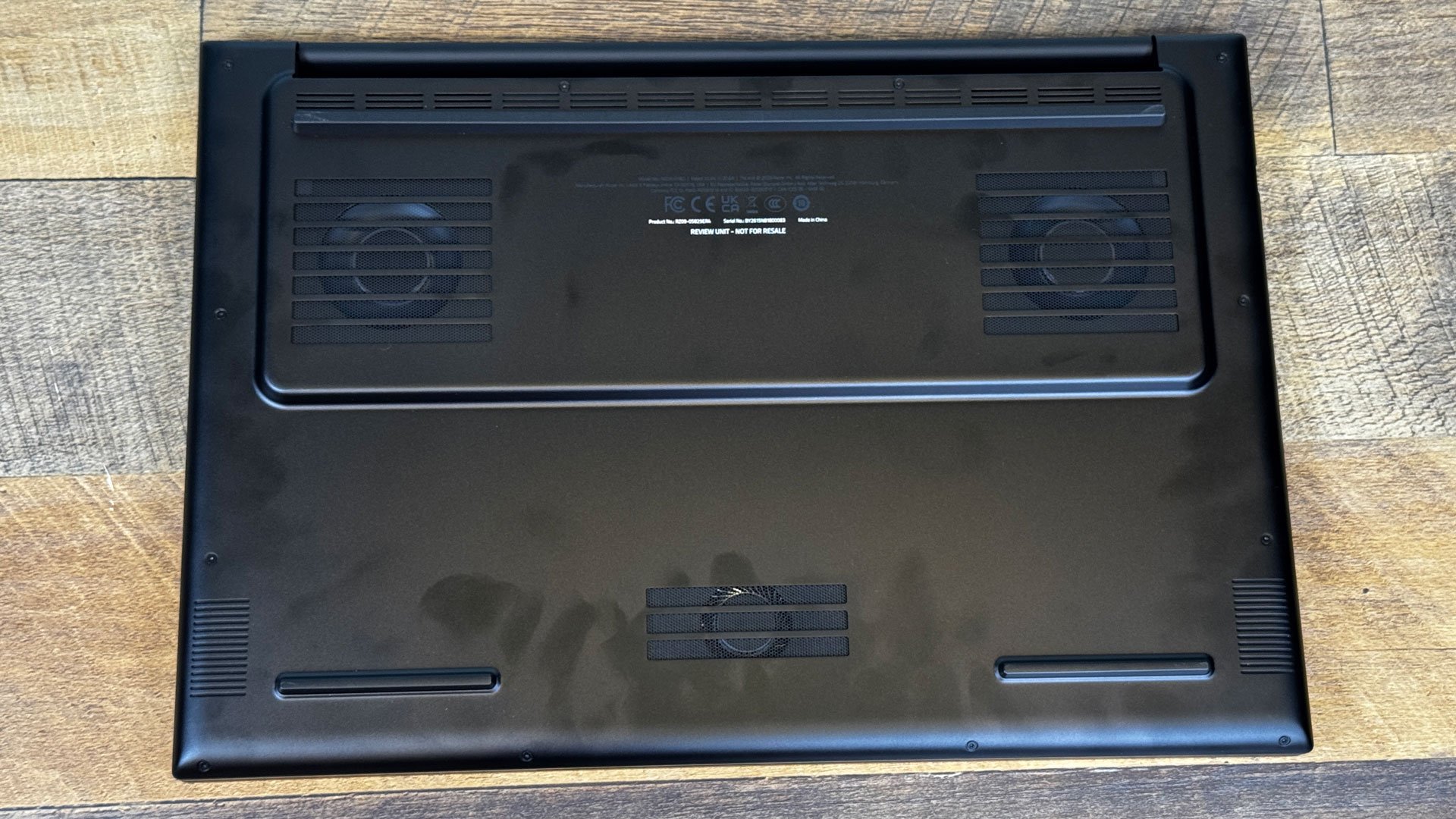
Packing a 175W GPU and a high-clocked HX CPU into this chassis has a heat budget, and the Blade pays it. After the 15-run Metro Exodus loop, the keyboard surface reached 109 F, the bottom hit 116 F, and the CPU measured 88.90 C against a GPU average of 69.62 C. The vapor chamber and tri-fan array keep the silicon inside spec, but the fans are loud and the deck runs warm. The 99 WHr battery, near the regulatory ceiling for carry-on, delivered 5 hours and 31 minutes on a light web and video rundown, ahead of the Alienware's 3:33 but well short of the MSI Raider's 8:34.
Connectivity and the platform stack
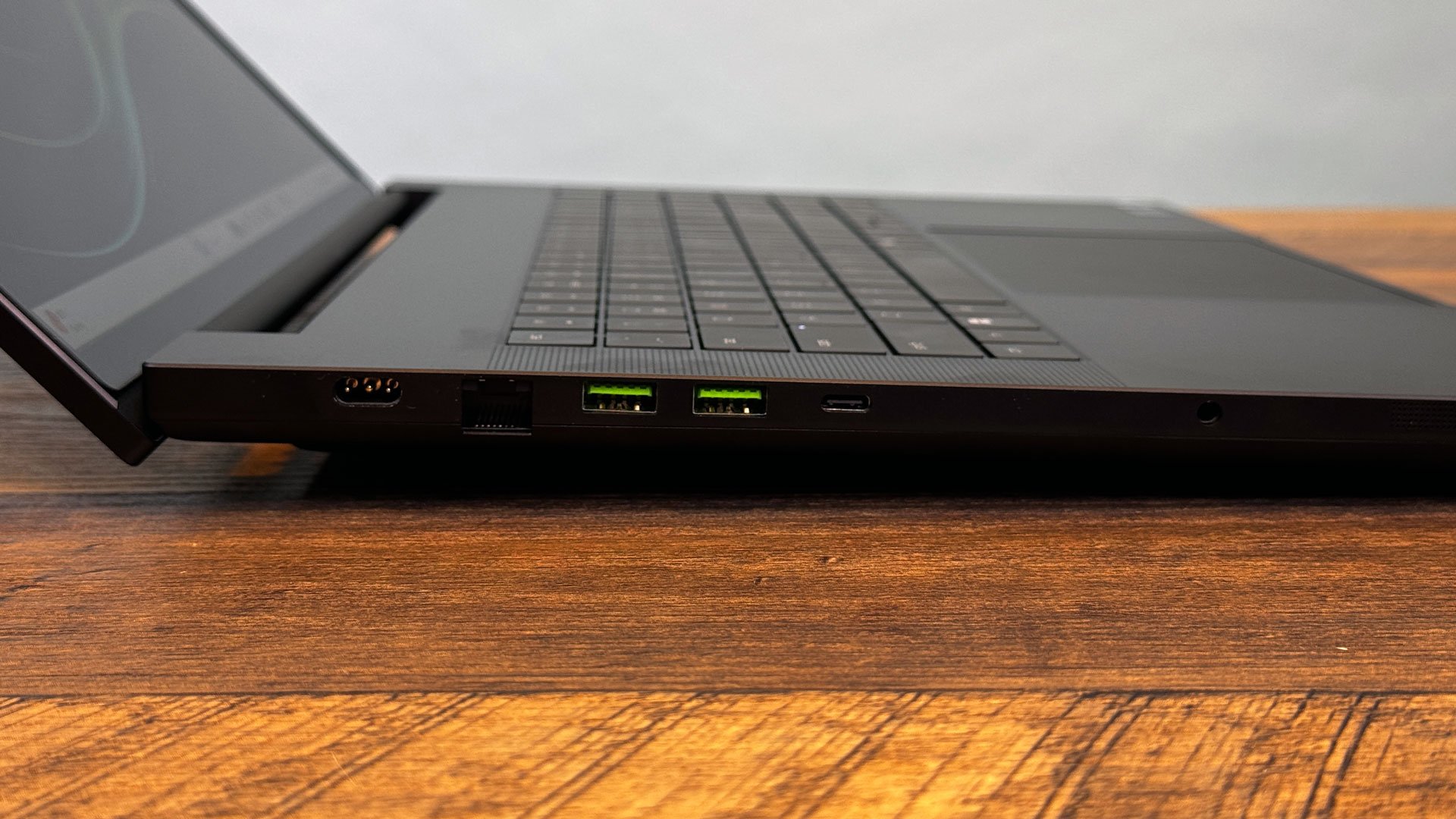
The I/O reflects the current Intel platform generation: a Thunderbolt 5 port alongside a Thunderbolt 4 port, three USB 3.2 Gen 2 Type-A connectors, HDMI 2.1, a UHS-II SD reader, 2.5Gb Ethernet, and Intel Wi-Fi 7 via the BE202 module. The two Thunderbolt ports going unlabeled is a usability miss on a product this expensive, since the bandwidth difference between TB4 and TB5 is exactly the kind of thing a buyer at this tier cares about.
Market implications
The configuration ladder runs from $3,999.99 with an RTX 5070 Ti and 1TB of storage to $6,999.99 with the full 128GB of DDR5 for AI workloads, with the reviewed 5090 unit at $5,399.99 in the middle. The strategic problem for Razer is that last year's 275HX models remain on shelves at $500 less, and the compute delta between the two CPU generations is small enough that the older stock is the rational buy for anyone who does not specifically want the brighter panel. That is the broader pattern across this mobile cycle: Intel's HX refresh and Nvidia's Blackwell mobile parts are genuinely capable, but the generational uplift has narrowed to the point where panel brightness and frame-buffer capacity, not raw silicon performance, are doing the work of justifying the price increase. For supply watchers, the empty Gen 5 slot and the LCD-over-OLED panel decision are the more telling signals, both showing where component availability and margin targets are shaping flagship hardware more than transistor budgets are.
Readers evaluating the lineup can compare configurations on Razer's official Blade 18 page and check Intel's Core Ultra HX platform specifications and Nvidia's GeForce RTX 50 Series laptop GPU details for the underlying silicon.
Comments
Please log in or register to join the discussion