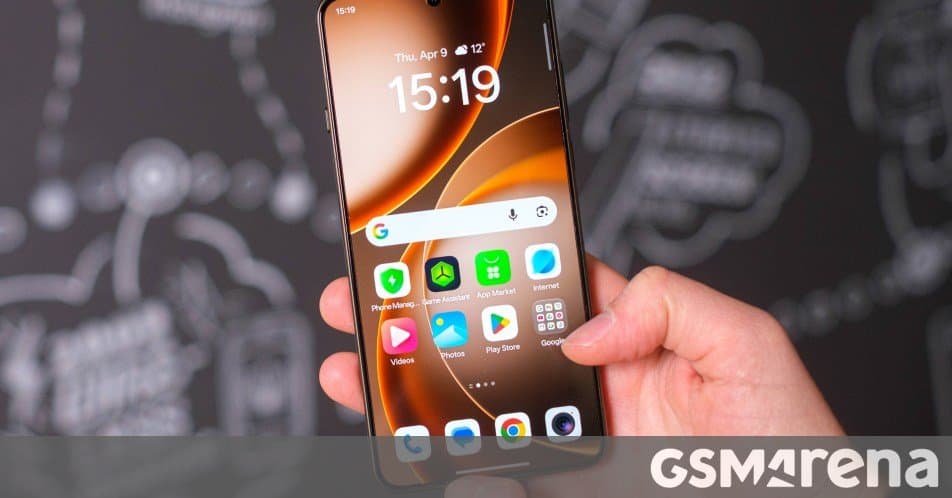
A rumor pegged ColorOS 17 as Oppo's answer to Apple's translucent Liquid Glass look. The company's own design director just shot it down, saying the next version is about fixing fundamentals, not chasing a new aesthetic.
Earlier this month, a report out of China set expectations that Oppo's ColorOS 17 would borrow heavily from Apple's Liquid Glass design language, the translucent, depth-heavy interface Apple introduced with iOS 26. The rumor suggested Oppo would tone down the transparency rather than copy it wholesale, landing on something glassy but more legible than Apple's first attempt.
That expectation now looks misplaced. ColorOS design director Chen Xi posted on Weibo confirming that ColorOS 17 will not arrive with a sweeping visual redesign. Instead, the team is putting its effort into improving the basic user experience, the kind of work that rarely generates leaks but tends to matter more day to day. He also acknowledged that some competitors may indeed be heading in a Liquid Glass direction, but said Oppo, at least for now, is not among them.
What's actually changing
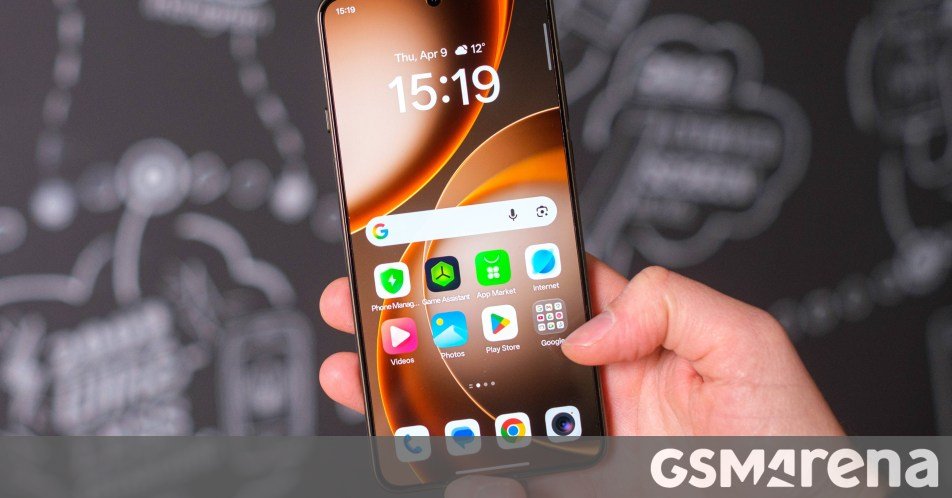
The headline here is restraint. Rather than rebuilding the interface around a new look, Oppo is signaling a maintenance-and-refinement cycle. Chen Xi also indicated that some new features are being postponed. It is not clear whether those land in an interim release like ColorOS 17.1 or 17.5, or whether they slip all the way to ColorOS 18. That ambiguity matters for anyone trying to plan around an upgrade, because a feature-light major release followed by meaningful point updates is a different ownership experience than a single big drop.
ColorOS runs on top of Android across Oppo's lineup, and design-language shifts on Android skins carry weight beyond aesthetics. A heavy translucency effect, the core idea behind Liquid Glass, leans on the GPU to blur and composite layers in real time. On flagship silicon that is cheap, but ColorOS spans a wide range of hardware, including midrange chips where constant live blur can cost battery and introduce frame drops. Choosing to refine the existing design instead of importing an expensive new effect is a defensible call for a skin that has to scale down as well as up.
The Liquid Glass context
Worth understanding is what Oppo is choosing not to copy. Apple's Liquid Glass, introduced in iOS 26, pushed translucency and refraction across system surfaces. The reception was mixed enough that Apple is already adjusting course. In iOS 27, Apple is reducing the default transparency and adding a slider so users can dial the effect to taste. In other words, the very design Oppo was rumored to be chasing is being walked back at the source.
That makes Oppo's decision look less like caution and more like timing. Adopting a polarizing look right as its originator softens it would have been awkward. By holding off, Oppo avoids shipping a trend that is already cooling.
Ecosystem angle
For existing Oppo owners, a no-redesign release is mostly good news. Major UI overhauls tend to relearn muscle memory, break third-party theming, and occasionally regress accessibility. A cycle focused on the fundamentals, smoother animations, fewer rough edges, better consistency, is the kind of update that ages well even if it does not photograph dramatically for launch slides.
It also keeps ColorOS visually distinct from iOS at a moment when several Android makers appear tempted to converge on Apple's aesthetic. Differentiation is one of the few levers a skin maker has once the underlying Android platform is shared, and Oppo is opting to keep its own identity rather than blur into the iOS look.
Whether users wanted the glassy treatment is a separate question, and one that will get answered the moment ColorOS 17 ships. For now, the official word is clear: the next ColorOS is about polish, not a new coat of paint.
Comments
Please log in or register to join the discussion