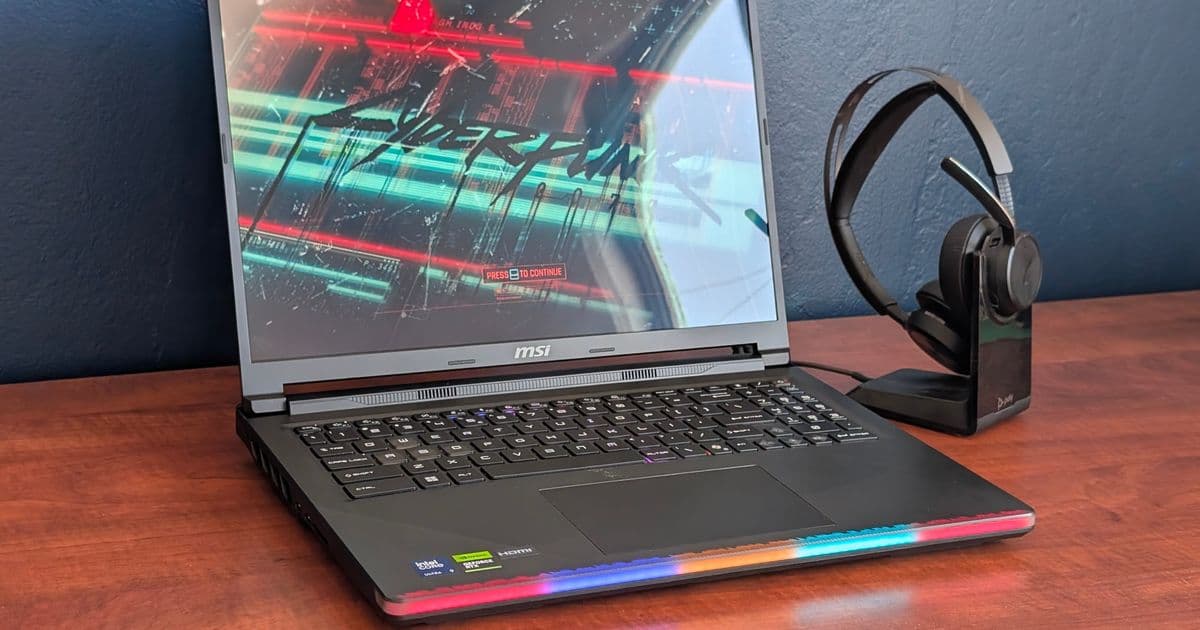
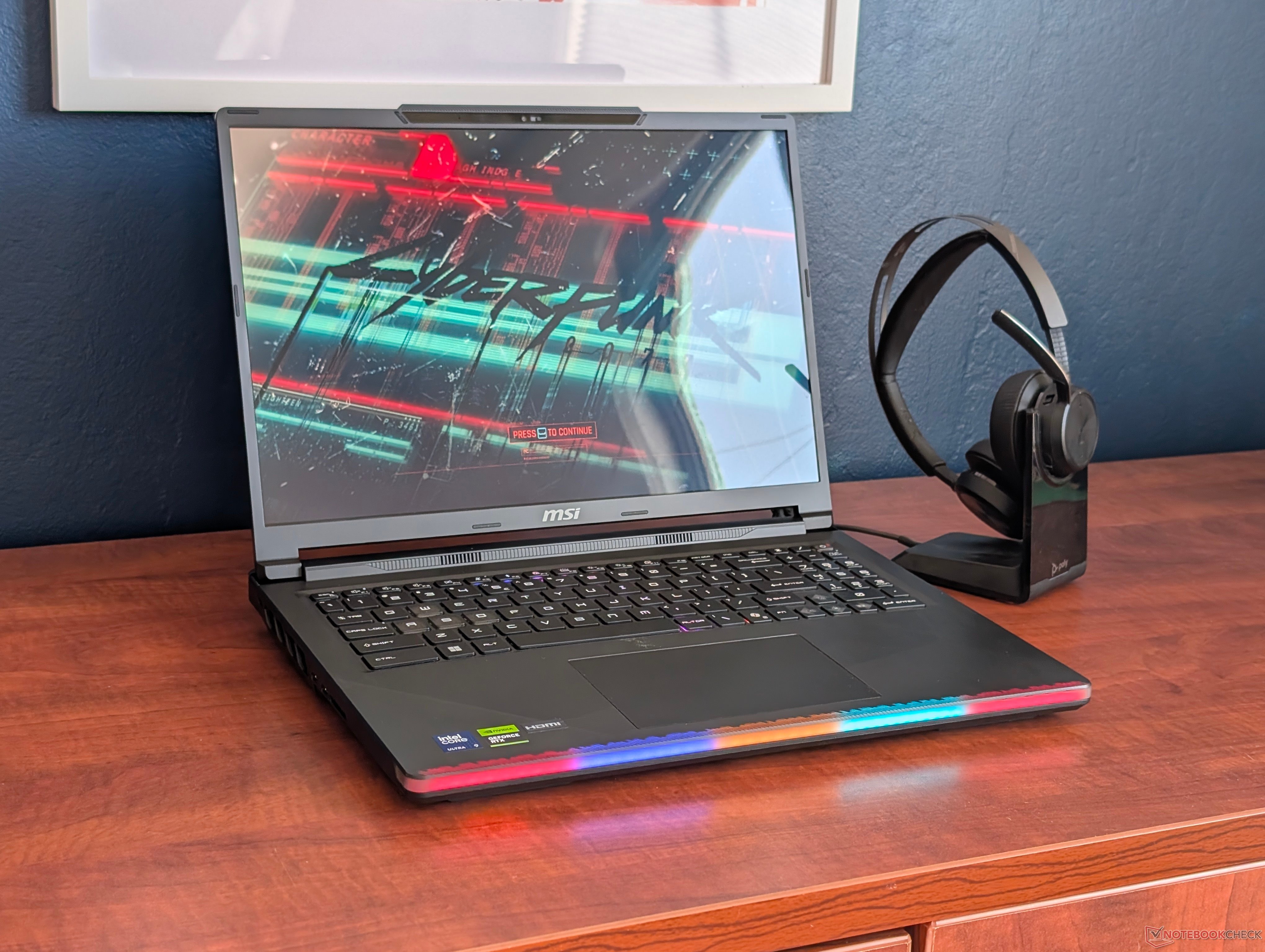
MSI's new 16-inch flagship tops the benchmark charts with the Core Ultra 9 290HX Plus, but it leaves out two display features that competitors at this price include as standard.
MSI puts its Raider and Titan laptops at the top of its gaming stack, which usually means top-tier silicon, premium panels, and a feature list long enough to justify the price. The new Raider 16 Max HX delivers on raw performance, but it trims two display features that buyers at the $3000-plus level have come to expect. That makes it an easier laptop to recommend for frame rates than for the complete package.
What's new
The headline is the Intel Core Ultra 9 290HX Plus, which sits at the very top of Intel's mobile HX lineup. In benchmarks it outperforms nearly every 16-inch gaming laptop in Notebookcheck's database, so there's no argument about the ceiling here. The chip is paired with a discrete GPU rated for up to 175 W, though you don't get that figure by default. Owners need to enable Apex mode or Cooler Boost mode through MSI Center to release the full power limit. Out of the box, the laptop runs more conservatively, which is worth knowing if your first benchmark run comes in lower than the reviews promise.
The display is a Samsung OLED panel, model ATNA60HU01-0. That part number matters more than it looks, because it's a near-sibling of the ATNA60HU06-0 used in the Razer Blade 16. Same family, same maker, slightly different revision.
How it compares
The comparison to the Blade 16 is where the Raider's omissions show up. The Razer supports both Advanced Optimus and G-Sync. The Raider supports neither. Advanced Optimus lets the system switch between the integrated and discrete GPU automatically and without a reboot, routing the display through whichever processor makes sense at the moment. Without it, the Raider falls back on a standard MUX switch. You can still pick between the integrated Intel graphics and the discrete GPU, but every switch requires a full restart. That's a real friction point for anyone who wants long battery life on the integrated GPU during the day and full discrete power at night, since each transition costs you a reboot.
G-Sync's absence is the other gap. Variable refresh on the panel still works through the standard adaptive sync path, but losing Nvidia's hardware-validated G-Sync means giving up one of the features that typically separates a flagship display from a mainstream one. For a laptop in this price tier, having a competitor with the same panel maker offer both features makes the Raider's spec sheet look thinner by direct comparison.
This isn't a one-off either. MSI has shipped several recent models without Advanced Optimus, including the Titan 18 HX and the Raider 18 HX. The likely explanation is supply and panel sourcing rather than a deliberate cost cut. Advanced Optimus depends on specific panel and controller support, and the small revision difference between the Raider's ATNA60HU01-0 and the Blade's ATNA60HU06-0 may be exactly the variable that decides whether the feature is available. If MSI couldn't secure the panel revision that supports it, the MUX-only approach becomes the fallback.
Who it's for
If your priority is the highest sustained performance you can get in a 16-inch chassis, the Raider 16 Max HX earns its name and its benchmark wins, provided you remember to flip on Apex or Cooler Boost mode. Buyers who switch between integrated and discrete graphics frequently, or who specifically want G-Sync, will feel the omissions every day and should weigh the Blade 16 or another competitor that includes both. At this price, those features aren't extras, they're part of what the segment has trained buyers to expect, and MSI is asking flagship money while leaving them on the table.
Comments
Please log in or register to join the discussion