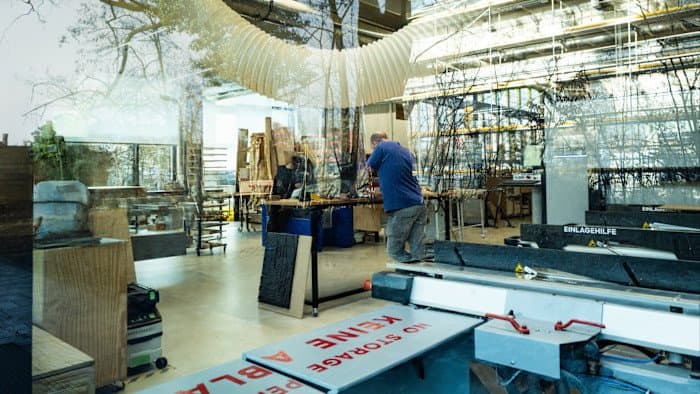
The Financial Times ranks UnternehmerTUM as Europe's leading startup hub for the third consecutive year, highlighting its support for over 1,000 companies since 2002 and its connection to Stanford University's entrepreneurial ecosystem.
Munich's UnternehmerTUM has been named Europe's top startup hub by the Financial Times for the third consecutive year, cementing its position as a leading center for entrepreneurial innovation on the continent. The center, which has supported more than 1,000 companies since its founding in 2002, continues to demonstrate the strength of Germany's startup ecosystem despite facing increasing competition from emerging hubs across Europe.
The Financial Times ranking evaluates startup hubs based on factors including the number of successful companies launched, available funding, talent pool, and connections to global innovation networks. UnternehmerTUM's consistent top placement reflects its comprehensive approach to supporting entrepreneurs from initial concept through scaling and exit.
A key factor in UnternehmerTUM's success is its strong connection to Stanford University's entrepreneurial ecosystem. The center has established partnerships that allow German entrepreneurs to access Silicon Valley's networks, mentorship, and investment opportunities. This transatlantic bridge has proven particularly valuable as European startups increasingly seek to compete on a global scale.
Since 2002, UnternehmerTUM has helped launch companies across diverse sectors including deep tech, healthcare, mobility, and industrial automation. The center provides entrepreneurs with workspace, technical equipment, expert mentoring, and access to a network of over 300 industry partners. This comprehensive support system has been crucial in helping startups navigate the challenging path from idea to market-ready product.
The center's success comes at a time when European startup hubs are experiencing rapid evolution. While traditional centers like London, Paris, and Berlin continue to grow, newer hubs in Lisbon, Stockholm, and other cities are emerging as serious contenders. Lisbon's Unicorn Factory, for instance, saw 300 businesses join in 2025 compared to 250 in 2024, with 17 unicorns relocating to the city since the hub's 2022 launch.
Stockholm presents an interesting contrast to Munich's stability. Many of the Swedish capital's thriving tech businesses are considering relocation as they look to scale up, amid growing US interest in Swedish AI startups like Lovable and Legora. This dynamic highlights the challenges faced by established hubs in retaining their most successful companies as they mature.
UnternehmerTUM's approach differs from many other European hubs in its emphasis on deep technology and industrial applications. While consumer-facing startups often dominate media attention, the Munich center has focused on supporting companies that develop complex technical solutions for manufacturing, energy, and other industrial sectors. This focus aligns well with Bavaria's strong industrial base and engineering talent pool.
The center's success also reflects broader trends in European startup development. Unlike the US, where venture capital has long been concentrated in a few geographic areas, European hubs have developed more specialized focuses. Munich's strength in industrial and deep tech complements London's financial services expertise and Paris's growing AI ecosystem.
Looking ahead, UnternehmerTUM faces both opportunities and challenges. The center is well-positioned to support startups working on critical technologies like artificial intelligence, quantum computing, and sustainable energy solutions. However, it must also contend with increasing competition from both established and emerging European hubs, as well as the ongoing challenge of helping European companies scale to global market leaders.
The Financial Times ranking serves as both recognition of UnternehmerTUM's achievements and a benchmark for continued improvement. As European startup ecosystems mature and evolve, centers like UnternehmerTUM will play a crucial role in determining whether the continent can produce the next generation of global technology leaders.
For entrepreneurs considering where to launch their ventures, UnternehmerTUM's top ranking provides strong validation of Munich's startup ecosystem. The center's track record of supporting over 1,000 companies, combined with its connections to global innovation networks, makes it an attractive option for founders working on technically complex solutions with industrial applications.
As European startup hubs continue to develop and specialize, the competition highlighted by rankings like the Financial Times survey will likely intensify. However, UnternehmerTUM's consistent top placement suggests that its comprehensive support model, strong industry connections, and focus on deep technology provide a sustainable competitive advantage in Europe's evolving entrepreneurial landscape.
Comments
Please log in or register to join the discussion