The GNOME 50 release candidate brings significant performance improvements for NVIDIA users, SDR-Native color support, and enhanced HDR capabilities to the Wayland compositor.
The GNOME 50 release candidate brings significant performance improvements for NVIDIA users, SDR-Native color support, and enhanced HDR capabilities to the Wayland compositor.
NVIDIA Performance Breakthrough
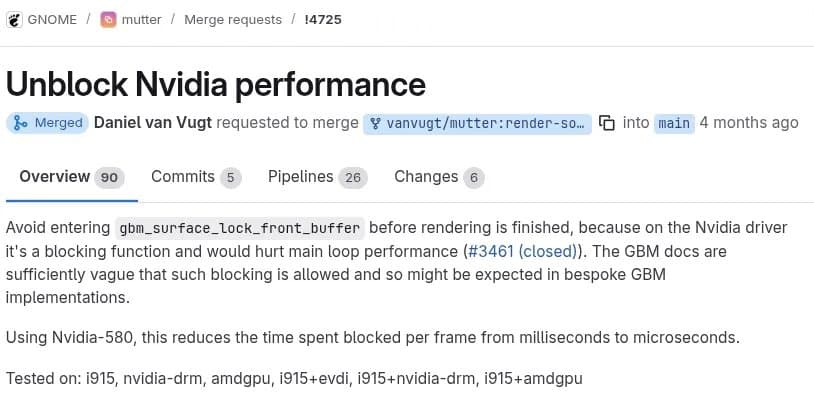
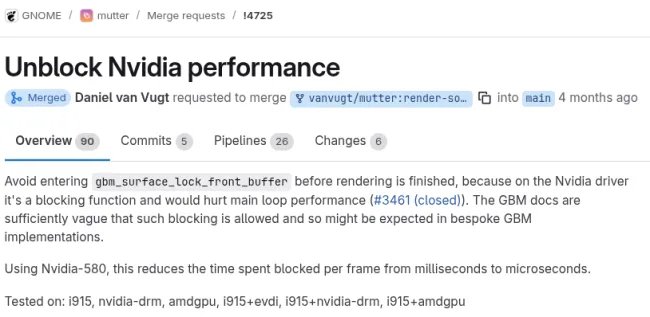
The most impactful change in Mutter 50.rc addresses long-standing performance issues with NVIDIA GPUs. The development team has implemented various workarounds that dramatically reduce frame-blocking times when using the NVIDIA R590 Linux driver. According to the merge notes, this optimization reduces the time spent blocked per frame from milliseconds to microseconds - a substantial improvement that should make GNOME feel significantly more responsive on NVIDIA hardware.
This performance boost comes alongside a technical change in how secondary GPU rendering is handled. Instead of using EGL surfaces, Mutter 50.rc now employs Framebuffer Objects (FBOs) for this purpose. This approach not only benefits NVIDIA drivers but also maintains compatibility with other graphics drivers while reducing code complexity. The FBO implementation also enables 10 bits per color scanout buffers when using the NVIDIA driver, providing better color depth support.
HDR and Color Management Enhancements
HDR support receives multiple improvements in this release. The compositor now includes proper HDR screen sharing support, addressing a significant gap in previous versions. Additionally, SDR-Native color mode support has been merged, specifically designed for wide color gamut displays. This feature allows for more accurate color reproduction on modern monitors that support extended color spaces.
Mutter 50.rc also implements Wayland color management v2 protocol support, bringing the compositor in line with the latest standards for color handling across different displays and content types. The release includes a specific optimization to disable tone mapping when HDR content is detected, ensuring that high dynamic range visuals maintain their intended appearance without unnecessary processing.
Additional Improvements and Fixes
The release candidate includes several other notable changes:
- VRR Support: Mutter now properly handles wp_commit_timing with Variable Refresh Rate support, improving the experience on modern displays with adaptive refresh rates
- Software Cursor Fix: Direct scanout functionality has been fixed when using software cursors, resolving display issues for certain configurations
- DevKit Enhancements: The development toolkit now includes clipboard integration and multi-monitor support, making it more useful for application testing
- Stability Improvements: Various crash fixes and memory leak resolutions have been implemented to improve overall system stability
Release Timeline and Context
With two weeks remaining until the GNOME 50 stable release, the Mutter 50.rc represents the final major milestone before general availability. This release candidate follows the typical GNOME development cycle, where the compositor receives its last round of enhancements and bug fixes before the final release.
The timing is particularly significant given the recent focus on Wayland adoption and the ongoing challenges with NVIDIA driver compatibility. By addressing these performance bottlenecks so close to the stable release, the GNOME team demonstrates their commitment to providing a smooth experience across different hardware configurations.
Looking Ahead
As GNOME 50 approaches its final release, users can expect a more responsive and visually capable desktop environment, particularly those using NVIDIA hardware. The combination of performance optimizations, enhanced HDR support, and improved color management positions Mutter 50 as a significant step forward in the Wayland compositor space.
For users eager to test these improvements, the release candidate is available now through standard GNOME development channels. However, as with any release candidate, it's recommended to wait for the stable release if you require a production-ready system.
The GNOME Shell 50.rc release, also announced today, includes various fixes and improved support for logind inhibitors in system actions, complementing the Mutter improvements and completing the core GNOME 50 experience.
Comments
Please log in or register to join the discussion