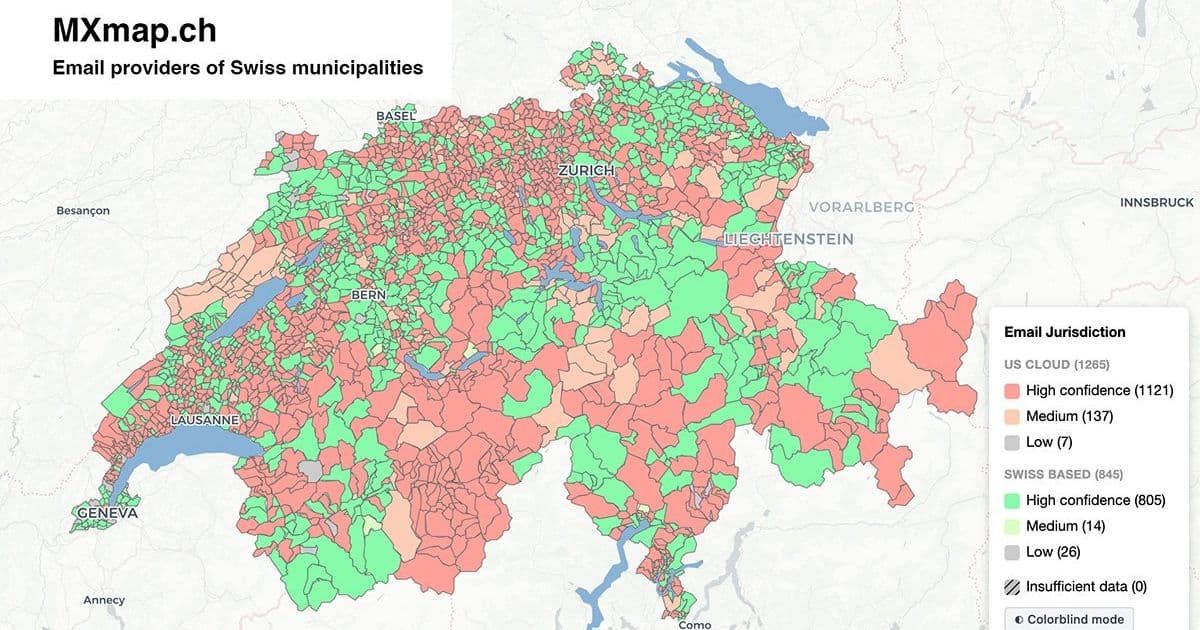
MXmap maps Switzerland's 2,100+ municipalities' email providers using DNS records and network signals, revealing US CLOUD Act exposure and Swiss-based alternatives.
A new interactive map called MXmap has launched to visualize which email providers handle official municipal communications across Switzerland's roughly 2,100 municipalities. The project aims to make visible the current landscape of digital service providers and raise awareness about data sovereignty concerns, particularly regarding US-based providers subject to the CLOUD Act.
How MXmap Works
The map analyzes each municipality's official domain through 11 different signals including DNS records, SMTP banners, ASN lookups, and a public Microsoft API endpoint. These signals are then classified by provider type with confidence scoring to determine whether a municipality uses US-based services, Swiss-based providers, or has insufficient data available.
Digital Sovereignty Context
A key motivation behind MXmap is highlighting the implications of the US CLOUD Act, which allows US authorities to request stored data regardless of where it's physically hosted. This creates potential sovereignty concerns for municipalities using US-based email services for official communications. The map groups municipalities by jurisdiction and provider type to make these patterns visible at a glance.
Current Landscape Findings
As of the latest update on March 24, 2026, the data shows:
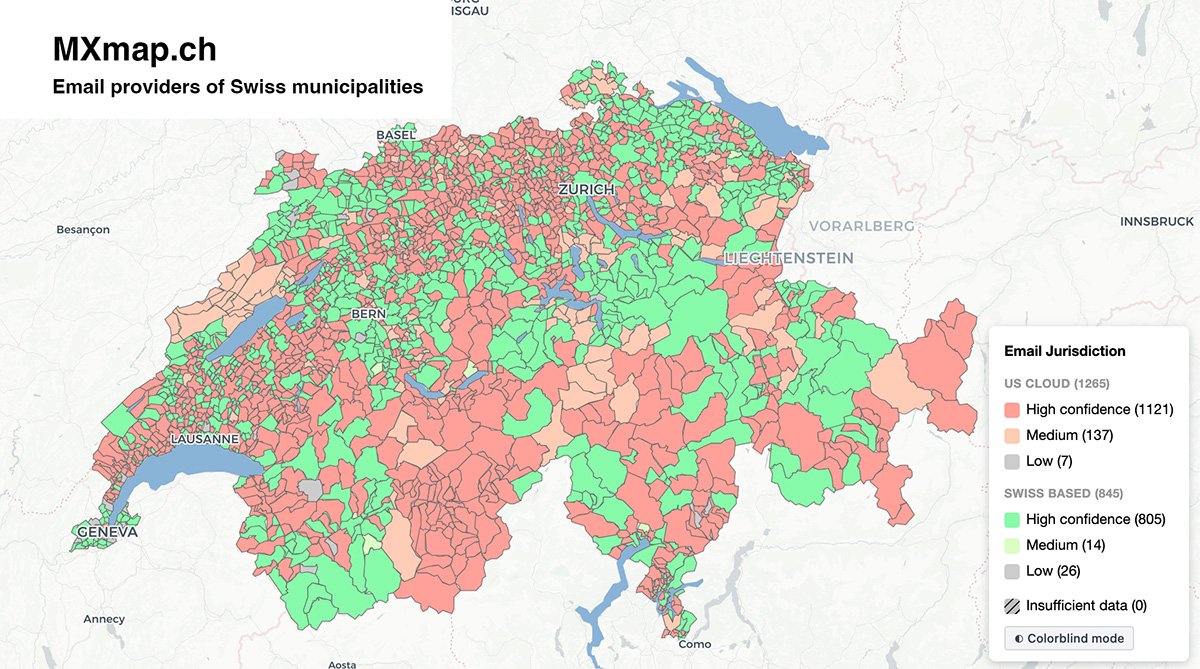
- US CLOUD providers: 1,265 municipalities (high confidence for 1,121, medium for 137, low for 7)
- Swiss-based providers: 845 municipalities (high confidence for 805, medium for 14, low for 26)
- Insufficient data: 0 municipalities
The map includes accessibility features like colorblind mode and uses OpenStreetMap data with CARTO tiles.
Technical Approach and Limitations
MXmap relies on public DNS records and network signals to infer mail routing and authorized senders. The project notes that DNS records indicate routing patterns rather than necessarily showing where data is actually stored. This distinction is important for understanding the limitations of the analysis.
The project is open source with code and data available on GitHub, and users can submit issues to report errors or inaccuracies.
Implications for Swiss Municipalities
This visualization tool provides Swiss municipalities and citizens with transparency about their digital infrastructure choices. As digital sovereignty becomes an increasingly important policy consideration, tools like MXmap help make abstract concerns about data jurisdiction concrete and actionable by showing the current state of affairs across all Swiss municipalities.
Comments
Please log in or register to join the discussion