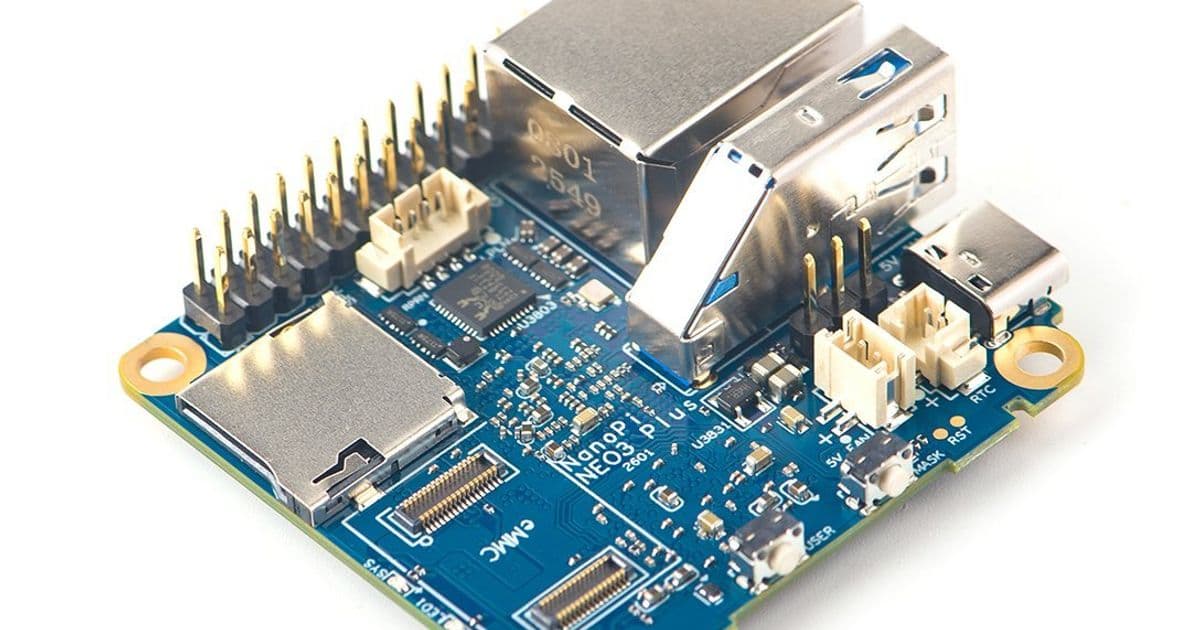
The NanoPi NEO03 Plus offers developers an ultra-compact, budget-friendly option for headless computing, perfect for IoT development, mobile app testing servers, and lightweight self-hosted services.
The FriendlyELEC NanoPi NEO03 Plus represents an interesting addition to the budget single-board computer market, targeting developers and hobbyists who need a tiny, affordable headless system. Measuring just 48 x 48mm (1.9″ x 1.9″), this palm-sized computer packs enough capability for specific use cases while maintaining an extremely accessible price point of $24.
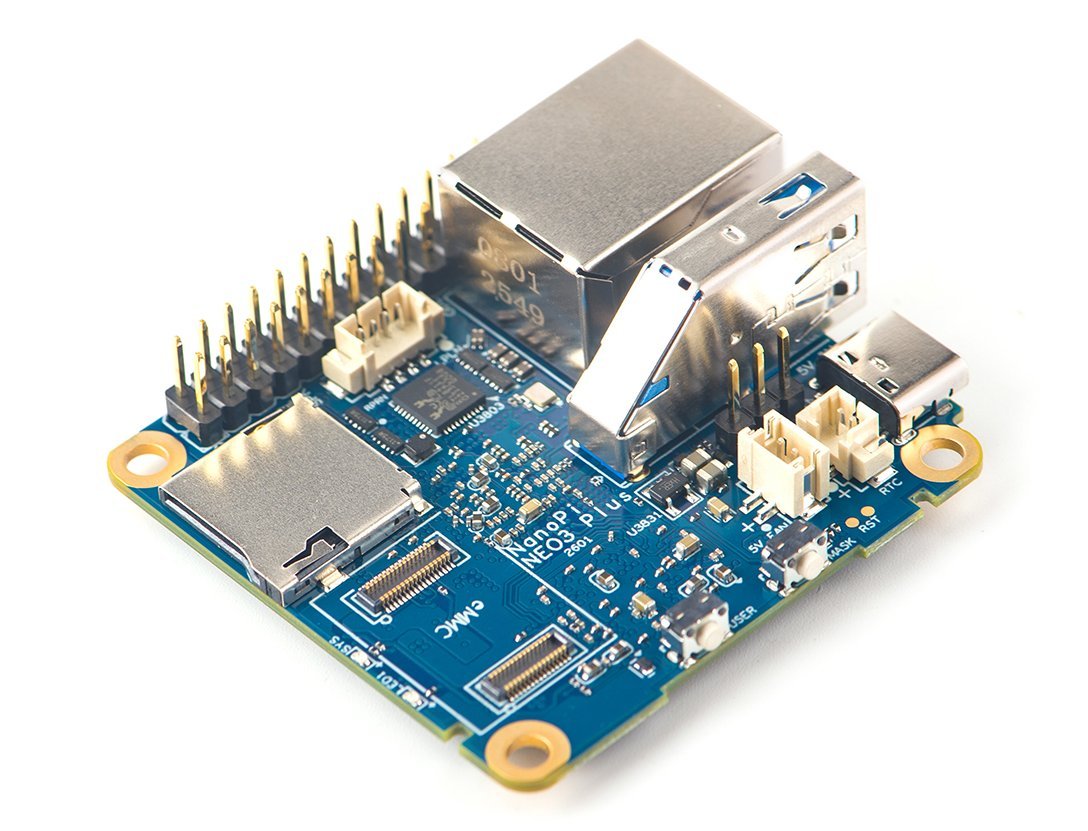
At the heart of the NanoPi NEO03 Plus is a 2 GHz Rockchip RK3528A quad-core Arm Cortex-A53 processor with Mali-450 graphics. While not designed for intensive workloads, this processor offers a noticeable improvement over the original NEO03 launched in 2020, which featured the similar but slightly slower RK3328 chip with maximum CPU frequencies of 1.5 GHz. For context, this places the performance somewhere between a Raspberry Pi Zero 2 W and a Raspberry Pi 3 Model B+, making it suitable for lightweight server tasks, development environments, and IoT applications.
The most significant limitation of the NanoPi NEO03 Plus is its lack of video output, firmly positioning it as a headless device. This means developers will need to access it remotely via SSH, VNC, or other network protocols. While this limits its versatility as a general-purpose computer, it actually makes it ideal for certain development scenarios where a display isn't necessary.
For mobile developers, the NanoPi NEO03 Plus could serve several practical purposes:
Continuous Integration/Continuous Deployment (CI/CD) Server: Its small size and low power consumption make it perfect for running lightweight CI/CD pipelines for mobile application testing.
IoT Development Hub: With its GPIO pins and ARM architecture, it can serve as a development platform for IoT applications that might eventually run on similar ARM-based mobile or embedded devices.
Mobile App Backend: As a tiny server for hosting APIs, databases, or other services that support mobile applications.
Cross-Platform Testing Environment: Since it supports multiple Linux distributions, developers can set up environments to test their applications on different Linux configurations.
The hardware specifications reveal a device clearly designed with specific use cases in mind:
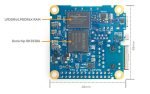
- Rockchip RK3528A quad-core Arm Cortex-A53 processor @ 2 GHz
- Mali-450 MP2 GPU
- 1GB RAM (with up to 2GB planned)
- eMMC socket for optional onboard storage
- microSD card slot (up to 128GB support)
- Gigabit Ethernet (RTL8211F controller)
- USB 3.0 Type-A host port
- USB 2.0 Type-C port
- 26-pin FPC GPIO connector
- 3-pin UART connector for debugging
- 4-pin stereo speaker connector
- 2-pin RTC battery connector
- Power options: 5V/2A USB Type-C or 2.54mm header
FriendlyELEC has provided a good selection of operating system images, including Ubuntu Core, Debian Core, FriendlyWrt, Proxmox VA, OpenMediaVault, Buildroot, and Alpine Linux. This variety gives developers flexibility to choose the most appropriate OS for their specific needs. For mobile development purposes, Ubuntu Core or Debian would likely be the most suitable choices, offering familiar environments and package repositories.
The addition of an eMMC socket is particularly noteworthy, as it provides a more reliable storage option than the microSD card typically used in budget SBCs. For developers planning to use the NanoPi NEO03 Plus as a dedicated server, this feature could significantly improve reliability and performance compared to SD card-based storage solutions.
However, potential buyers should be aware of some limitations beyond the lack of video output. The 1GB of RAM (in the currently available model) may be constraining for more demanding applications. Additionally, while the processor is capable for its price point, it won't handle heavy compilation tasks or complex virtualization workloads efficiently.
For comparison, the Raspberry Pi Zero 2 W costs around $15 but includes HDMI output, while the Raspberry Pi 4 Model B offers significantly more power at $35 but is considerably larger. The NanoPi NEO03 Plus finds its niche in applications where extreme compactness and headless operation are prioritized over graphical capabilities or raw performance.
When considering the NanoPi NEO03 Plus for development projects, it's worth evaluating whether its specific features align with your needs. If you require a tiny, low-power server for specific tasks, it offers excellent value. However, if you need a development platform with display output or more substantial processing power, other options might be more suitable.
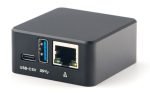
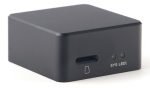
The optional case adds $8 to the price tag, bringing the total to $32. While not strictly necessary, the case would likely provide better protection for the board and make it easier to integrate into projects. The case would also help with heat dissipation, though the low-power nature of the RK3528A means thermal issues are unlikely to be a major concern under normal loads.
For mobile developers working on cross-platform applications, the NanoPi NEO03 Plus could serve as an economical testing environment, especially for ARM-based Linux backends. Its small size also makes it practical for deployment in IoT projects where space is limited.
In conclusion, the NanoPi NEO03 Plus won't replace your primary development workstation, but it fills an interesting niche in the SBC market. Its combination of tiny size, low price, and headless design makes it worth considering for specific development scenarios where these characteristics align with project requirements. As with any budget SBC, understanding its limitations is key to determining whether it's the right tool for your particular needs.
For more information and to purchase the NanoPi NEO03 Plus, you can visit the FriendlyELEC website. Additional technical details and community discussions can be found on the official NanoPi NEO03 Plus product page.
Comments
Please log in or register to join the discussion