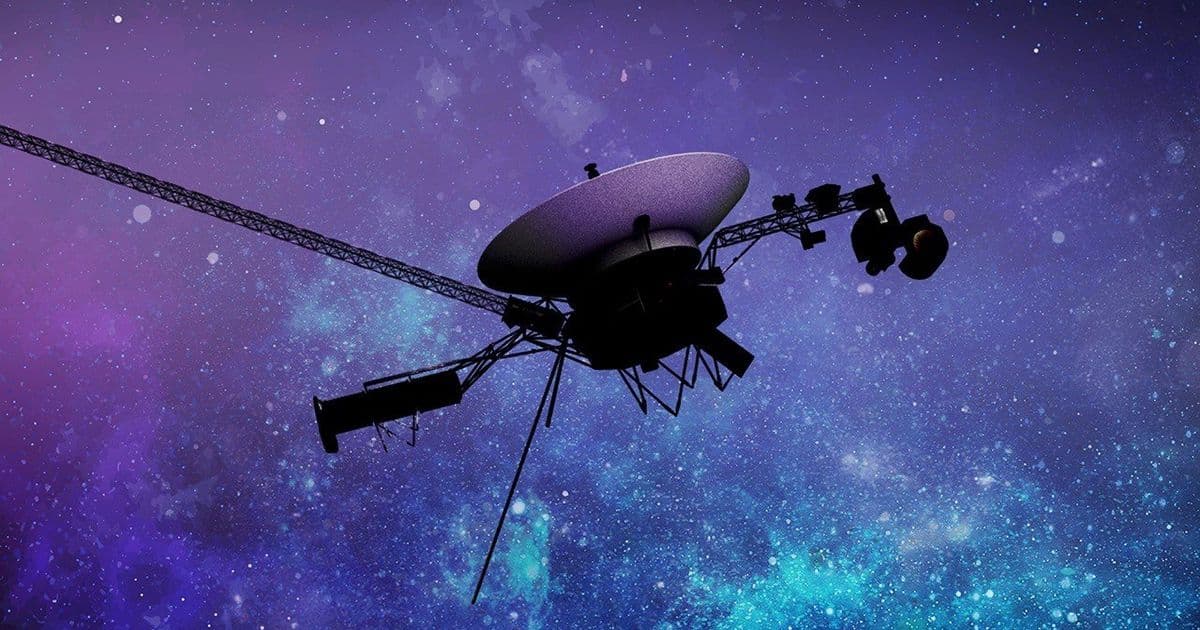
NASA engineers have shut down Voyager 1's Low-energy Charged Particles experiment to conserve power, marking another step in extending humanity's farthest spacecraft as it continues exploring interstellar space.
NASA engineers at the Jet Propulsion Laboratory in Southern California have powered down one of Voyager 1's scientific instruments, the Low-energy Charged Particles experiment (LECP), in a calculated move to extend the spacecraft's operational life as it continues its historic journey through interstellar space.
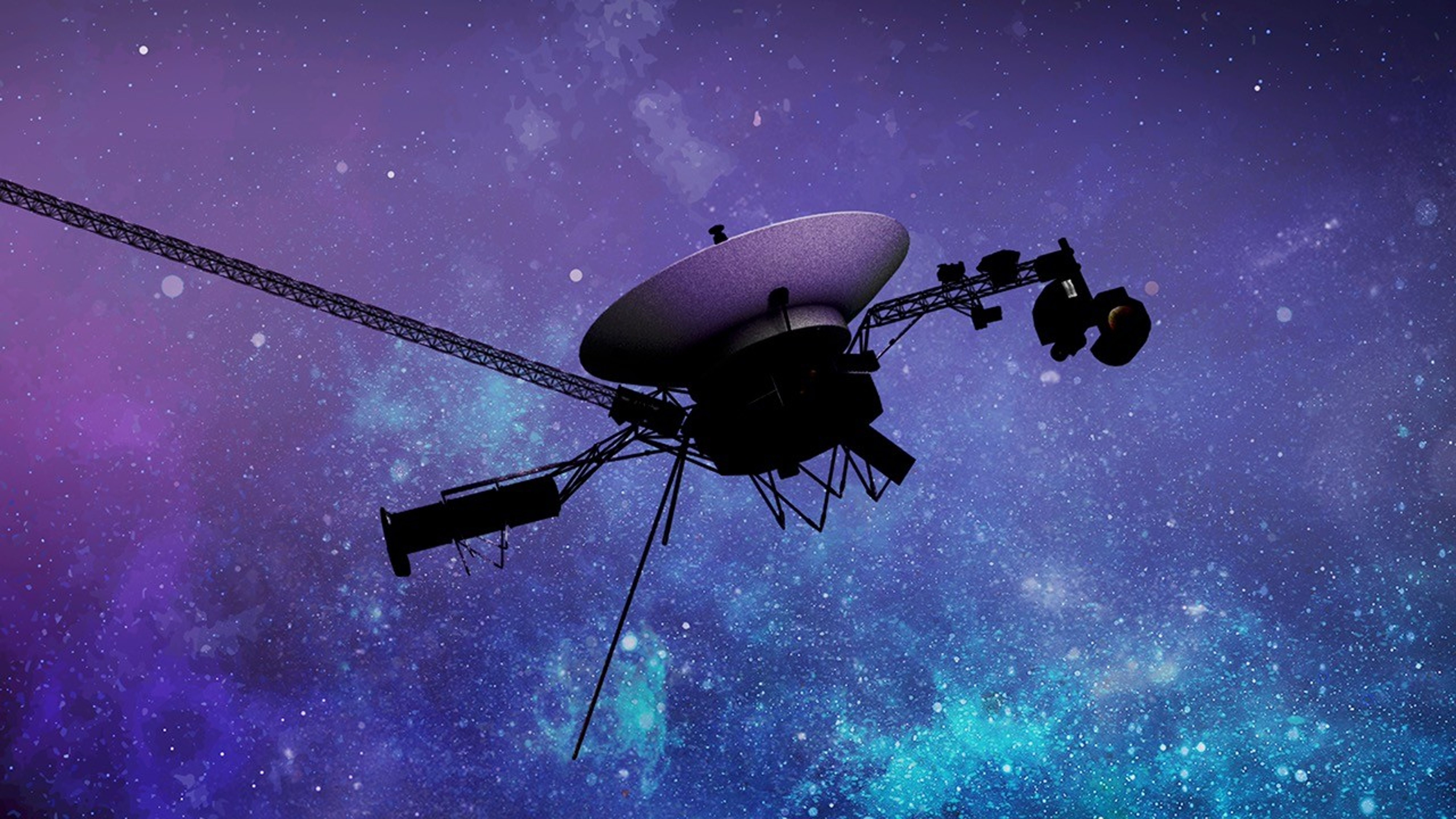
Launched in 1977, Voyager 1 has been measuring low-energy charged particles, including ions, electrons, and cosmic rays from our solar system and galaxy for nearly 49 years. The LECP has provided critical data about the structure of the interstellar medium, detecting pressure fronts and regions of varying particle density beyond our heliosphere. With Voyager 1 now more than 15 billion miles (25 billion kilometers) from Earth, it remains the only spacecraft providing direct measurements from this region of space.
The decision to shut down the LECP came after an unexpected power drop during a routine roll maneuver on February 27, 2026. Both Voyager spacecraft lose approximately 4 watts of power annually due to their decaying plutonium power sources. With power margins now razor-thin after almost half a century in space, mission engineers needed to act proactively to prevent the spacecraft's undervoltage fault protection system from triggering automatically.
"While shutting down a science instrument is not anybody's preference, it is the best option available," said Kareem Badaruddin, Voyager mission manager at JPL. "Voyager 1 still has two remaining operating science instruments — one that listens to plasma waves and one that measures magnetic fields. They are still working great, sending back data from a region of space no other human-made craft has ever explored."
This shutdown wasn't an impulsive decision but part of a carefully planned sequence developed years ago by Voyager's science and engineering teams. Of the 10 identical sets of instruments carried by each spacecraft, seven have now been powered down across both Voyagers. The LECP was next on the predetermined list, following the shutdown of Voyager 2's LECP in March 2025.
The command sequence to shut down the instrument took approximately 23 hours to reach Voyager 1, with the shutdown process itself requiring about three hours and 15 minutes to complete. In a strategic move, engineers chose to keep a small motor that spins the sensor in a circle operational, as it consumes minimal power (0.5 watts) and could potentially allow for the instrument's reactivation if additional power becomes available.
This latest power conservation measure is expected to provide Voyager 1 with approximately one additional year of operational margin. During this time, engineers are developing what they've nicknamed "the Big Bang" — a more ambitious energy-saving fix designed to further extend Voyager operations. The plan involves simultaneously swapping out a group of powered devices, turning some off while replacing them with lower-power alternatives to maintain spacecraft warmth and continue gathering science data.
The team plans to implement this fix on Voyager 2 first, as it has slightly more power to spare and is closer to Earth, making it a safer test subject. Tests are scheduled for May and June 2026, with implementation on Voyager 1 planned for no earlier than July if the tests prove successful.
These ongoing efforts highlight the remarkable longevity of the Voyager missions and the ingenuity of engineers working to preserve humanity's farthest-reaching scientific instruments. As Voyager 1 continues its journey through the interstellar medium, each power conservation decision represents a careful balance between extending the mission's life and maintaining its unique scientific capabilities in a region of space no human-made object has ever explored.
Comments
Please log in or register to join the discussion