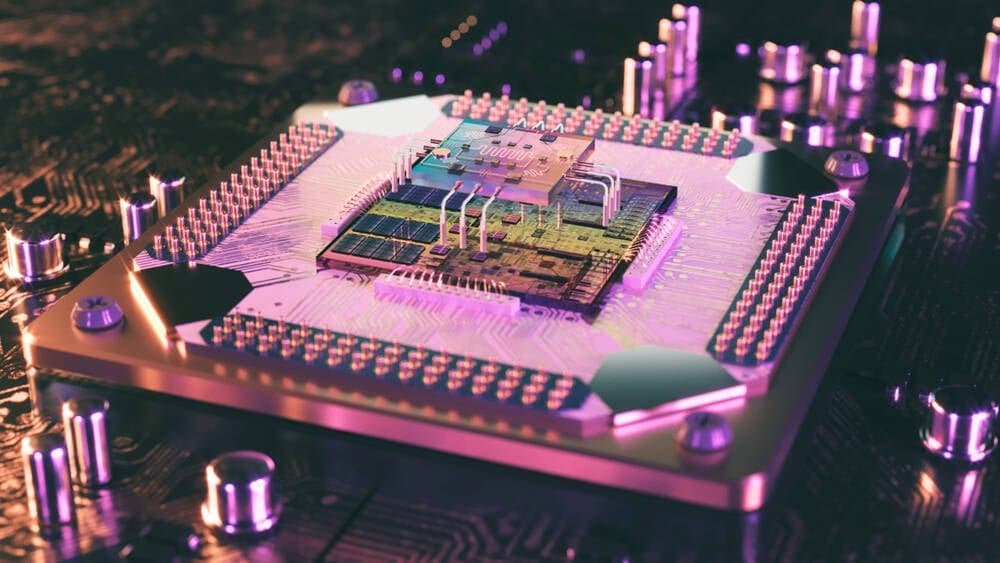
Nvidia unveils new AI models to tackle quantum computing's error rates, claiming its technology could reduce errors by a factor of a billion.
Nvidia has turned its AI expertise toward quantum computing's most stubborn problem: error rates. The GPU giant unveiled new open-weight models designed to help quantum hardware developers dramatically reduce processor errors, which currently occur roughly once in every thousand operations.
The billion-fold challenge
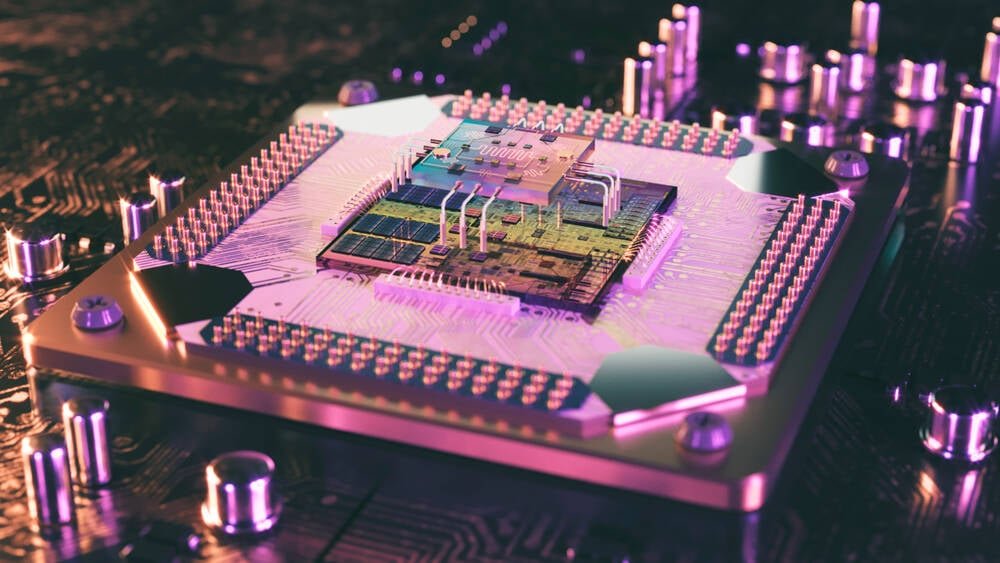
According to Nvidia, even the best quantum systems generate errors at a rate of about one in every thousand operations. To make quantum computers truly useful for applications in materials science, logistics, and financial modeling, these error rates need to improve by a factor of a billion.
"When you've got a GPU hammer, every problem starts to look like an AI nail," Nvidia seems to have concluded, applying its machine learning prowess to quantum's reliability crisis.
Ising Calibration: Quantum autotune
The first model, codenamed Ising Calibration, is a 35 billion-parameter vision-language model trained on data from partner quantum systems. Its purpose is straightforward: help developers find the ideal settings to minimize noise and errors within quantum processors.
Nvidia claims the model could be integrated into an "agentic framework" to fully automate the calibration process. By streaming data collected from quantum systems and making real-time adjustments, the AI could theoretically drive error rates below specific thresholds without human intervention.
Unlike many large language models, Ising Calibration is relatively lightweight and can run on hardware like the RTX Pro 6000 Blackwell or Nvidia's GB10-based DGX Spark systems.
Ising Decoding: Real-time error correction
While calibration can reduce how often errors occur, it can't eliminate them entirely. This is where Nvidia's Ising Decoding models come in.
Available in two sizes—912,000 parameters for the SurfaceCode-1 model and 1.79 million for the "Accurate" model—these tiny convolutional neural networks are designed to detect and correct errors in real time. Nvidia claims they can catch errors between 2.25 and 2.5 times faster than conventional approaches using frameworks like PyMatching.
The use of an older CNN architecture, rather than more complex models, allows these decoders to operate with minimal latency—critical for quantum error correction where timing matters.
Developer tools and accessibility
Nvidia is making these tools widely available to the quantum computing community. Weights for Ising Calibration 1 and Ising Decoder SurfaceCode 1 are available on Hugging Face, with Ising Calibration 1 also landing on Nvidia Build and as an inference microservice (NIM).
The company is also rolling out training frameworks to help developers generate synthetic data and fine-tune the models for their specific quantum systems. Inference blueprints are being provided to help implement the models in production environments.
Part of a broader quantum strategy
These models represent just the latest in a series of Nvidia investments in quantum computing over the past few years. The company has expanded into hardware and software libraries, and even established a research center with a Blackwell-based supercomputing cluster dedicated to quantum research.
Whether AI can truly solve quantum computing's error crisis remains to be seen, but Nvidia's approach—applying its GPU and AI expertise to quantum's most pressing challenges—represents a significant bet on the technology's future.
For quantum computing to move beyond experimental demonstrations and into practical applications, error rates must improve dramatically. If Nvidia's AI models can deliver even a fraction of the promised improvements, they could accelerate the timeline for useful quantum computers by years.
The models are available now for developers to experiment with, marking an important moment where quantum computing's theoretical promise meets the practical tools needed to make it a reality.
Comments
Please log in or register to join the discussion