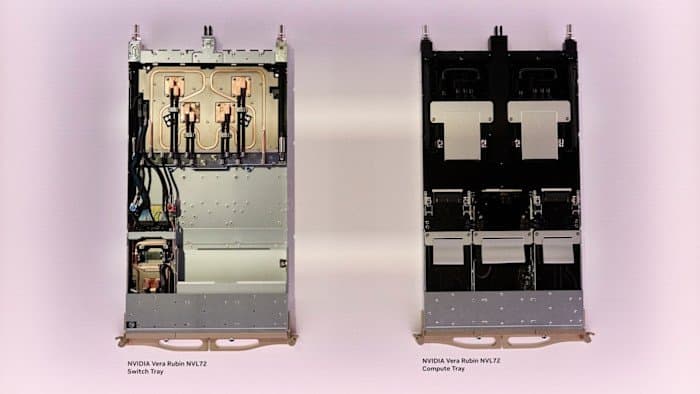
Nvidia has reallocated manufacturing capacity at TSMC away from H200 chips for China to focus on its latest Vera Rubin products, reflecting escalating US-China tech tensions.
Nvidia has made a significant strategic shift in its manufacturing operations, reallocating production capacity at Taiwan Semiconductor Manufacturing Company (TSMC) away from chips intended for the Chinese market to focus on its latest Vera Rubin products, according to sources familiar with the matter.
The move represents a notable escalation in the ongoing US-China tech tensions, as Nvidia redirects resources from its H200 chip production line, which was specifically designed for the Chinese market, to its next-generation AI hardware. This reallocation comes amid increasing geopolitical pressures and export control measures affecting semiconductor trade between the United States and China.
Strategic Manufacturing Realignment
The decision to shift manufacturing capacity reflects Nvidia's need to prioritize its most advanced products while navigating complex international trade regulations. The H200 chips, which were tailored to meet Chinese market requirements under existing export restrictions, are being deprioritized in favor of the Vera Rubin line, Nvidia's latest AI accelerator series.
Industry analysts suggest this move could have several implications:
- Supply constraints for Chinese customers: The reallocation may create shortages of H200 chips in China, potentially affecting data centers and AI companies that rely on these processors
- Accelerated product cycles: By focusing on newer technology, Nvidia may be attempting to maintain its competitive edge in the global AI hardware market
- Geopolitical positioning: The shift aligns with broader US efforts to limit China's access to cutting-edge semiconductor technology
Broader Context of US-China Tech Competition
This manufacturing reallocation occurs against a backdrop of intensifying technological rivalry between the United States and China. The semiconductor industry has become a key battleground, with both nations investing heavily in domestic chip production capabilities and implementing various trade restrictions.
Recent developments in this space include:
- Export control measures: The US has implemented increasingly strict controls on advanced chip exports to China
- Domestic manufacturing initiatives: Both countries are investing billions in building homegrown semiconductor capacity
- Supply chain diversification: Companies are seeking to reduce dependence on single-source manufacturing, particularly in geopolitically sensitive regions
Impact on Global AI Hardware Market
The reallocation of TSMC's manufacturing capacity could have ripple effects throughout the global AI hardware ecosystem. With Nvidia being the dominant player in AI accelerators, any production changes can significantly impact availability and pricing across the industry.
Key considerations include:
- Lead times for AI hardware: Customers may face longer wait times for both H200 and Vera Rubin products
- Pricing pressures: Supply constraints could drive up prices for AI accelerators
- Alternative suppliers: Competitors like AMD and Intel may see increased demand as customers seek alternatives
Nvidia's Strategic Positioning
This move appears to be part of Nvidia's broader strategy to maintain its technological leadership while adapting to geopolitical realities. By focusing on its most advanced products, Nvidia can maximize its competitive advantage in markets where it faces fewer restrictions.
The company has been investing heavily in next-generation AI hardware, with the Vera Rubin line representing the latest evolution of its data center GPU architecture. These chips offer significant performance improvements over previous generations, making them particularly attractive for demanding AI workloads.
Market Reactions and Future Outlook
Financial markets have responded to news of the manufacturing shift, with Nvidia's stock showing modest volatility as investors assess the long-term implications. Industry analysts are divided on whether this represents a temporary adjustment or a more permanent restructuring of Nvidia's global manufacturing strategy.
Looking ahead, several factors will likely influence the trajectory of this situation:
- US export policy changes: Further tightening or loosening of restrictions could affect Nvidia's production decisions
- China's domestic semiconductor development: Progress in China's chip manufacturing capabilities may reduce its dependence on foreign suppliers
- Alternative manufacturing locations: Companies may seek to diversify production across multiple geographic regions to mitigate geopolitical risks
Technical Considerations
The H200 and Vera Rubin represent different points in Nvidia's product roadmap. The H200 was designed as a China-specific variant of the H100, with modifications to comply with export controls. The Vera Rubin, by contrast, represents Nvidia's latest general-market AI accelerator technology.
This shift in manufacturing priority suggests that:
- Performance demands are increasing: Customers are willing to pay premiums for the latest technology
- Export control compliance is becoming more complex: Companies must carefully manage product variants for different markets
- Manufacturing capacity remains constrained: Even a company of Nvidia's size must make difficult choices about product prioritization
The reallocation at TSMC underscores the complex interplay between technological innovation, geopolitical strategy, and manufacturing logistics that defines the modern semiconductor industry. As tensions between the US and China continue to evolve, companies like Nvidia will likely face ongoing challenges in balancing global market demands with regulatory compliance and strategic priorities.
Comments
Please log in or register to join the discussion