Crude oil prices fell sharply after former President Trump's announcement of a U.S.-Iran ceasefire, easing market fears about Middle East supply disruptions.
Oil prices plunged on Monday following former President Donald Trump's announcement of a U.S.-Iran ceasefire, with Brent crude dropping over 3% and West Texas Intermediate falling nearly 4% in early trading. The sudden diplomatic development eased market fears about potential supply disruptions from the Middle East, one of the world's most critical oil-producing regions.
Market Impact
The ceasefire announcement sent shockwaves through energy markets, with traders rapidly unwinding positions built on geopolitical risk premiums. Brent crude futures fell to $72.50 per barrel, while WTI crude dropped to $68.30, marking the steepest single-day decline in months.
"This ceasefire removes a significant layer of uncertainty that had been priced into oil markets," said energy analyst Sarah Chen at Global Markets Research. "Traders had been factoring in the possibility of supply disruptions from the Strait of Hormuz, which handles about 20% of global oil shipments."
Regional Context
The U.S. and Iran have been engaged in escalating tensions over the past year, with concerns mounting about potential military confrontations that could disrupt oil flows. The Strait of Hormuz, a narrow waterway between Iran and Oman, is particularly vulnerable to geopolitical tensions.

Iran's oil exports had already been under pressure from U.S. sanctions, but the threat of military action had kept markets on edge. The ceasefire announcement suggests a de-escalation that traders hadn't fully priced in.
Supply Chain Effects
Beyond immediate price movements, the ceasefire could have longer-term implications for global oil supply chains. Iran sits on approximately 9% of the world's proven oil reserves, and any sustained reduction in tensions could eventually lead to increased Iranian oil exports.
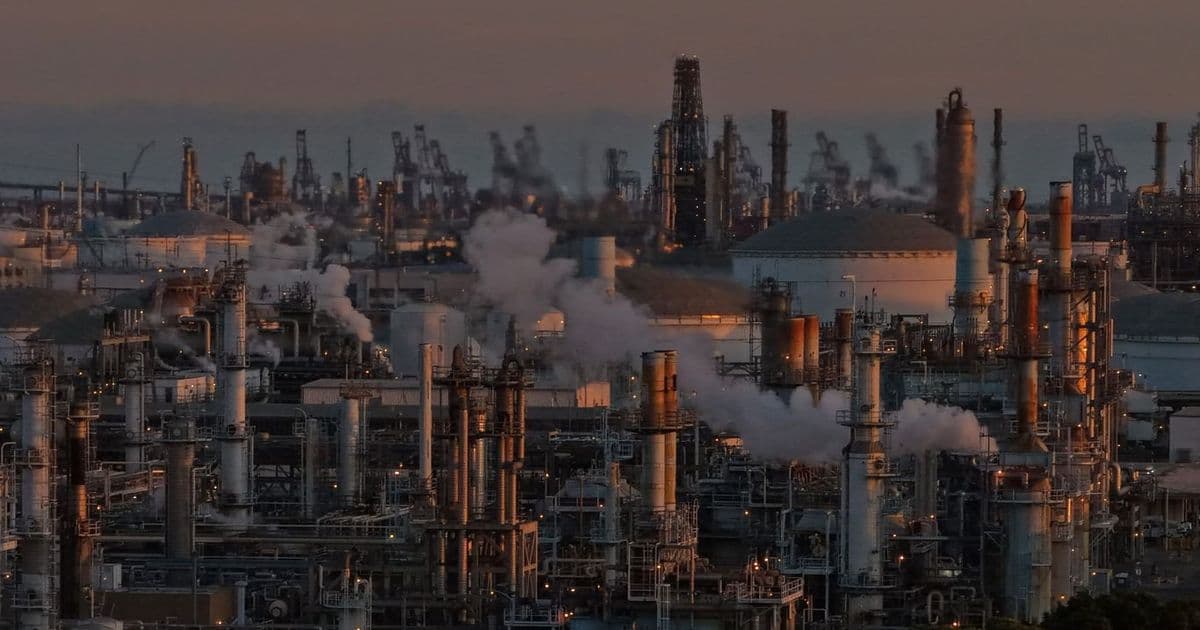
Major oil companies with operations in the region, including Marathon Petroleum Corp, saw their stock prices react to the news. The Los Angeles Refinery in Carson, Calif., pictured above, represents the complex infrastructure that could be affected by Middle East stability.
Market Analysis
Energy analysts note that while the ceasefire removes immediate geopolitical risk, other factors continue to influence oil prices:
- OPEC+ production decisions
- Global demand recovery post-pandemic
- U.S. shale production levels
- Chinese economic growth and energy consumption
"The market was already dealing with concerns about oversupply," noted Chen. "This ceasefire adds another bearish factor to an already soft demand environment."
Future Outlook
The sustainability of the ceasefire remains uncertain, and markets will be watching closely for any signs of renewed tensions. However, the immediate reaction demonstrates how sensitive oil prices remain to Middle East geopolitics.
Traders are now shifting focus to upcoming OPEC+ meetings and U.S. inventory data, which could provide further direction for oil markets in the coming weeks.
For now, the ceasefire represents a significant de-escalation that has provided immediate relief to oil markets, though the long-term implications for global energy supply and pricing remain to be seen.
Comments
Please log in or register to join the discussion