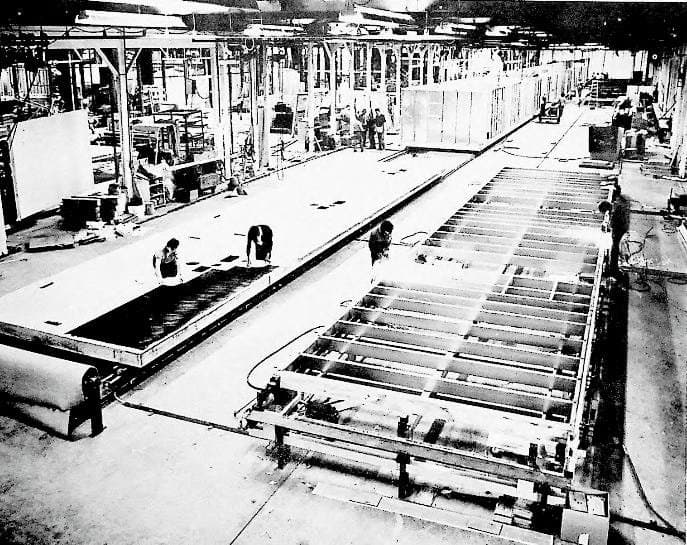
A deep analysis of Operation Breakthrough, the ambitious 1969-1974 HUD program that sought to revolutionize American home construction through industrialized methods, examining why it failed and what it tells us about the persistent challenges of transforming traditional industries.
The persistent challenge of affordable housing in America has led many to look toward industrialization as a potential solution, drawing parallels between the evolution of automobile manufacturing and the stagnation of home construction. Operation Breakthrough, a bold 1969-1974 program by the Department of Housing and Urban Development, represents one of the most comprehensive attempts to apply mass production principles to homebuilding. Its failure offers profound insights into why construction remains stubbornly resistant to the productivity transformations that have reshaped other industries.
The Promise of Industrialized Homebuilding
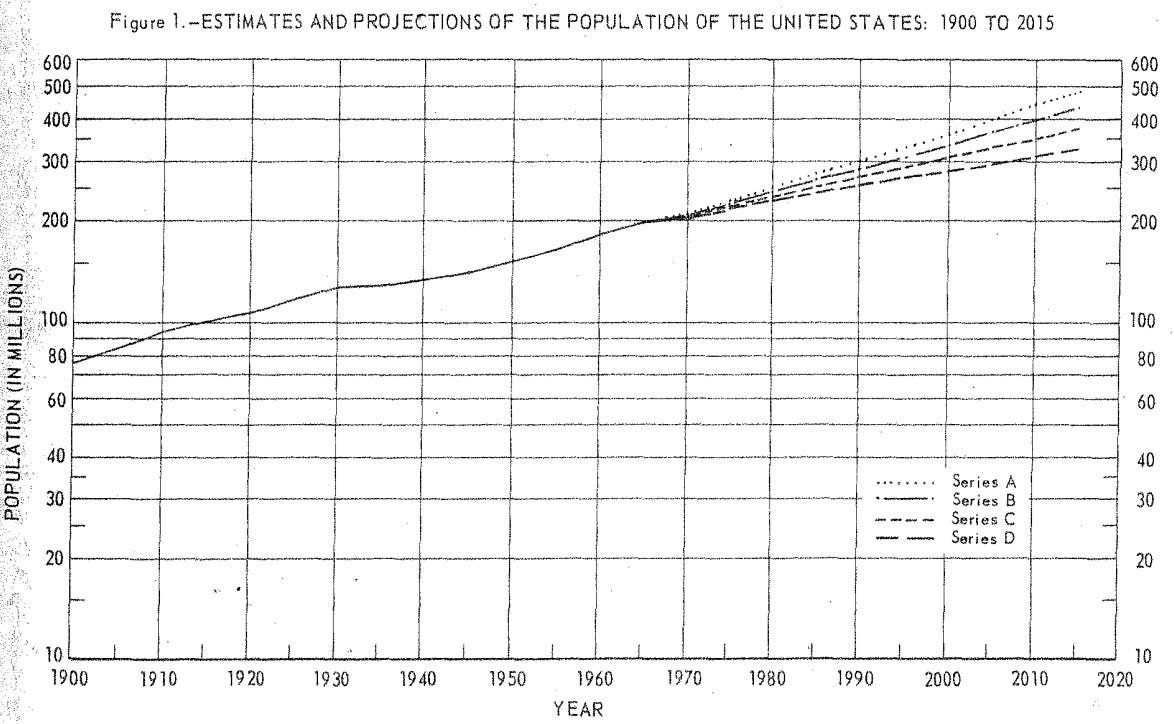
Operation Breakthrough emerged from a context of profound demographic change and housing anxiety. In the 1960s, America was experiencing unprecedented population growth, with projections suggesting the country would reach 250 million people by the mid-1980s and 300 million by 2000. Birth rates had risen from 2.2 children per woman during the Great Depression to 3.6 by the end of the 1950s. This population explosion, concentrated increasingly in urban areas, created what seemed like an insurmountable housing challenge.
President Lyndon Johnson famously declared that by the end of the century, America would need to build as many new homes as had been constructed since the arrival of the first colonists. This belief in an impending housing shortage, combined with the apparent success of mass production in other industries, led to the creation of Operation Breakthrough under HUD Secretary George Romney, a former automobile executive who believed manufacturing principles could solve America's housing crisis.
The program was structured in three phases: Phase I would identify and develop promising industrialized housing systems; Phase II would construct demonstration projects across multiple sites; and Phase III would implement large-scale production. Unlike earlier recommendations that positioned this as an experimental program, Breakthrough aimed for transformation on a national scale.
The Implementation Challenge
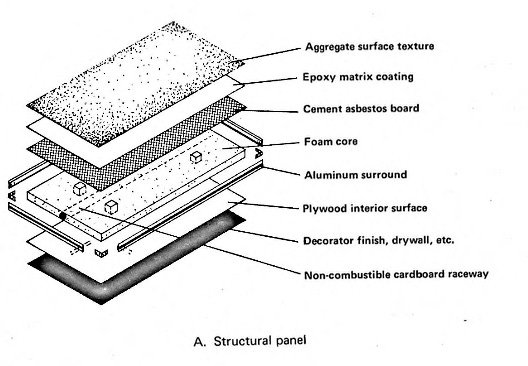
The program's ambitious scope immediately created tensions between experimental rigor and demonstration objectives. When HUD issued its Request for Proposal in 1969, respondents were given only 90 days to submit proposals, insufficient time for developing truly novel systems. The evaluation criteria favored established technologies over radical innovation, with 14 of the 22 selected systems being conventional module or panel systems already in widespread use.
{{IMAGE:3}}
Even these established systems encountered significant difficulties during development. More than half required substantial modifications before Phase II contracts could be signed. Christiana Western Structures, for instance, had originally proposed fully enclosed fiberglass-lined wall panels with pre-installed services, but this was changed to a more conventional open wall panel system due to cost concerns. Similarly, aerospace manufacturer TRW abandoned its plan to use rotating mandrels for fiberglass wrapping in favor of simpler panel construction.
The development of performance-based evaluation criteria by HUD and the National Bureau of Standards introduced additional complexity. While intended to facilitate innovation by focusing on outcomes rather than specific methods, these criteria proved more burdensome than traditional building codes. The performance-based language was unfamiliar to many participants, and requirements like acoustic isolation were substantially more stringent than existing codes.
The Reality of Implementation
During Phase II, construction at the nine demonstration sites encountered numerous obstacles that revealed the gap between theory and practice in industrialized construction.
Local opposition proved persistent despite HUD's efforts to build community support. In Macon, the mayor reversed his stance and publicly renounced the project. In Sacramento, a small group of citizens hired a lawyer to challenge county approvals. Labor disputes further complicated construction, with Teamsters strikes in Sacramento and jurisdiction disputes in New Jersey causing significant delays.
Transportation costs emerged as a critical economic constraint. Most producers needed factories within a few hundred miles of job sites to maintain cost advantages, otherwise transportation costs would negate any savings from prefabrication. Three producers withdrew from specific sites due to these economic realities, unable to justify the expense of shipping modules long distances.
Technical difficulties plagued many of the more innovative systems. Stirling Homex abandoned its hydraulic jack system in favor of conventional crane-based erection. Material Systems Corporation's composite panels proved problematic, with persistent leaks leading some residents to move out and causing the cancellation of its St. Louis demonstration project. Even well-established systems encountered issues with module damage during transportation, scheduling challenges, and difficulties with final assembly.
The Political and Economic Context
Operation Breakthrough's fate was ultimately sealed by shifting political and economic circumstances. The program had been conceived to address a perceived housing shortage that conventional builders couldn't meet. However, by the early 1970s, conventional homebuilders had essentially doubled output from 1.2 million units in 1965 to nearly 2.4 million units in 1972. Simultaneously, mobile homes—factory-built housing outside the Breakthrough framework—were gaining popularity, reaching nearly 600,000 units annually by 1972.
Political changes further undermined the program. George Romney clashed with the Nixon administration throughout his tenure, and in January 1973, both Romney and program director Harold Finger were replaced by new appointees less committed to Breakthrough. That same month, Nixon cut funding for additional Section 236 projects that were essential for Phase III.
Despite these setbacks, some Phase III construction proceeded using already-allocated funds, with approximately 25,000 units under construction by 1975. However, without sustained government support, this proved to be a brief rather than transformative phenomenon.
Why Industrialized Homebuilding Proves Elusive
Operation Breakthrough's failure reveals deeper challenges in applying manufacturing principles to construction that extend beyond the program's specific shortcomings.
The fundamental premise—that factory-based construction would yield dramatic improvements in production efficiency and cost reduction similar to those seen in manufacturing—has proven difficult to realize in practice. Even Sweden, with its large-scale adoption of factory-built methods, does not appear to benefit from substantially improved productivity or decreased homebuilding costs. National Homes, which built approximately 400,000 prefab homes over its history, never achieved the transformative impact that Ford's assembly line had on automobile manufacturing.
Construction differs from manufacturing in several critical ways. Homes are highly customized products built on unique sites with varying conditions, unlike standardized manufactured goods. The construction industry's fragmented structure, with numerous specialized trades and subcontractors, creates coordination challenges that don't exist in integrated manufacturing facilities. Additionally, the regulatory environment for construction, with its complex web of building codes, zoning requirements, and inspection processes, creates barriers that don't constrain manufacturing production.
Enduring Lessons
Operation Breakthrough cost approximately $72 million (equivalent to about $500 million in 2026 dollars) and constructed more than 30,000 housing units using industrialized methods. Yet today, factory-built homes constitute only about 10% of new housing construction, most of which are manufactured (mobile) homes. Outside of manufactured HUD-code homes, factory-built homes make up roughly 3% of the single-family home market.
The program's legacy offers several important lessons for contemporary efforts to industrialize construction, including recent initiatives like Katerra that have pursued similar goals with venture capital backing rather than government funding.
First, the transformation of traditional industries requires sustained commitment beyond political cycles. Operation Breakthrough was undermined by changing administrations and shifting priorities, demonstrating that industrialization efforts must be designed with longer time horizons than typical political programs.
Second, the relationship between innovation and established practice requires careful balancing. Operation Breakthrough's rushed timeline and evaluation criteria favored established technologies over radical innovation, limiting the program's transformative potential. Truly industrializing construction may require more fundamental rethinking of processes rather than simply applying existing methods at scale.
Third, the economic constraints of construction—particularly transportation costs and the need for local adaptation—must be addressed systematically. Operation Breakthrough revealed how these factors can undermine the theoretical advantages of prefabrication, suggesting that successful industrialization may require new economic models rather than simply applying manufacturing principles to construction.
Finally, the social and regulatory dimensions of construction cannot be overlooked. Operation Breakthrough encountered significant opposition from communities and labor organizations, highlighting that successful transformation requires addressing these social dimensions alongside technical and economic factors.
The persistent challenges in industrializing home construction suggest that Walter Gropius's 1930s observation about the divergence between automobile and home construction remains relevant nearly a century later. While Operation Breakthrough failed in its immediate objectives, it offers valuable insights for contemporary efforts to address the enduring challenge of affordable housing through industrialized methods. The program's history suggests that transforming construction will require not just technological innovation, but also sustained economic commitment, thoughtful regulatory reform, and a deeper understanding of the industry's unique characteristics.
Comments
Please log in or register to join the discussion