
Pew Research Center finds wider AI use across chatbots, search, and home devices, while U.S. adults expect more harm than benefit.

Pew Research Center found a split in U.S. attitudes toward AI: more adults use the tools, but more adults expect harm from them.
Pew surveyed 5,119 U.S. adults from Feb. 17-23, 2026. About half said they use AI chatbots such as ChatGPT, Gemini, or Copilot, up from one-third in 2024. About one in four said they use chatbots each day.
ChatGPT leads the category. Pew found that 44% of U.S. adults use ChatGPT, compared with 24% for Gemini, 17% for Copilot, 14% for Meta AI, 8% for Grok, 6% for Claude, and 3% for Character.ai.
That adoption gives developers a clear signal. Chatbots have left the trial phase for a large share of Americans. Search, workplace tasks, image work, health questions, news, and emotional support now sit inside one interface for many users. Product teams that build AI features face users who bring experience, habits, and doubts with them.
Pew found that search and work lead chatbot use. About four in 10 U.S. adults said they use chatbots to search for information. Among employed adults, 38% said they use chatbots for work tasks. Smaller shares use them for fun, image or video creation, medical advice, diet and fitness, or news.
The report gives less support to the idea that Americans treat chatbots as friends. One in 10 adults said they use chatbots for emotional support, and a smaller share said they use them for companionship. Those figures matter because builders and regulators have focused on attachment, mental health, and user dependency. Pew’s data suggests that concern has a base, but practical use still dominates.
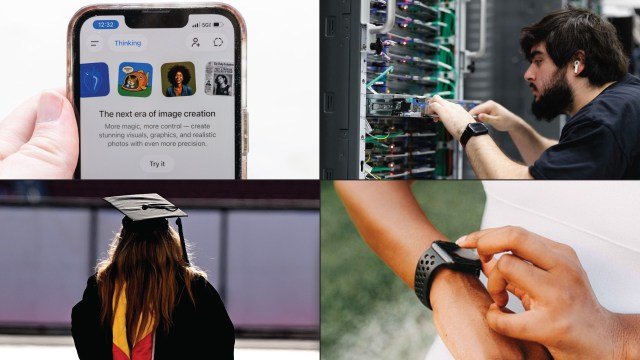
AI reaches people through more than chat windows. Pew found that 60% of U.S. adults read AI summaries at the top of search results. About 37% have a smartwatch. About 35% have a smart speaker, 18% have a smart doorbell with AI features, 13% have a robot vacuum with AI features, and 11% have a smart thermostat with AI features.
Those numbers explain why public opinion has grown harder to parse. You can reject AI as a trend and still read an AI search summary. You can distrust AI companies and still own a watch, speaker, or doorbell that uses machine learning. AI now enters the home through devices that users bought for convenience, not ideology.
Americans give chatbots credit for narrow gains. Pew found that adults who use chatbots credit them more for help than harm on productivity, information, and creativity. About 30% said chatbots help their productivity. A similar share said chatbots help them stay informed. About 21% said chatbots help their creativity, while 11% said they hurt it.
The social effects drew a cooler response. Pew found that few adults said chatbots help or hurt their happiness or relationships. Many users appear to treat chatbots as tools that answer questions or finish tasks, not as companions that reshape their private lives.
Public trust drops when Pew asks about AI’s wider impact. Four in 10 U.S. adults said AI will have a negative effect on society over the next 20 years. About 31% said AI will have a negative effect on them. Fewer adults expected positive effects.
Younger adults complicate the standard adoption story. Adults under 30 use AI at high rates, but Pew found that they express more concern than older groups about AI’s effect on society and on their own lives. That pattern should matter to companies building AI products for students, early-career workers, and young consumers. Familiarity has not produced trust.
Speed drives much of the anxiety. Pew found that 63% of U.S. adults think AI advances too fast. About 2% said it advances too slow. That gap gives policymakers and AI companies a public warning: many Americans see acceleration as a risk signal.
Data security creates the sharpest concern. Pew found that 71% of adults think wider AI use will make their personal information less secure. About 3% said AI will make their information more secure.
Developers can read that as a product requirement. Users want clear data controls, retention settings, audit trails, and plain explanations about training and sharing. Privacy language buried in terms of service will not answer a user who thinks AI puts personal data at risk.
The regulation numbers show little confidence in either government or industry. Pew found that 67% of Americans have little or no confidence in the U.S. government to regulate AI. About six in 10 lack confidence in U.S. companies to develop and use AI in a responsible way.
Party views shifted since 2024. Pew found that Democrats now express more skepticism than Republicans toward the government’s ability to regulate AI, 74% to 61%. Democrats also express more concern than Republicans about whether U.S. companies will develop AI with care, 65% to 53%.
The counterargument comes from use itself. Millions of Americans keep using chatbots because the tools save time, answer questions, draft text, and help with work. Many users can hold both views at once: AI helps them finish a task today, and AI may harm society over the next 20 years.
That tension defines the market for AI products in 2026. Adoption no longer proves trust. Usage does not erase privacy concerns. Product teams that treat public skepticism as ignorance will misread their users. Pew’s numbers point to a more demanding audience: people who use AI, compare models, notice failure, and want stronger guardrails before they grant more access to their work, homes, and data.
Comments
Please log in or register to join the discussion