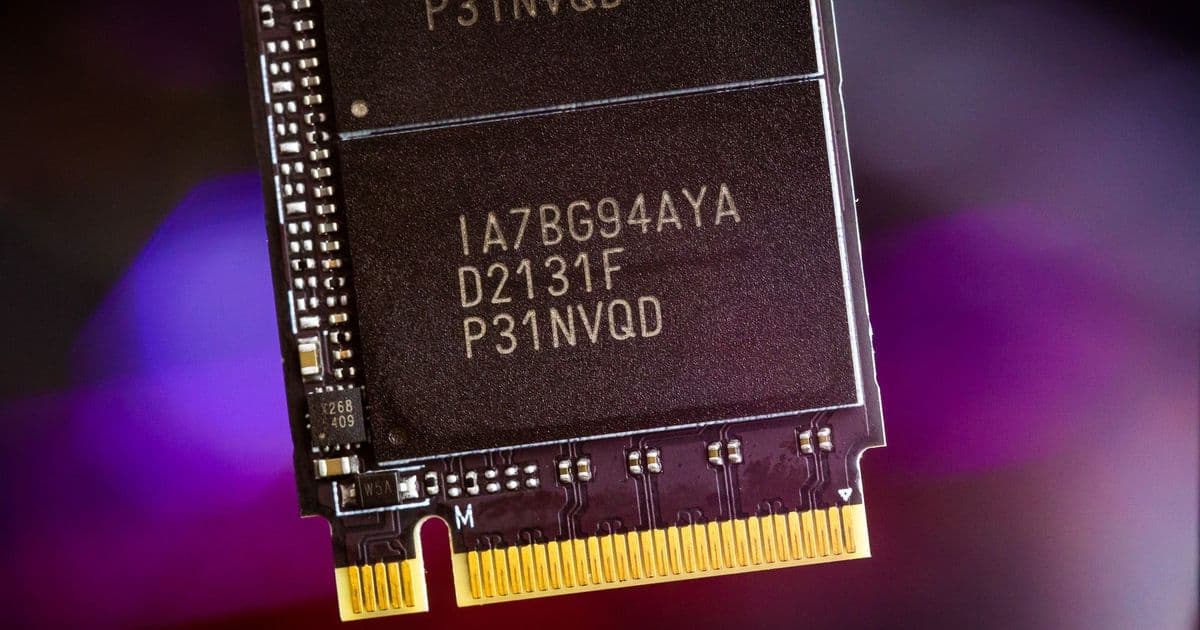
Phison CEO Khein-seng Pua reveals NAND flash prices jumped 50% overnight as AI data centers drive unprecedented demand, forcing the company to secure long-term supply agreements and borrow up to $500 million to fund operations.
The semiconductor industry is experiencing unprecedented supply constraints as AI infrastructure expansion drives memory and storage prices to new heights. Phison CEO Khein-seng Pua revealed that NAND flash manufacturers have increased prices by as much as 50% overnight, underscoring the severe shortage affecting the entire ecosystem.
This dramatic price surge comes as AI data centers continue their rapid expansion, consuming vast quantities of memory and storage components. The demand from cloud service providers and hyperscalers has created a perfect storm of supply constraints, forcing companies like Phison to fundamentally restructure their business operations.
Phison, a Taiwanese semiconductor company specializing in controller chips for SSDs, has shifted its business model to meet this demand. The company now delivers products directly to cloud service providers and AI hyperscalers, with enterprise SSD solutions accounting for 30% of its revenue. This direct-to-customer approach represents a significant pivot from traditional distribution channels.
However, this shift comes with its own set of challenges. Phison has begun asking customers for shorter payment timeframes, with some clients required to pay upfront. This mirrors the company's own experience with suppliers demanding faster payments, creating a cash flow crunch across the supply chain.
To secure adequate supply in this volatile market, Phison has signed long-term agreements with six NAND manufacturers and two DRAM suppliers globally. The CEO emphasized that these agreements prioritize supply security over cost considerations, reflecting the severity of the shortage. Additionally, the company is negotiating prepaid NAND chip arrangements with suppliers to ensure priority access during shortages.
Despite these efforts, Phison's inventory value has grown from NT$35.6 billion (approximately US$1.12 billion) to NT$50 billion (approximately US$1.57 billion) in just months. Yet CEO Pua stated that "both money and inventory are insufficient," highlighting the scale of the challenge facing the company.
The company's financial position has become increasingly strained as it navigates these market conditions. Phison's board has approved borrowing between $400 million and $500 million to support operations and development initiatives during this crisis period.
On the product development front, Phison continues to advance next-generation technologies. The company plans to deliver PCIe 6.0 samples by August 2026 and is actively working on PCIe 7.0 support. These developments require significant capital investment at a time when the company is already facing financial pressures.
Interestingly, despite higher prices, demand from cloud and enterprise customers continues to increase. This sustained demand has resulted in higher revenues for Phison, even as profit margins face pressure from increased component costs. The company is not relying on lower costs from existing inventory to drive margins, though this does provide some benefit.
The situation reflects broader trends in the semiconductor industry, where AI infrastructure buildout is reshaping supply chains and pricing dynamics. Memory makers are projected to earn $551 billion from the AI boom, according to industry analysts, as companies compete for limited supply.
This crisis extends beyond just NAND flash. The entire memory market is experiencing similar pressures, with companies like Samsung and SK hynix shortening memory contracts as pricing power shifts back to suppliers. The automotive industry has also been impacted, with chip scarcity continuing to affect production despite efforts to stabilize supply.
For Phison and similar companies, the current environment requires a delicate balance between securing supply, managing cash flow, and continuing product development. The company's strategy of prioritizing supply agreements over cost considerations may serve as a model for other firms facing similar challenges in the AI-driven semiconductor market.
As AI infrastructure continues to expand, these supply constraints are likely to persist, potentially reshaping the competitive landscape in the memory and storage industry for years to come.
Comments
Please log in or register to join the discussion