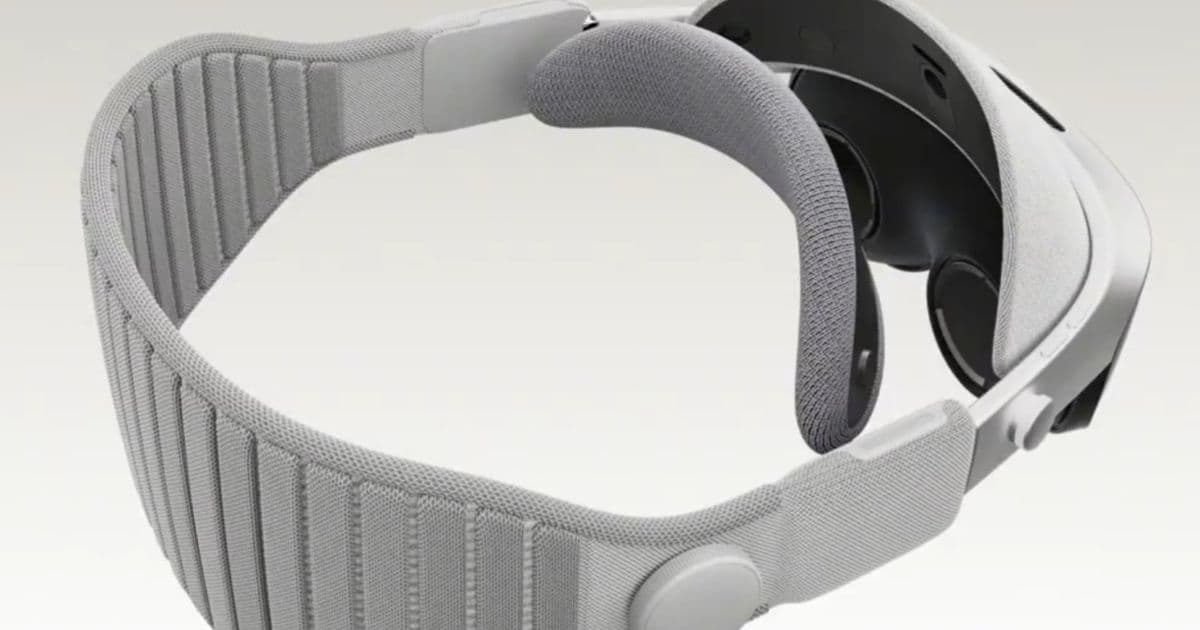
A leaked SDK video shows Pico's Project Swan headset weeks before GDC 2026, and the spec sheet behind it suggests Pico is aiming directly at Apple's Vision Pro and Samsung's Galaxy XR rather than the budget tier it usually plays in.
Pico has spent years as the value pick in standalone XR, the brand you reached for when a Quest felt too expensive and a Vision Pro felt like a second mortgage. Project Swan looks like the headset that ends that positioning. A video pulled from Pico's own publicly accessible software development kit, shared on X by user Luna (@Lunayian), gives the first clear look at the hardware, and the spec disclosures Pico has made around it point at a device built to trade blows with the most expensive headsets on the market.
What's new
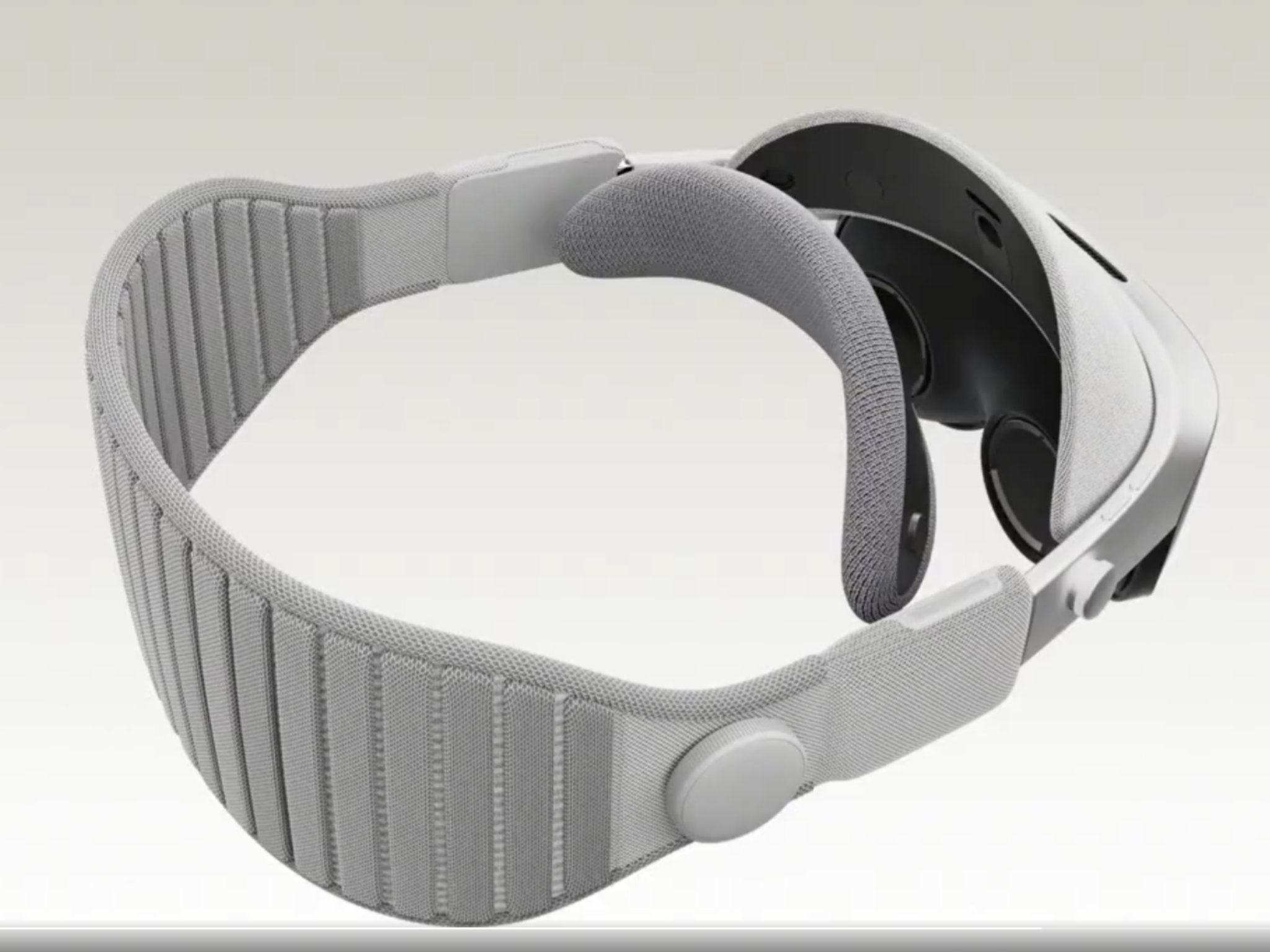
The leaked footage shows a headset that wears its influences openly. The front shell and the way the optics sit in the frame read like Apple's Vision Pro, while the soft headband and external battery approach echo Samsung's Galaxy XR. A single side-mounted control button handles core system commands, and most of the interaction model appears to lean on hand gestures and head tracking rather than physical inputs. Pico still ships a pair of motion controllers in the box for anyone who wants tracked input, which is one practical advantage over the controller-free Vision Pro.
The battery is a separate tethered pack with five LED charge indicators, a USB Type-C port, its own power button, and what looks like a detachable connector at the headset end. That detail matters for anyone who has lived with a fixed-cable battery: a removable connection means you can swap packs or replace a worn cable without sending the whole unit in. Side-firing speakers, detachable headband supports, and multiple spatial tracking cameras round out the visible hardware.
{{IMAGE:2}}
Underneath, the numbers are where Swan stops looking like a mid-range device. Pico is using dual 4K Micro-OLED panels with a pixel density near 4,000 pixels per inch. The angular resolution lands at up to 40 pixels per degree across the view and peaks at 45 PPD in the center sweet spot. For reference, that center figure sits in the same neighborhood as the Vision Pro, which is the panel quality you need before fine text in a virtual monitor stops looking fringed.
The more interesting claim is the processing layout. Swan runs a dual-chip architecture: a custom "Pico Silicon" part dedicated to sensing, spatial computing, and image processing, paired with a flagship SoC that Pico says delivers more than twice the CPU and GPU performance of Qualcomm's XR2 Gen 2. Splitting perception and rendering across two chips is the same structural idea Apple used with its R1 sensor processor, and it exists for one reason: keeping motion-to-photon latency low. Pico quotes 12 milliseconds end-to-end for mixed reality passthrough, which is the figure that decides whether passthrough feels like looking through glass or looking at a slightly delayed video feed.
How it compares
The XR2 Gen 2 is the chip inside the Quest 3 and most current standalone headsets, so a claim of more than double its CPU and GPU throughput puts Swan in a different performance class than the mainstream competition. The dedicated sensing processor is the part that separates it from typical Qualcomm-only designs, where the main SoC has to juggle tracking and rendering on the same silicon. Whether the real-world result matches Apple's depends on optics, software, and thermal behavior that no leaked clip can show, but on paper Pico is no longer building a cheaper alternative. It is building a peer.
The software side has moved at the same pace. Pico OS 6 introduces a Spatial Engine layer that pulls standard Android apps directly into immersive environments, and a feature called PanoScreen that lets you arrange multiple app windows in a 360-degree space around you, driven by hand gestures, controllers, keyboards, or mice. That is a direct answer to the Vision Pro's multi-window Mac mirroring and Galaxy XR's Android XR multitasking. The bet across all three is the same: the headset as a portable, infinite-monitor workstation rather than a gaming box. Details are on the Pico XR developer site.
Who it's for
Swan is aimed at the buyer who wants Vision Pro capability without committing to Apple's ecosystem or its price, and who wants tracked controllers that Apple won't sell them. The external battery and the productivity-first software say this is a sit-down, work-and-watch device more than a room-scale fitness headset. If you already own a Quest 3 for games, Swan is not a replacement so much as a different category of purchase.
The caution is the obvious one. Everything here comes from a leak and from Pico's own marketing claims, and angular resolution, latency, and performance multipliers are the easiest numbers in this industry to state generously. Pico is slated for a global launch in late 2026 and is expected to run live demonstrations during its GDC 2026 developer session next week, which is where those claims either hold up under a real lens or quietly soften. Until someone outside the company puts text into PanoScreen and reads it back, treat the spec sheet as a target rather than a result.
Comments
Please log in or register to join the discussion