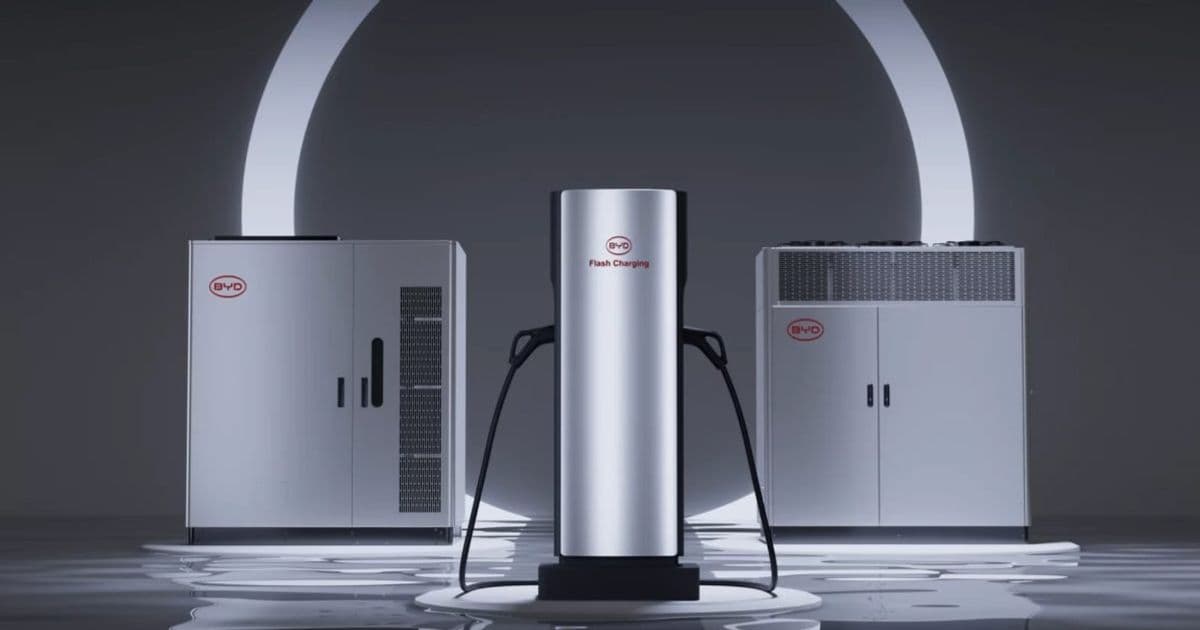
A single job posting in Toronto signals that BYD wants to build its own 1,000 kW charging network in Canada before it sells a single car there. The pattern is familiar, but the numbers are not, and the community reaction splits sharply between excitement and a quieter objection about what these chargers actually do for cars that aren't BYDs.
There is a recurring pattern in how Chinese automakers enter new markets, and it usually starts with something boring: a job listing. This week the tell came from BYD North America, which posted a role in Toronto for a "Flash Charging Business Development Manager" tasked with executing the company's "flash charging network expansion strategy and business growth across Canada." No press release, no staged unveiling. Just a hiring page, spotted and reported by Electrek, that quietly confirms the first planned deployment of BYD's megawatt charging system anywhere in North America.
The observation worth making isn't that BYD is coming to Canada. That has been telegraphed since January, when Canada cut its tariff on Chinese EVs from 100% to 6.1% under a quota system and BYD confirmed plans for 20 dealerships starting in Toronto. The interesting part is the sequencing. BYD is hiring to build and operate physical charging infrastructure before it sells a car in the country. That ordering tells you more about strategy than any marketing slide would.
The play is borrowed, the spec sheet is not
If this feels familiar, it should. Tesla built out its Supercharger network starting in 2012, ahead of demand, and turned it into the single most durable competitive advantage the company had for the better part of a decade. Owning the charging experience meant owning the objection that kept buyers away. BYD is running that same script, except the headline number is roughly three times larger.
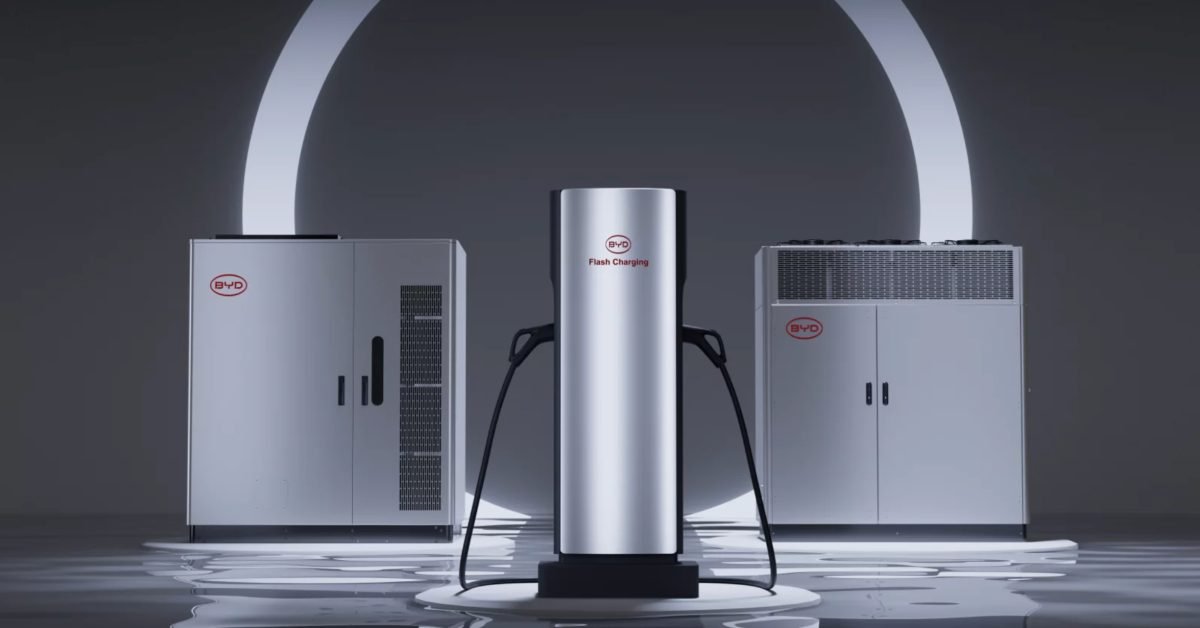
BYD unveiled its 1,000 kW Flash Charging system alongside a 1,000-volt Super e-Platform in March 2025, then pushed it to 1,500 kW with a second-generation Blade battery earlier this year. The company claims the system can add about 250 miles, or 400 km, of range in five minutes. For context, Tesla's V4 Supercharger cabinets top out around 500 kW for cars, and most North American EVs can't sustain more than 350 kW. BYD's hardware is built around vehicles drawing up to 1,000 amps at 1,000 volts.
The deployment pace in China backs up the ambition. BYD has built more than 5,700 Flash Charging stations there in roughly a year, and is now adding charging power at a rate that, by Electrek's accounting, runs about 2.4 times Tesla's monthly Supercharger expansion. Whatever skepticism is warranted about marketing peak numbers, the build cadence is real and measurable.
The counter-argument hiding in the comments
Here is where the consensus gets more honest if you read past the headline. The most upvoted comment on the original article makes a point that almost every casual reader will miss: you do not get "Flash Charging" unless you own a BYD car with the Super e-Platform. The five-minute figure is a property of a specific battery architecture, not of the charger plugged into your car.
The commenter, going by LPark, framed it well. The reason most EVs slow down dramatically as they fill up is that the charger has to throttle current as the state of charge climbs, to protect the cells. A battery engineered to accept very high current across the whole charge cycle changes that math. As the comment put it, a car with equivalent battery chemistry would charge in half the time even at a conventional fast charger, because the bottleneck was never purely the charger. The secret is in the cell, not the cable.
That distinction matters for how this story gets told. A megawatt charger in a parking lot does not magically speed up a Hyundai or a Tesla parked next to it. The infrastructure and the vehicle have to be co-designed. So the realistic near-term picture is a closed loop: BYD chargers fast-charging BYD cars, much like the early Supercharger network was a Tesla-only proposition. The open question is whether other manufacturers ship batteries capable of using that headroom within a few years, which would turn a proprietary moat into shared public benefit.
Why Canada, and why winter
The geographic choice is deliberate. BYD's second-generation Blade battery is pitched as charging from 10% to 70% in about five minutes even at -20°C. Cold-weather charging slowdown is one of the most cited reasons Canadians hesitate on EVs, and it is a genuine physics problem, not just marketing anxiety. If the claim holds up in independent testing, it targets the exact objection BYD needs to neutralize as an unknown brand entering a cold market.
The job posting itself reveals the operational reality behind the spec sheet. It asks for partners handling "power grid upgrades, equipment installation, and on-site operation services," and wants candidates with at least five years in commercial charging or energy storage plus an electrical engineering background. BYD pairs its stations with integrated battery storage specifically to soften the load these chargers put on local grids. Pulling a megawatt per stall is not something a typical distribution transformer shrugs off, which is why the grid-upgrade language is front and center rather than buried.
The friction nobody at headquarters controls
The enthusiasm should be tempered by logistics. BYD's Canadian vehicle launch has reportedly slipped toward 2027 because of the import quota system, and a charging network realistically needs to be operational before customers show up. Permitting, grid interconnection, and construction in Canada do not move at Shenzhen speed, battery buffering or not. The gap between a job posting and a functioning station is measured in years of municipal approvals and utility coordination.
There is also the broader political backdrop. The United States keeps BYD out entirely through tariffs, which sets up the contrast Electrek flagged bluntly: Canadian drivers may soon have access to megawatt-class charging and some of the cheapest EVs on the market while American buyers sit behind a 350 to 500 kW ceiling. Whether that contrast becomes a genuine competitive embarrassment or just a talking point depends on execution, and execution is the part that has not happened yet.
The pattern is clear enough to name. A capable newcomer is using infrastructure as a beachhead, the same way the incumbent it's chasing once did, with hardware that is genuinely ahead on paper. What remains unproven is everything that turns a strategy into a network: the grid deals, the permitting timelines, and whether the rest of the industry ever builds batteries that can drink from these chargers. Until then, the five-minute headline is real, but it comes with an asterisk that most readers will never see.
Comments
Please log in or register to join the discussion