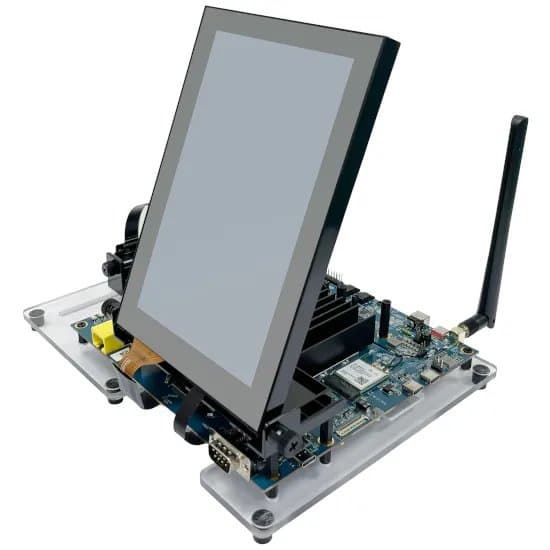
Collabora developers have queued a mainline driver for Airoha's AN8801R single-port Gigabit Ethernet PHY, the transceiver sitting on boards like the MediaTek Genio 720-EVK. It is bound for the Linux 7.2 merge window.
A new Ethernet PHY driver just hit net-next.git, and it is the kind of low-level plumbing that quietly determines whether your gigabit link actually negotiates cleanly or sits there dropping packets. Louis-Alexis Eyraud and AngeloGioacchino Del Regno of Collabora have written the air_an8801 driver to support the Airoha AN8801R Gigabit Ethernet PHY, with the code now staged for the upcoming Linux 7.2 merge window.
{{IMAGE:2}}
What the AN8801R Actually Is
The AN8801R is a single-port Ethernet PHY transceiver. A PHY is the chip that handles the physical layer of Ethernet: it takes the digital MAC traffic from the SoC and turns it into the analog signaling that travels down the twisted-pair copper, then does the reverse on the way back in. It manages auto-negotiation, link speed selection, and the actual electrical line driving. The MAC inside your SoC handles framing and addressing; the PHY handles getting bits onto the wire. On most consumer routers and SBCs, this split is invisible because the PHY is soldered down and just works, but the driver underneath has to know how to configure clocks, MDIO register maps, and link state.
Airoha positions the AN8801R as a low-power, highly integrated part aimed at Ethernet switches, routers and gateways, set top boxes, smart TVs, and game consoles. That target list tells you everything about where it shows up: cost-sensitive embedded boxes where board area and power budget matter more than headline throughput. It is a 10/100/1000 part, so a single gigabit port, not a multi-gig or 2.5GbE device.
Where You'll Find It: the MediaTek Genio 720-EVK
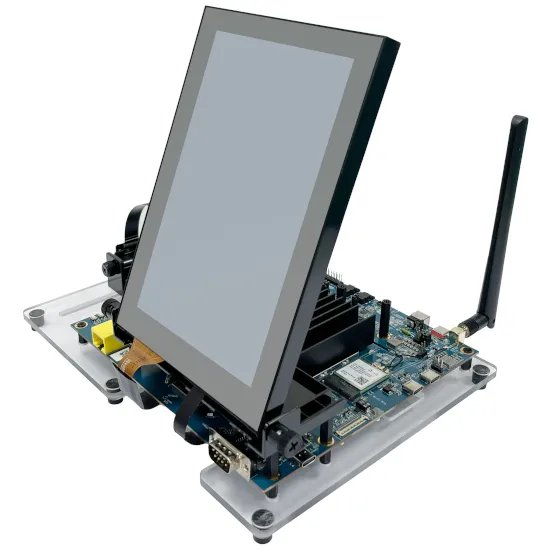
The concrete board driving this upstreaming effort is the MediaTek Genio 720-EVK development kit. The Genio 720 is MediaTek's edge-AI and IoT application processor, and the EVK pairs it with the AN8801R for its wired networking. If you have been eyeing the Genio platform for a homelab edge node or an always-on inference box, this is the difference between the onboard Ethernet being a first-class mainline citizen versus depending on a vendor BSP.
Built From the Downstream Vendor Driver
The upstream air_an8801 driver is based on a downstream kernel driver written by Airoha Technology that ships in MediaTek's vendor kernel, which is derived from Linux 6.6. This is the usual lifecycle for embedded networking silicon. The vendor writes a driver against whatever LTS kernel their SoC BSP targets, it works well enough to ship product, and then someone, often a third party like Collabora doing platform enablement, does the real work of cleaning it up to mainline standards and getting it reviewed on the netdev list.
The practical payoff for anyone running their own kernels is real. A vendor driver pinned to 6.6 means you are stuck on that kernel branch or carrying out-of-tree patches forward yourself every time you rebase. Once air_an8801 is in mainline, the PHY just works on any current kernel without backporting, and it picks up the broader PHY subsystem improvements that land over time: better ethtool integration, cable diagnostics, EEE (Energy Efficient Ethernet) handling, and consistent behavior across the link layer.
Enabling It
The driver is gated behind a new AIR_AN8801_PHY Kconfig option. If you are building a kernel for a Genio 720 board or anything else that carries this PHY, that is the symbol to enable under the Ethernet PHY device drivers menu. It will arrive in the net-next tree first and then flow into mainline during the Linux 7.2 merge window, so the first release you can grab it in without manual patching will be a 7.2 release candidate.
For the homelab crowd, none of this changes a benchmark number. A gigabit PHY tops out at gigabit, and the AN8801R is not pretending otherwise. What it changes is the maintenance equation: one less reason to run a frozen vendor kernel, one more board that boots a stock upstream image with working networking out of the box. That is the unglamorous work that makes embedded Linux boards actually usable for people who would rather measure their own systems than babysit someone else's patch stack.
Comments
Please log in or register to join the discussion