A small `fetch` bug reveals a larger truth about software design: every interface decides which risks users must consciously face, and which ones they may unknowingly inherit.
Thesis
The central argument of “Your Interface Has Two Channels” is that interface design is not only about what an API, language feature, or UI allows a user to do, but about what it forces the user to notice while doing it. Every interface carries both data and concerns, and those concerns can either appear in the main path of use, where they must be confronted, or off to the side, where they can be missed until a latent assumption becomes a production bug.
The opening fetch example is powerful because the failure is not exotic. In JavaScript, fetch resolves its promise when the server responds, even if that response is a 500 error. As the MDN documentation for Fetch explains, network failures reject, but HTTP error statuses still produce a response object. That means a programmer can write code that appears natural, parses JSON, starts a server, and never realizes that response.ok was the real gate between valid configuration and an error payload wearing the shape of data.
The article’s philosophical move is to say that this is not merely bad luck or careless programming. It is a signaling failure. The interface allowed a consequential concern, whether the HTTP response was semantically successful, to remain out-of-band. The programmer did not choose to ignore the error path. The programmer was never made to see that a choice existed.
Key Arguments
The article borrows the distinction between in-band and out-of-band signaling from telecommunications, then turns it into a vocabulary for API design. In-band concerns are carried through the path the user must travel. Out-of-band concerns exist somewhere else, perhaps in documentation, naming convention, runtime behavior, comments, or optional parameters. The difference matters because a missed in-band concern usually becomes an explicit decision, while a missed out-of-band concern becomes an accidental assumption.
Rust’s Result<T, E> is the cleanest example. A function returning Result<Config, ParseError> does not allow the caller to treat parsing as if it simply produces a Config. The type itself blocks that fiction. The caller must match, unwrap, propagate, or otherwise acknowledge the error. This does not guarantee wise handling, but it guarantees awareness. The concern is part of the interface’s main current.
JavaScript exceptions illustrate the opposite trade-off. A TypeScript function declared as returning Config may throw, but unless the type system or surrounding convention makes that visible, the caller can proceed as if failure does not exist. Documentation can say @throws, but documentation is not the same thing as confrontation. Java’s checked exceptions attempted to move exceptional failure back into the compiler-visible path, although the article rightly observes that confrontation without good ergonomics can decay into ritual. Empty catch blocks and broad throws Exception declarations create the appearance of thought without the substance of it.
That distinction is one of the article’s best insights. Making a concern in-band is not automatically good design. Attention is a scarce resource, and interfaces can waste it. If every minor possibility demands ceremony, users learn to swat away signals rather than interpret them. A good interface does not maximize friction. It spends friction where the cost of accidental ignorance is high.
The article also separates data representation from concern signaling. A C-style sentinel value such as -1 for failure is technically in-band as data, because it travels through the return value, but it may still be out-of-band as a concern. The caller can store the file descriptor, pass it onward, and never check whether it represents failure. In contrast, a Java checked exception travels outside the ordinary return value, yet the concern is in-band because the compiler forces acknowledgment. This is a subtle but useful distinction: the question is not where the bits travel, but whether the user must consciously interpret them.
Naming becomes another signaling channel. A HashSet name tells the user something about implementation, but not necessarily about iteration guarantees. A user may observe stable ordering in small examples and quietly depend on behavior the contract never promised. A TreeSet, by contrast, makes ordering harder to miss because the name points toward sorted structure. Names do not have the force of a compiler, but they guide attention, and attention is the real subject of the essay.
Union types extend the same idea. They are often praised for making invalid states unrepresentable, but the article argues that they can also make valid but easily missed distinctions visible. A keyboard event with key, altKey, ctrlKey, metaKey, and shiftKey fields permits every combination, but the primary key field can dominate the programmer’s attention. A discriminated union separating single-key from modified-key forces the modifier concern into the foreground, even if both cases are legal. This is less about correctness as mathematical exclusion and more about correctness as guided perception.
Required parameters work similarly. Java’s new String(bytes) can silently use the platform default charset, which may be fine until data crosses machines, regions, old systems, or protocols. Requiring a charset, as Guava does through APIs such as ByteSource.asCharSource(Charset), makes the encoding decision visible at the point where bytes become text. The interface refuses to let a global environmental assumption masquerade as an intentional choice.
Randomization is the article’s most interesting example because it moves a concern in-band through instability. If a map or hash table has unspecified iteration order, deterministic behavior can invite accidental dependence. Go’s language spec states that map iteration order is not specified, and the runtime has long made that uncertainty visible enough that developers are discouraged from relying on it. The design principle is almost psychological: if a behavior is not guaranteed, the interface should avoid looking too guaranteed.
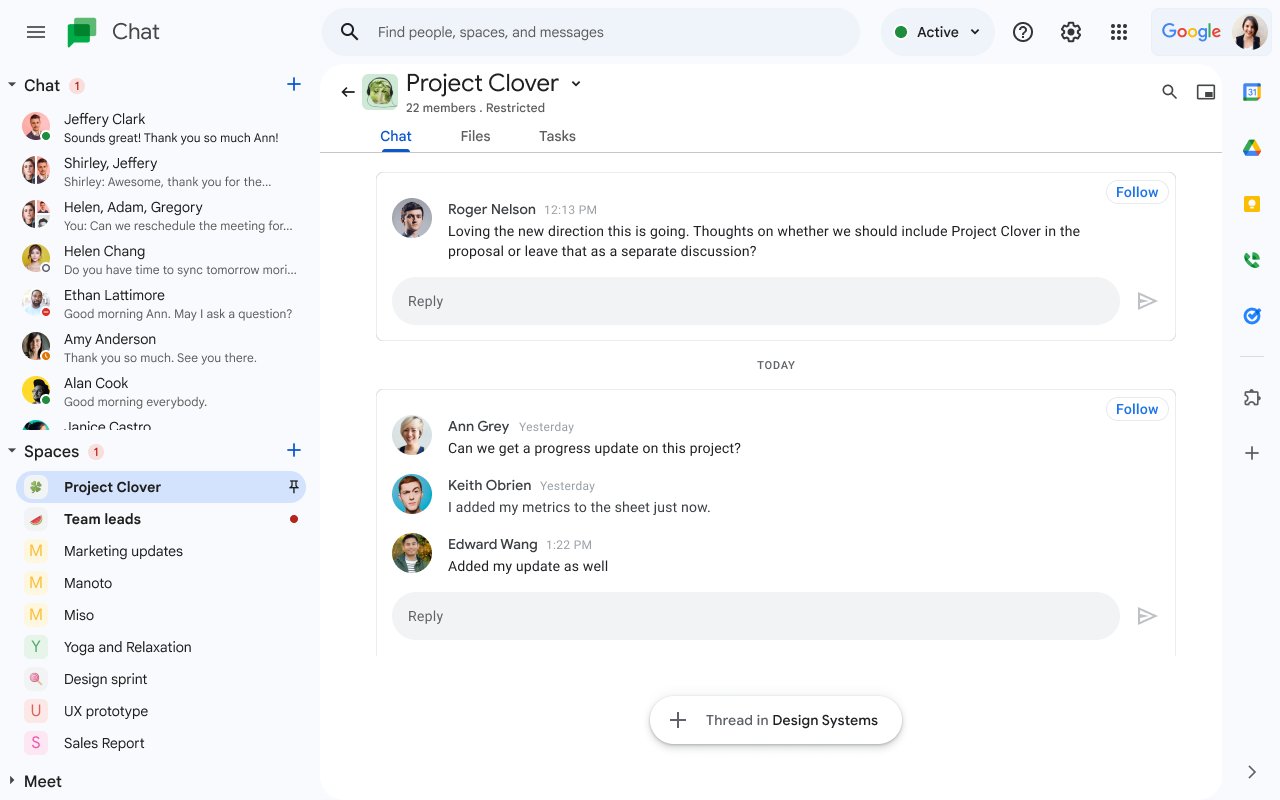
The same argument translates well to user interfaces. The comparison between older Google Chat topic grouping and Slack-style inline threading shows that visual layout can force or hide decisions just as strongly as a type signature. In the older Google Chat model, users had to choose whether they were starting a new conversation or replying to an existing one. In Slack’s model, the always-available channel composer makes a top-level reply the path of least resistance, so threading becomes easier to forget.
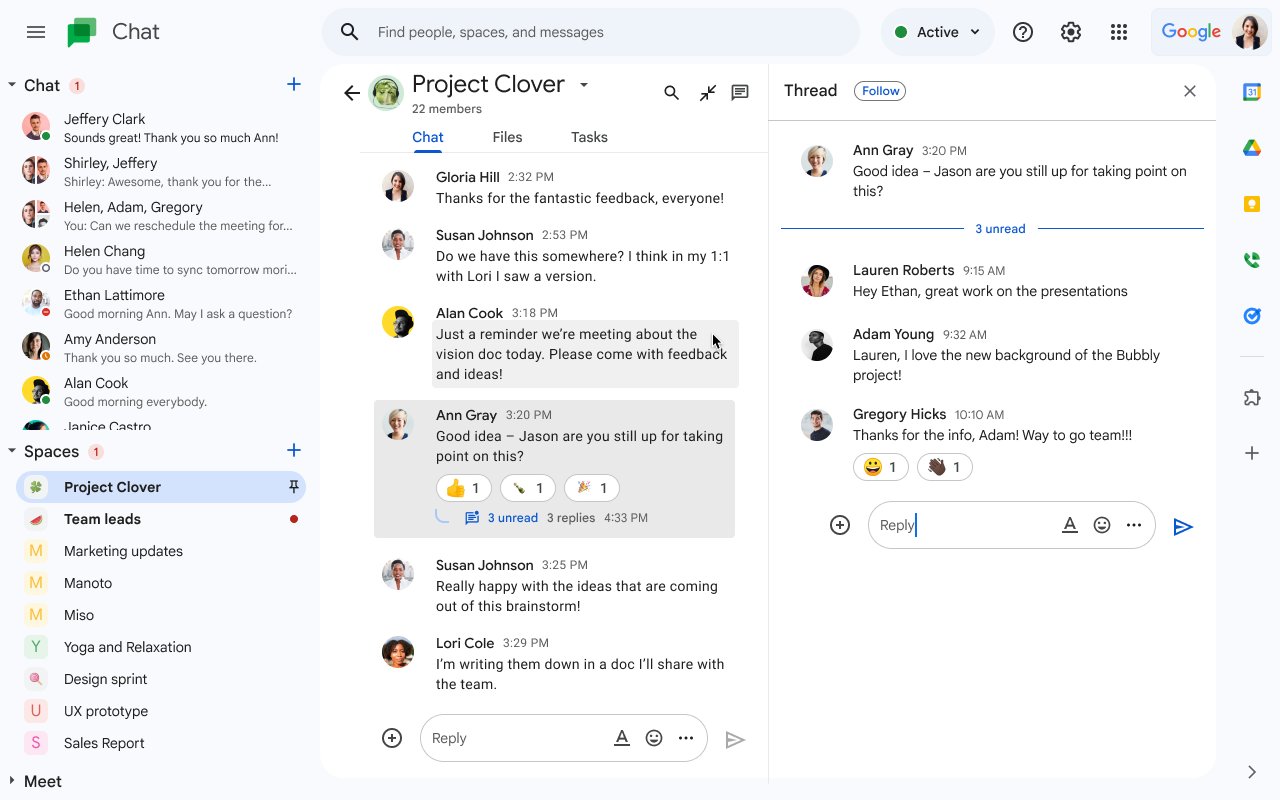
This is not merely a chat-product preference. It is the UI version of fetch resolving on HTTP 500. The interface makes one action feel like the default flow and makes the structurally safer action require extra awareness. When people reply in the wrong place, the failure is not only user error. The interface made the conversational boundary out-of-band.
Implications
The implication for API designers is that every optional parameter, default value, thrown exception, nullable return, sentinel value, naming choice, and UI affordance is a theory of attention. Design is not just deciding what should be possible. It is deciding what should be impossible to miss.
This reframes familiar debates. “Should this function throw or return an error value?” becomes “Should failure be part of the caller’s ordinary reasoning path?” “Should this argument have a default?” becomes “Is the default safe enough that accidental acceptance is acceptable?” “Should this be a union?” becomes “Do users need to distinguish these cases before they can safely proceed?”
The article’s principles are practical because they resist absolutism. Sensible defaults belong out-of-band when they match nearly every use case and do not corrupt meaning. An indexOf starting position defaulting to zero is harmless because it matches the intuitive operation. Auto-pagination with a reasonable page size may be fine if it preserves correctness and merely changes performance. Python’s open defaulting to read mode is a good safe default because it avoids destructive writes.
Security, privacy, and data integrity change the calculus. If a default can destroy data, expose information, weaken authentication, corrupt encoding, or silently relax validation, the concern deserves stronger signaling. The same is true when a choice is hard to recover from later. Interfaces should be gentle when the cost of guessing is low and forceful when the cost of guessing is hidden but severe.
Actionability also matters. A concern should not be in-band merely because it is real. If users cannot make a meaningful choice at the moment they are confronted, the signal becomes noise. Android’s move from install-time permission approval to runtime permission prompts is a strong example. The user can better judge a camera request when tapping a scan button than when installing an app among a long list of abstract capabilities.
This helps explain why overzealous configuration APIs feel bad. A database client that requires a timeout, retry policy, pool size, isolation level, and tracing configuration before the first query may be technically honest, but it may force premature guesses. The better design may set conservative defaults, expose diagnostics, and make tuning visible when production behavior supplies context.
The broader pattern is that interfaces educate by constraint. They teach users what the designer thinks deserves attention. A type checker, compiler error, required field, disabled button, explicit branch, or changing iteration order says, “You cannot proceed while pretending this does not exist.” Documentation says, “This exists if you remember to look.” Both have a place, but they are not equivalent.
Counter-Perspectives
There is a real risk in making too many concerns in-band. Developers already operate inside dense fields of prompts, types, lints, warnings, permissions, schema constraints, and configuration demands. If every theoretical edge case blocks progress, users learn to satisfy the interface rather than think with it. The Java checked-exception backlash is a warning: mandatory acknowledgment can become a paperwork system for code.
There is also a composability cost. Error unions can spread through call chains. Required parameters can make simple examples feel heavy. Rich discriminated unions can be more accurate but harder to evolve. UI flows that force choices can slow expert users. Randomization can expose hidden assumptions, but it can also make debugging less repeatable unless paired with tooling, seeds, or clear diagnostics.
The strongest counter-perspective is that out-of-band does not always mean careless. Documentation, conventions, monitoring, tests, linters, and culture are real channels. A low-level systems library can reasonably expect users to understand memory ownership or concurrency hazards that would overwhelm a beginner-facing tool. Audience matters. The article acknowledges this through the example of Rust surfacing mutex poisoning via Result while Python hides buffer sizing behind a default. Different communities have selected into different contracts of attention.
The deeper lesson, then, is not that every API should imitate Rust or that every UI should force a modal choice. It is that designers should be conscious of where each concern lives. The worst failures come from accidental out-of-band design, where an interface hides a dangerous assumption without anyone deciding that hiding it was acceptable.
A well-designed interface is not one that eliminates thought. It is one that allocates thought. It lets ordinary cases stay ordinary, but it interrupts the user before silence becomes false confidence. That is why the fetch example lingers: the code looks reasonable, the runtime behavior is specified, and the bug still feels unfair. The interface did not merely permit a mistake. It made the mistake feel like the natural path.
Comments
Please log in or register to join the discussion