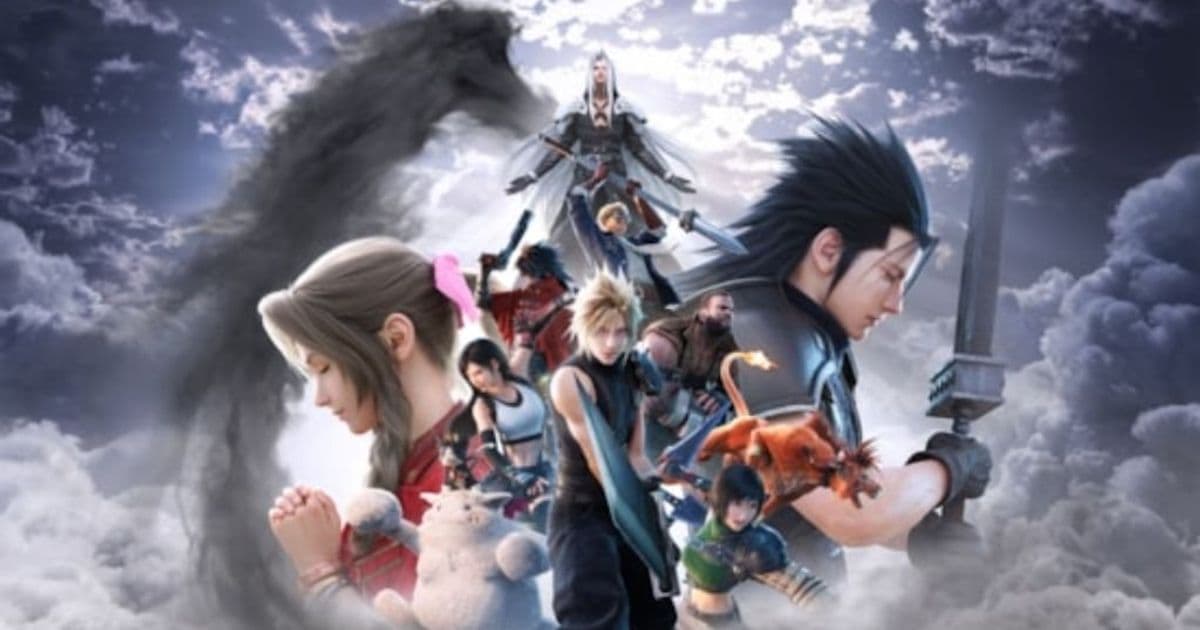
Square Enix locked in a spring 2027 same-day release for the trilogy capper, and director Naoki Hamaguchi says keeping the same team across Remake, Rebirth, and Revelation is the reason it shipped in a decade instead of the six-to-seven years a single AAA title now demands.
Square Enix used June 2026 to confirm what fans had been tracking since the Final Fantasy VII Remake project began: the trilogy ends with Final Fantasy VII: Revelation, targeting a spring 2027 launch on PC, PlayStation 5, Nintendo Switch 2, and Xbox Series X|S. Every version ships the same day, which is the detail worth flagging first because simultaneous multi-platform launches are still the exception for projects this size, not the rule.

What's new
The reveal trailer leaned on two things. The first is traversal: players can explore regions using the Highwind airship, which expands how the world map connects compared to the more corridor-and-region structure of earlier entries. The second is a heavier emphasis on player-driven story choices, suggesting branching beats rather than a fixed retelling. For a remake of a 1997 game whose plot most of its audience already knows, choice-driven structure is a reasonable way to keep the third act unpredictable.
The release cadence is the headline for anyone watching development timelines. Final Fantasy VII Remake arrived in 2020, Rebirth followed in 2024, and Revelation caps the trilogy by roughly 2027. That is the full arc delivered in about a decade. Stack that against the current AAA baseline, where a single blockbuster routinely runs five to seven years from concept to shelf, and the throughput on this trilogy looks unusual. Square Enix shipped three large titles in the time many studios spend on one.
How it compares
Director Naoki Hamaguchi of Square Enix's Creative Studio explained the pacing in an interview with restart.run, and his reasons are less about a secret production technology than about scheduling discipline and roster stability. Planning for the remake started while Final Fantasy XV and Final Fantasy XVI were still in development, so the team was not starting cold each time.
The bigger factor he named is staff continuity. "When we were working toward the end of Remake, we already had an idea of how to develop Rebirth, and then, toward the end of development on Rebirth, we had a rough idea of how to approach Revelation," Hamaguchi said. He added that keeping most of the same team across the transition from Rebirth to Revelation preserved a consistent workflow: "Having a kind of constant alignment within the staff, and having the same staff, or most of the staff, work on Revelation from Rebirth to Revelation meant we were able to maintain the same type of flow, and I think that really helped development stay on track within that span of time."
That tracks with how production cost actually behaves on large software projects. The expensive part of a long cycle is rarely the code or the assets in isolation, it is the institutional knowledge lost when teams disband between projects and the ramp-up tax paid to rebuild it. By treating the trilogy as one continuous pipeline rather than three separate greenlights, Square Enix amortized its tooling, its engine work, and its team familiarity across all three games. Hamaguchi framed the contrast directly: "Games these days tend to take five to seven years. Rebirth was only a few years ago, and we're already now looking at Revelation coming in spring."
There is a hardware angle hiding in the platform list too. Including Nintendo Switch 2 alongside PS5 and Xbox Series X|S, on the same day, means the team had to scale a visually demanding engine down to a handheld-class target without holding back the higher-end versions. Same-day parity across that spread of performance envelopes is a meaningful engineering result on its own, and it implies the studio's continuous-team approach extended to keeping its platform and optimization knowledge intact rather than rebuilt per entry.
Who it's for
If you have played Remake and Rebirth, Revelation is the conclusion you have been waiting on, and the spring 2027 window plus same-day multi-platform release means you will not be locked into a single console to finish the story. PC and Switch 2 owners get in at launch rather than a year later, which has not always been the pattern for Square Enix's marquee titles.
For people who follow how big software actually gets built, the more interesting takeaway is the production model. Hamaguchi's account is a clean case study in why keeping a team together between releases pays off in schedule, and why studios that rebuild from scratch each cycle keep landing in the five-to-seven-year range. The trilogy did not move faster because of any single trick. It moved faster because the people who knew the codebase, the pipeline, and the world never had to relearn them.
Comments
Please log in or register to join the discussion