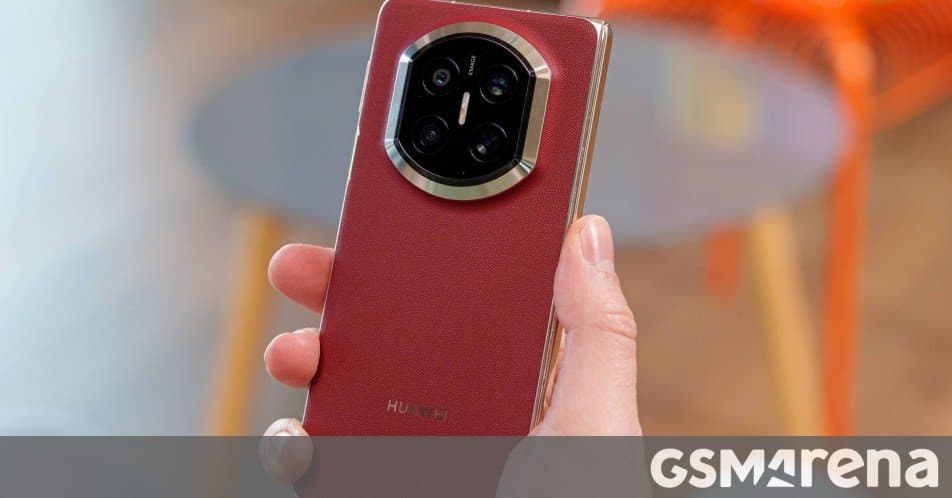
Huawei has told its partners and corporate clients in China that every product in its catalog gets more expensive on July 1, 2026. The culprit is the same RAM and storage cost spike squeezing the entire industry, with AI demand soaking up supply that used to flow into phones and laptops.
Huawei is the latest name to join a lengthening list of device makers warning that prices are about to climb. The company sent an official "price adjustment notice" to its key partner networks and corporate clients in China, confirming that from July 1, 2026, the prices for all Huawei products will rise. There is no exact figure yet, and the company says more specifics arrive next month, but the direction is set.
What Huawei actually said
The notice points to two forces working together. The first is a shift in the global chip supply chain. The second is the enormous appetite of AI systems for the same components that go into consumer hardware. Put those together and Huawei says it faces "ever-increasing cost pressure" that it can no longer absorb internally.
Stripped of the corporate phrasing, this is about memory. RAM and NAND flash storage prices have been climbing sharply, and Huawei is telling buyers it has run out of room to swallow the difference. Rather than quietly trimming specs or cutting margins, the company is choosing to pass the cost forward.
That is a notable move for a brand that sells across a wide range, from the foldable Mate X7 down to budget devices like the nova Y74 with its 6,620mAh battery. A blanket increase covering "all Huawei products" means phones, tablets, laptops, wearables, and accessories are all in scope.
Why memory got so expensive
The reason this is happening to Huawei, and to nearly everyone else, comes down to where memory chips are going. Modern AI accelerators rely on high-bandwidth memory, or HBM, which is built on the same DRAM manufacturing lines that produce the LPDDR chips inside your phone and the DDR5 modules inside laptops and servers. There is a finite amount of wafer capacity, and HBM commands far higher margins.
When a memory maker like Samsung, SK Hynix, or Micron can sell wafer output as HBM stacks for AI data centers at premium prices, the incentive to allocate capacity toward consumer-grade LPDDR shrinks. Supply tightens on the consumer side, contract prices rise, and device makers feel it at the bill of materials level. A phone with 12GB or 16GB of RAM and 512GB of storage suddenly costs meaningfully more to build than it did a year ago, even with no design changes at all.
Storage follows a similar pattern. NAND flash production has been disciplined after a long stretch of oversupply, and the same data center buildout that wants memory also wants vast amounts of solid-state storage. The result is upward pressure on both of the components that scale most directly with a phone's spec sheet.
The ecosystem angle
For Huawei specifically, the timing intersects with its broader hardware and software strategy. The company has been pushing HarmonyOS as a self-contained ecosystem inside China, weaving its phones, tablets, laptops, watches, and smart home gear into a tightly linked experience. That integration is a selling point, but it also means a customer committed to Huawei devices has fewer easy exits. When prices rise across an ecosystem you have already bought into, switching out a single product becomes less attractive than it would be for someone holding a loose collection of devices from different brands.
Huawei is also investing heavily on the silicon side, with reports of the company targeting 1.4nm chip production by 2031 and floating its own scaling approach for semiconductors. Vertical ambitions like that are expensive, and a memory-driven cost increase lands on top of an organization already spending to reduce its dependence on outside suppliers.
What it means for buyers
If you have been eyeing a Huawei device, the practical takeaway is simple. Buying before July 1 locks in current pricing, and waiting likely means paying more for the same hardware. That said, Huawei is far from alone here. Other manufacturers have signaled similar increases, and the memory squeeze is an industry condition rather than a single-brand problem. Expect comparable adjustments from rivals over the coming quarters.
The exact size of the increase remains the open question. A few percent would be an annoyance; a double-digit jump on higher-storage configurations would reshape how the lineup competes on value. Huawei says the details are coming next month, and those numbers will tell us how much of the memory shock the company expects its customers to carry. For now, the message is clear enough: the era of steadily falling per-gigabyte prices has paused, and consumer hardware is starting to reflect the cost of feeding the AI boom.
Comments
Please log in or register to join the discussion