Leaked firmware and a Musk product cameo confirm two slimmer Starlink dishes are in production: a shrunken Standard and a Mini Rugged with its own battery and USB-C charging. Here's how they stack up against the current kits and which buyers should hold off.
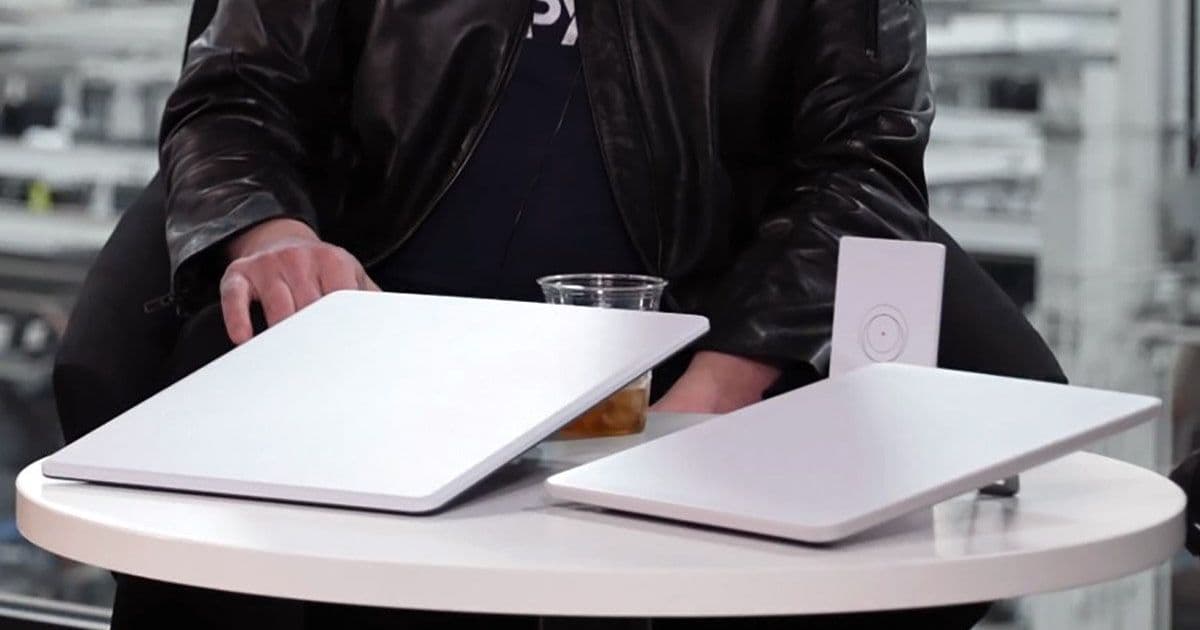
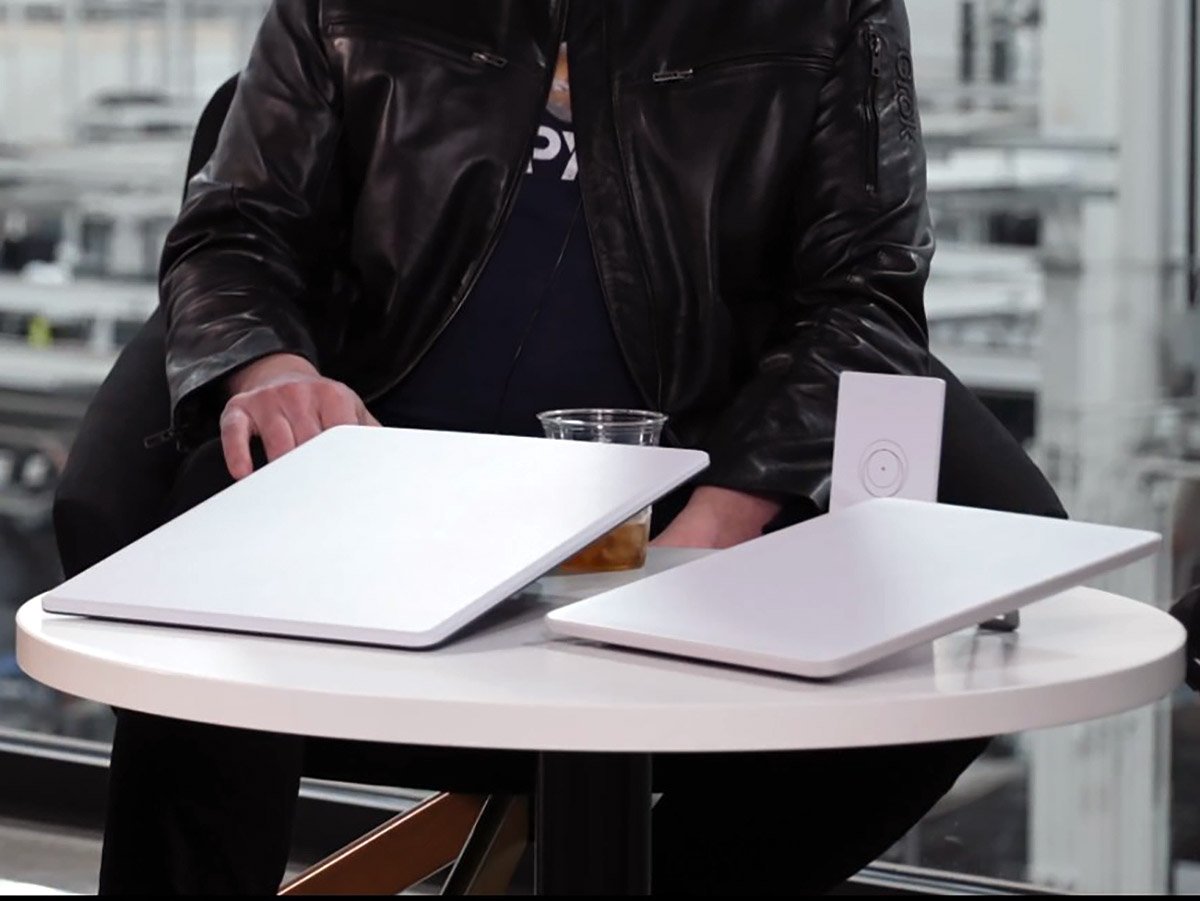
SpaceX is lining up two new Starlink dishes ahead of its record-breaking IPO, and for once the leaks and the official tease line up. Elon Musk parked two unannounced terminals on the table during a SpaceX AI satellite briefing, calling them "the new Starlink terminals, which we make in much higher volume than the current terminals." That was the whole quote. The hardware did the rest of the talking, and it said both units are slimmer and more travel-friendly than the Standard and Mini dishes on sale today.
What's new
Two products appear to be in the pipeline, with a release window expected somewhere in Q2 to Q3 2026.
The first is a successor to the V4 Standard dish, internally tagged rev5. Ukrainian teardown specialist Oleg Kutkov, who has a long track record of pulling Starlink firmware apart, spotted the rev5 board string alongside several "prod" variants that suggest the boards are already rolling off a line rather than sitting in a lab. The current V4 Standard launched in late 2023, so it's due for a refresh, and the physical evidence points to a real shrink rather than a spec bump. The new Standard looks closer in size to the backpack-friendly Mini than to its own predecessor.
The second, and more interesting, find is a MINI1_RUGGED_PROD1 device string. That points to a hardened version of the Mini. A research team at the University of Victoria went further and identified firmware references to PowerSource_BATTERY, PowerSource_USBC, and DishBatteryStats, fields that track state of charge and active charging. In plain terms: a Mini with a battery inside it, charged over USB-C, reporting its own power telemetry.
How it compares
The Mini that exists today sells on Amazon for around $360, and it's genuinely portable, but it has a tether problem. It needs an external power supply or a third-party battery pack to run, which means anyone taking it into the field ends up carrying a brick and a tangle of adapters to keep it alive. A self-contained battery removes that entire dependency. For emergency response, remote camping, disaster zones, or any deployment where mains power isn't a given, an all-in-one unit you can pick up and run is a meaningfully different product, not just a tougher shell.
The rugged designation in the firmware string also implies improved environmental sealing or impact tolerance over the standard Mini, which suits the same off-grid use cases. SpaceX hasn't said what ingress rating to expect, so treat ruggedness as directional until there's a spec sheet.
On the Standard side, the story is convergence. The Standard dish has always been the higher-throughput, fixed-install option, while the Mini traded performance for portability. A rev5 Standard that shrinks toward Mini dimensions narrows that physical gap. The open question, and the one that matters most for buyers, is whether SpaceX keeps the Standard's larger phased-array aperture and its performance edge while cutting the footprint, or whether the smaller size comes with a throughput compromise. None of the leaked strings answer that. A smaller panel can mean fewer antenna elements, which can mean lower peak speeds and weaker performance under load or in obstructed sky. Until the spec sheet lands, assume the size reduction has a trade-off attached rather than being free.
Who it's for
If you run a fixed home or office install and your current V4 Standard works, there's no reason to chase rev5 on looks alone. Wait for confirmed throughput numbers before deciding the shrink is an upgrade rather than a sidegrade.
If you're a mobile or off-grid user eyeing the Mini, the calculus flips. The rugged Mini with an integrated battery is the unit worth holding out for. Buying the current $360 Mini today means immediately budgeting for a power solution that the next generation may build in. For RV travelers, field crews, and emergency kits, the battery model is the one that actually solves the daily annoyance.
SpaceX has not officially confirmed specs or pricing for either dish. What we have is Musk confirming they're in production on camera, plus firmware evidence that backs both the slimmer Standard and the battery-equipped Mini. With the long-anticipated SpaceX IPO approaching, a launch timed to ride that attention would fit the company's pattern, so expect the official reveal sooner rather than later.
Comments
Please log in or register to join the discussion