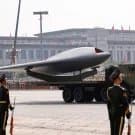
Leaked Chinese military procurement documents show the People's Liberation Army's systematic integration of AI across all warfare domains, from autonomous drone operations to cyber attacks and information warfare.
Chinese military procurement documents obtained by researchers reveal the People's Liberation Army's comprehensive strategy to integrate artificial intelligence across all domains of modern warfare, from autonomous drone operations to cyber attacks and information warfare campaigns.
According to analysis published in Foreign Affairs, the documents show the PLA has been systematically acquiring AI capabilities for specific military applications over the past several years. The procurement records detail efforts to develop AI systems for drone piloting assistance, cyber attack coordination, battlefield decision-making support, and large-scale disinformation operations.
The documents indicate the PLA views AI as critical for maintaining military competitiveness against Western forces, particularly in areas where China faces technological disadvantages. The military appears to be pursuing a "system of systems" approach, where AI augments human decision-makers rather than replacing them entirely.
Key findings from the procurement analysis include:
Autonomous Systems Development
- Multiple contracts for AI-powered drone control systems that can operate in contested environments
- Research into swarm intelligence for coordinating large numbers of unmanned vehicles
- Development of computer vision systems for target identification and tracking
Cyber Warfare Capabilities
- Procurement of AI tools for automated vulnerability discovery and exploitation
- Systems designed to coordinate distributed denial-of-service attacks
- Machine learning models for social engineering and phishing campaign optimization
Decision Support Systems
- AI assistants for military planning and logistics optimization
- Real-time battlefield analysis tools using sensor fusion
- Predictive modeling for force deployment and resource allocation
Information Operations
- AI systems for content generation and distribution across social media platforms
- Tools for identifying and exploiting social divisions in target populations
- Automated fact-checking bypass mechanisms
The PLA's approach appears to mirror broader Chinese national AI strategy, which emphasizes military-civil fusion and the integration of commercial AI advances into defense applications. The documents suggest China views AI as an "assassin's mace" technology that could offset traditional military advantages held by the United States and its allies.
This revelation comes amid growing concerns about AI's role in military applications globally. The Pentagon has been pursuing its own AI initiatives through programs like Project Maven, while tech companies face increasing pressure regarding military contracts. The contrast between U.S. companies' public stances on military AI and the PLA's systematic procurement highlights the strategic competition in this domain.
Strategic Implications
The PLA's documented AI integration efforts suggest several concerning trends:
Accelerated Decision Cycles: AI systems could enable faster operational tempo in both conventional and cyber domains
Asymmetric Capabilities: AI may allow China to project power in ways that don't require matching U.S. hardware capabilities
Information Dominance: Advanced AI tools for information warfare could be deployed at scales previously impossible
Human-Machine Teaming: The PLA appears focused on augmenting rather than replacing human operators
International Response
The revelation of these procurement documents is likely to intensify debates about AI arms control and military applications. While the United States has imposed export controls on advanced AI chips to China, the documents suggest the PLA has found ways to develop indigenous capabilities or acquire them through alternative channels.
Some analysts argue this underscores the need for international agreements on military AI use, while others contend that the technology's dual-use nature makes such agreements difficult to enforce. The PLA's systematic approach to AI integration suggests that, regardless of international norms, China views the technology as essential for future military operations.
Technical Context
The PLA's AI procurement strategy reflects current limitations in the technology. Rather than pursuing artificial general intelligence, the documents show a focus on narrow AI applications where the technology has proven effective:
- Computer vision for surveillance and targeting
- Natural language processing for information operations
- Reinforcement learning for autonomous navigation
- Predictive analytics for logistics and planning
This pragmatic approach suggests the PLA is building capabilities based on proven technologies rather than speculative future advances.
The documents provide rare insight into how a major military power is actually implementing AI technologies, rather than theoretical discussions of potential applications. As AI capabilities continue to advance, the gap between stated intentions and actual deployment may narrow, making the PLA's current approach a critical indicator of future military AI development trajectories.
The full analysis of these procurement documents appears in the March 2026 issue of Foreign Affairs, providing detailed breakdowns of specific contracts and their intended military applications.
Comments
Please log in or register to join the discussion