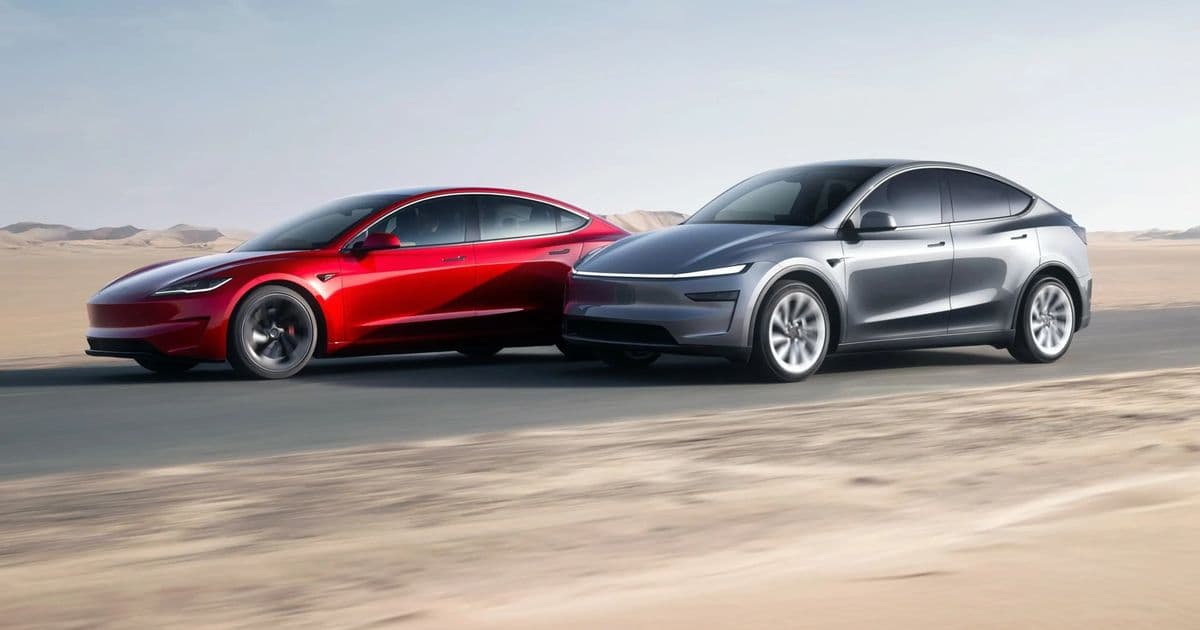
Tesla's massive AI6 chip order could generate billions for Samsung as the automaker doubles down on in-house silicon development for future vehicles and robots.
Tesla's ambitious plans for AI6 silicon development have put Samsung in a prime position to benefit from a potential revenue bonanza, as the electric vehicle maker scrambles to secure additional wafer capacity from its Texas foundry partner.
Tesla's $20 billion chip investment signals AI6 push
The numbers are staggering. Tesla announced during its latest quarterly earnings that it will spend $20 billion in 2026 alone to maintain its competitive edge in electric vehicles, robotics, and energy storage. This represents a doubling of its historical average capital expenditure and underscores the company's commitment to vertical integration of critical components.
Much of this investment will flow directly to Samsung, which currently supplies Tesla with AI4 chips fabricated on a 5nm process for use in the 2026 Model Y. The existing foundry contract, valued at approximately $2 billion annually for 16,000 wafers per month, is now being renegotiated as Tesla seeks to dramatically expand its silicon footprint.
AI6 ambitions require 40,000 wafers monthly
Tesla's current AI4 chip production runs at 16,000 wafers per month through Samsung's Texas facility. However, the company now believes it will need 40,000 wafers monthly to support its AI6 ambitions, representing a 150% increase in capacity requirements.
This massive scaling effort comes as Tesla prepares to transition from its current 5nm AI4 processor to the next-generation AI6 chip, which will be manufactured on Samsung's advanced 2nm process. The smaller process node promises significant improvements in performance and power efficiency, critical for the autonomous driving and robotics applications Tesla envisions.
Samsung's 5G modem adds another revenue stream
Beyond the AI6 processor itself, Samsung has developed a dedicated 5G modem specifically for Tesla's products. This modem is scheduled to begin shipping later in 2026, creating an additional revenue stream that could add hundreds of millions to Samsung's earnings from the Tesla partnership.
The 5G modem represents a strategic move by Tesla to reduce its reliance on Qualcomm and other third-party suppliers, further cementing the deepening relationship between the two companies.
Timeline pushes AI6 deployment to 2028
Despite the aggressive capacity negotiations, Tesla's AI6 processor is not expected to appear in vehicles or robots before 2028. This timeline suggests that the current AI4 chips will continue to power Tesla's products through at least 2027, providing a bridge to the next generation of silicon.
This delay also gives Samsung additional time to ramp up production capacity at its Texas facilities. The company's Taylor fab, which was originally planned to be operational this year, may face delays that could impact Tesla's ability to secure the 40,000 wafers it's seeking.
Samsung leverages AI chip boom for premium pricing
Samsung appears to be capitalizing on the current AI chip boom to maximize its revenue from the Tesla partnership. Industry sources indicate that the company has successfully negotiated premium pricing for its next-generation HBM4 memory with other clients, charging Nvidia double the previous rates.
This pricing power stems from the massive demand for AI-capable processors across the technology industry. As companies race to develop more sophisticated AI models and applications, foundries like Samsung have gained significant leverage in contract negotiations.
Texas foundry capacity remains uncertain
The success of Tesla's AI6 ambitions ultimately depends on Samsung's ability to deliver the requested capacity at the agreed-upon price point. The Texas foundry's ability to scale production to 40,000 wafers monthly represents a significant challenge, particularly given the advanced 2nm process technology involved.
Samsung must balance Tesla's demands against commitments to other major clients and its own production constraints. The company's stock price has reached record highs amid the AI chip craze, suggesting investors expect continued strong performance from its foundry business.
Strategic implications for automotive silicon
Tesla's push for AI6 silicon represents a broader trend in the automotive industry toward greater vertical integration of critical components. By developing its own AI processors, Tesla aims to optimize performance for its specific autonomous driving algorithms and reduce dependence on off-the-shelf solutions.
This strategy could provide Tesla with a competitive advantage as vehicles become increasingly software-defined and AI-dependent. The company's willingness to invest $20 billion annually in silicon development signals its belief that custom processors will be essential for future autonomous capabilities.
What this means for consumers
For Tesla customers, the AI6 development timeline suggests that significant performance improvements in autonomous driving capabilities may be several years away. However, the massive investment in custom silicon indicates that Tesla remains committed to advancing its Full Self-Driving technology.
The partnership between Tesla and Samsung also highlights the growing importance of semiconductor supply chains in the automotive industry, where access to advanced process nodes can determine competitive positioning in the race toward full autonomy.
As negotiations continue between the two companies, the outcome will likely shape not only Tesla's product roadmap but also Samsung's foundry strategy for years to come. The potential for $5 billion in annual revenue from a single client underscores the strategic value of Tesla's silicon ambitions for Samsung's bottom line.
The coming months will reveal whether Samsung can accommodate Tesla's ambitious capacity requests and at what price, potentially setting precedents for future automotive semiconductor partnerships in an increasingly AI-driven world.
Comments
Please log in or register to join the discussion