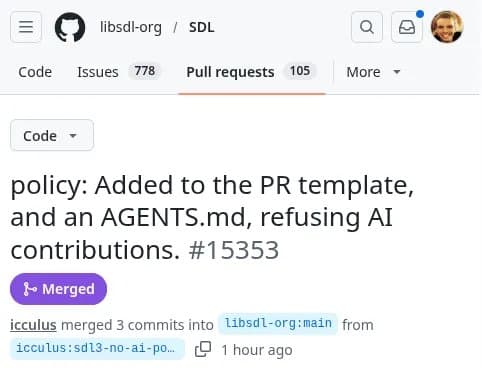
The Simple DirectMedia Layer (SDL) has implemented a strict policy prohibiting AI/LLM-generated code contributions, citing licensing concerns and quality issues as key reasons for this decision.
The Simple DirectMedia Layer (SDL), a cornerstone library for cross-platform game development and an integral part of the Steam Runtime, has taken a firm stance against AI-generated code contributions. In a move that underscores growing concerns within the open-source community, SDL has implemented a comprehensive policy prohibiting the use of Large Language Models (LLMs) like ChatGPT, Claude, Copilot, and others for generating code submitted to the project.
This policy emerged after a community discussion sparked by a GitHub ticket questioning SDL's stance on AI-generated contributions. The debate intensified following observations of GitHub Copilot usage in recent SDL reviews and suspicions that some recent contributions may have been produced using AI tools like Claude Code.
Ryan C. Gordon, known in the community as "Icculus," authored the official AGENTS.md document that outlines SDL's position. The policy is unequivocal: "AI may not be used to generate code for contributions to this project." The document goes on to explain the rationale behind this decision, citing several critical concerns:
Licensing Uncertainty
One of the primary concerns is the potential licensing conflicts that AI-generated code might introduce. Since AI models are trained on vast datasets of unknown origin, there's no way to verify whether the generated code complies with SDL's Zlib license or whether it might inadvertently include code from other projects with incompatible licenses. This uncertainty poses a significant risk to the project's legal standing and the broader open-source ecosystem.
Quality and Reliability Issues
SDL's policy also addresses the practical problems associated with AI-generated code. The document notes that AI tools frequently "hallucinate issues that are not actually problems in practice, report incorrect information, and describe problems that are actually not issues at all." This tendency to generate false positives or misdiagnose code issues can lead to unnecessary work and potentially introduce new problems into the codebase.
Human Oversight Required
While the policy prohibits AI-generated code, it does acknowledge that AI tools can be useful for identifying potential issues. However, it emphasizes that any solutions to these identified problems must be authored by humans. This nuanced approach recognizes the potential benefits of AI-assisted development while maintaining the integrity of the contribution process.
Implementation Details
The policy has been implemented through multiple channels. The AGENTS.md document serves as the official policy statement, while the GitHub pull request template has been updated to include a checkbox confirming that the submission does not contain AI-generated code. This dual approach ensures that contributors are aware of the policy at multiple stages of the contribution process.
Industry Context
SDL's decision places it among a growing number of open-source projects taking a cautious approach to AI-generated code. This trend reflects broader concerns within the developer community about the implications of AI-assisted development for code quality, licensing, and the fundamental principles of open-source collaboration.
Impact on the Gaming Ecosystem
As a critical component of the cross-platform gaming infrastructure and the Steam Runtime, SDL's policy could have ripple effects throughout the gaming industry. Game developers and engine creators who rely on SDL will need to ensure their contributions comply with this policy, potentially influencing development practices across the sector.
Community Response
The policy has sparked discussion within the SDL community and beyond. While some developers appreciate the clear stance on maintaining code quality and licensing integrity, others argue that the blanket prohibition might be too restrictive, especially as AI tools continue to evolve and improve.
Looking Forward
As AI-assisted development tools become increasingly sophisticated, projects like SDL will need to continually evaluate their policies. The current stance represents a conservative approach that prioritizes the project's long-term stability and legal compliance over the potential short-term benefits of AI-generated code.
For developers working with SDL, this policy serves as a reminder that while AI tools can be valuable for learning, debugging, and exploring solutions, the final code that makes its way into production systems should be human-authored and carefully reviewed. This approach ensures that the codebase remains maintainable, legally compliant, and true to the collaborative spirit of open-source development.
The full policy details can be found in the official SDL repository, where the community continues to discuss the implications and implementation of this important decision for the future of cross-platform game development.
Comments
Please log in or register to join the discussion