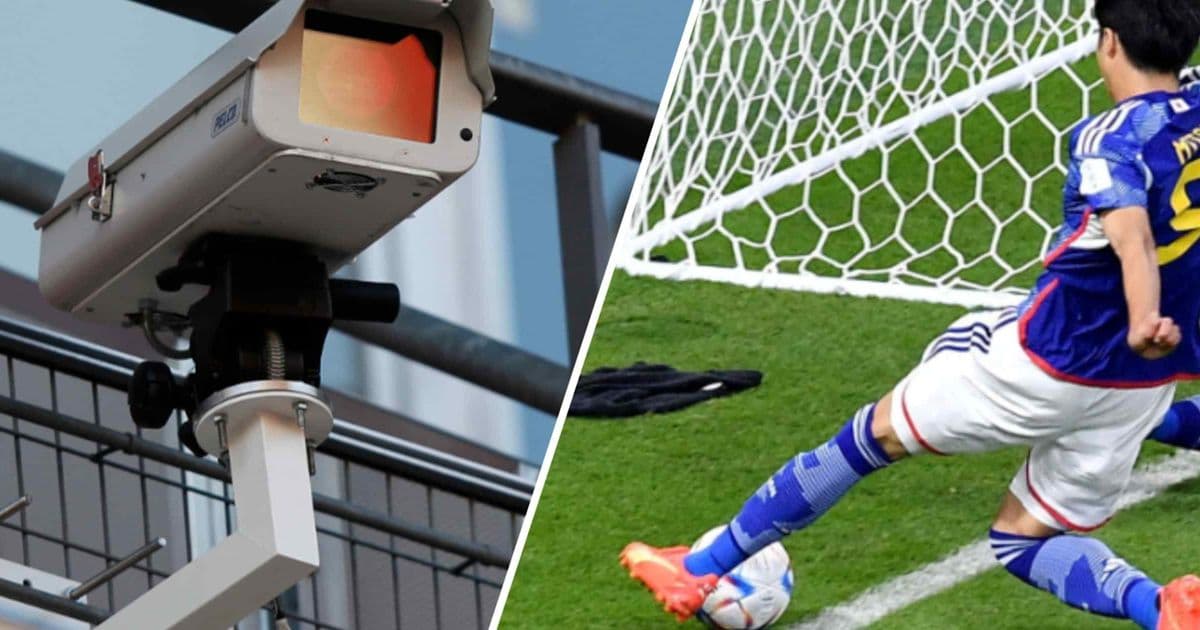
Sony is rolling out a faster version of its Hawk-Eye officiating system for the 2026 World Cup, trimming the review delays that have frustrated fans and broadcasters. The upgrade is less about refereeing accuracy than about Sony's push to turn precision-sensing technology into a durable revenue line outside consumer electronics.
Sony Group has upgraded its Hawk-Eye officiating technology ahead of the 2026 World Cup, promising to cut the wait times that have made video reviews one of the most criticized parts of the modern game. The pitch is simple: faster decisions, less dead air, and a smoother broadcast product. The business logic underneath it is more interesting than the feature itself.
Hawk-Eye, which Sony acquired in 2011, has quietly become one of the company's more strategic assets. The system uses an array of high-frame-rate cameras positioned around a stadium to triangulate the position of the ball and players in three dimensions. For offside calls and goal-line decisions, that data feeds the video assistant referee, or VAR, process. The complaint has never been accuracy. It has been speed. A single offside review can stall a match for minutes while officials examine angles, and every one of those pauses is a gap in the live product that broadcasters paid billions to carry.
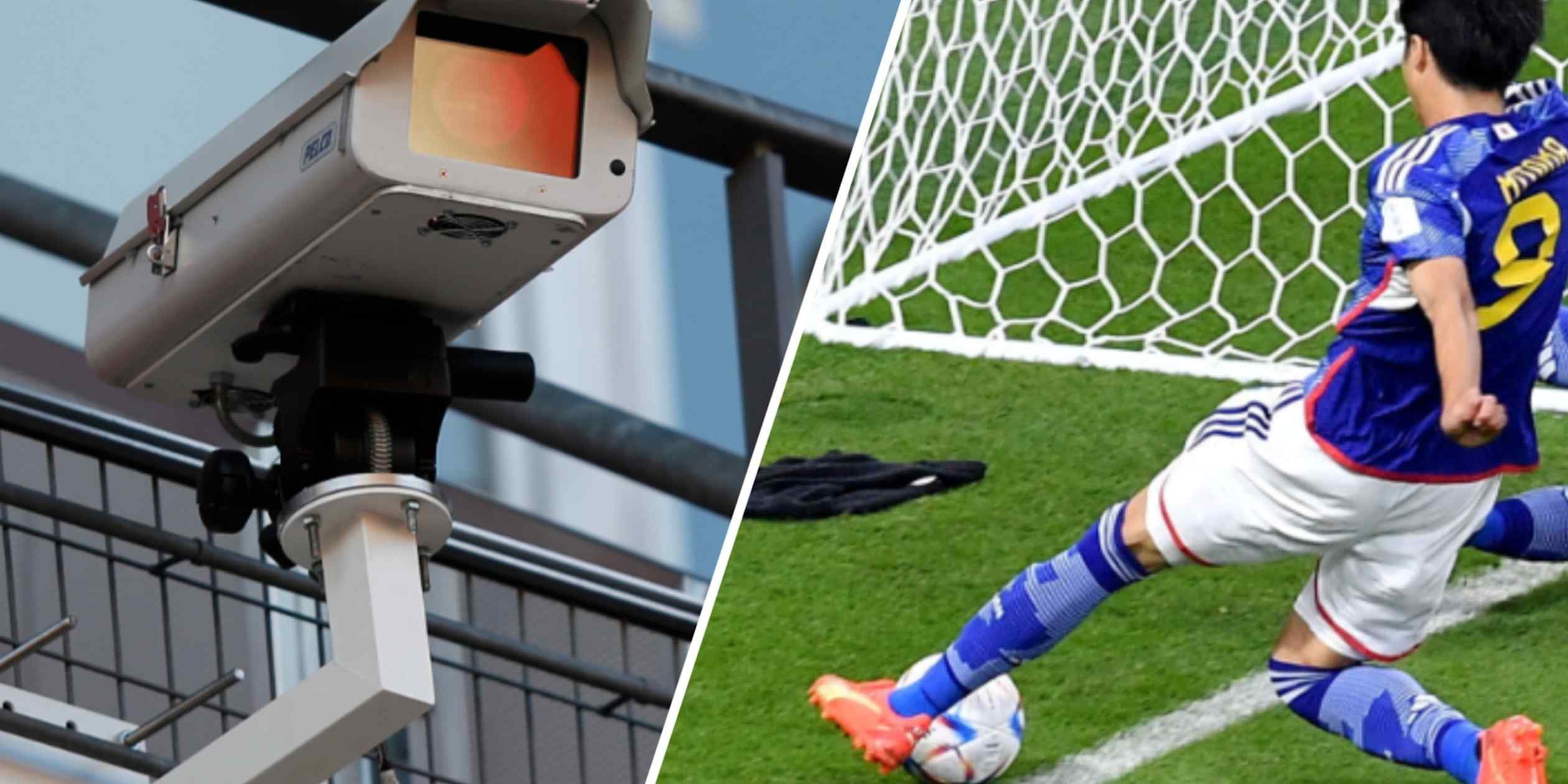
That is where the upgrade matters commercially. By shortening review times, Sony is selling something broadcasters and governing bodies actually value in financial terms: fewer interruptions, tighter pacing, and a viewing experience that holds audiences through the moments that historically bleed engagement. FIFA's introduction of semi-automated offside technology at the 2022 World Cup in Qatar, built on Hawk-Eye's tracking, was the first large-scale proof that limb-tracking and ball-sensing could be productized at tournament scale. The 2026 edition, co-hosted by the United States, Mexico and Canada and expanded to 48 teams, is a far larger stage, with more matches, more venues, and more broadcast hours to fill.
Why Sony keeps investing in a niche
For a company whose name still signals televisions and PlayStation consoles, sports officiating looks like an odd corner to defend. It makes more sense when you read it as part of Sony's broader repositioning away from commodity hardware and toward sensing, imaging, and content services that carry higher margins and stickier customer relationships.
Sony already supplies the image sensors inside a large share of the world's smartphones, a business that gives it deep expertise in capturing and processing high-speed visual data. Hawk-Eye is an applied extension of that same competency: cameras, computer vision, and real-time spatial modeling, sold not as components but as a managed service to leagues and federations. The technology now spans tennis, cricket, soccer and other sports, and the contracts tend to be multi-year and renewing, which is exactly the kind of recurring revenue that hardware-heavy companies covet.
The officiating market itself is small relative to Sony's overall revenue, but it sits at the center of a larger play. Sony has been steadily building a sports-viewing portfolio, including technologies that place fans virtually on the pitch and tools that enrich live broadcasts with tracking data. Each of these leans on the same underlying spatial-data pipeline. Once you can model every player and the ball in three dimensions in near real time, you can resell that data stream to broadcasters for graphics, to betting partners for live odds, and to leagues for analytics. The officiating use case is the credibility anchor. If the system is trusted to decide goals at a World Cup, it is trusted everywhere downstream.
The competitive context
Sony is not alone in chasing sports data. Companies like Genius Sports and Sportradar have built sizable businesses around collecting and distributing live sports data, particularly for the betting market, and broadcasters increasingly expect tracking-driven graphics as table stakes. What distinguishes Hawk-Eye is its position inside the officiating workflow, a regulated, mission-critical role that competitors cannot easily replicate because it requires the trust of governing bodies accumulated over years of deployments.
That trust is also the constraint. Officiating technology operates under intense scrutiny, and every visible failure becomes a reputational liability for the supplier. Speed improvements that introduce error would be far worse for Sony than slow reviews that are correct. The 2026 upgrade therefore has to deliver faster output without loosening the accuracy that justified the system in the first place, a trade-off that explains why these advances arrive incrementally rather than in dramatic leaps.
What it means
For the World Cup audience, the change should register as shorter stoppages and quicker confirmations on contested goals. For Sony, the stakes are longer term. The 2026 tournament functions as a global demonstration of what its sensing and imaging stack can do under the harshest conditions, watched by billions and dissected frame by frame. A clean performance strengthens Sony's case to leagues weighing whether to standardize on its platform, and it reinforces the narrative that the company's future growth lies in services built atop its imaging dominance rather than in selling more boxes.
The broader signal is that live sports has become a proving ground for real-time computer vision, and the firms that control the officiating layer are positioned to monetize far more than the calls themselves. Sony spent more than a decade turning a tennis line-calling tool into infrastructure for global soccer. The faster replays at this World Cup are the visible product. The data pipeline behind them is the business.
Comments
Please log in or register to join the discussion