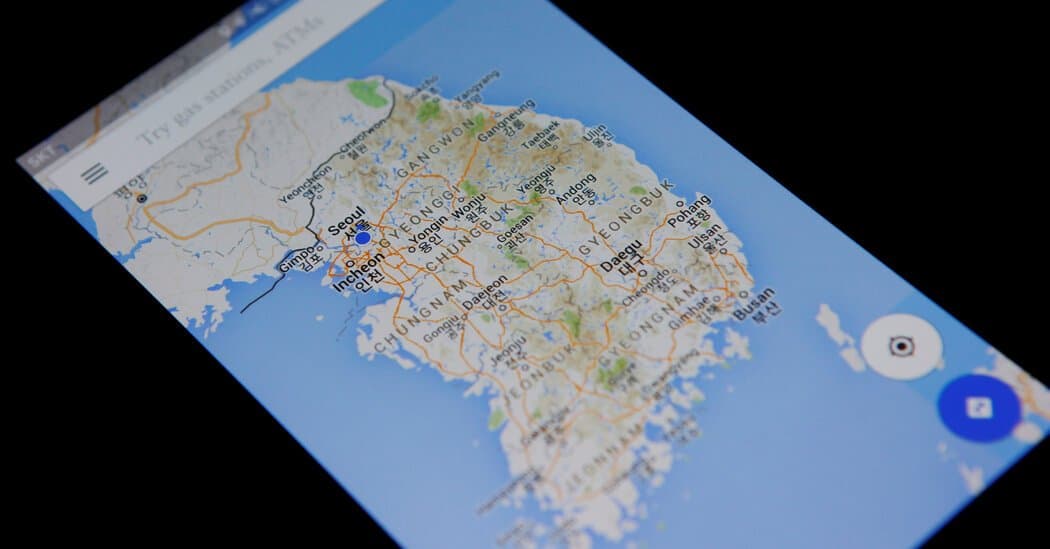
South Korea has approved Google's request to export detailed geographic data overseas, reversing a longstanding policy that made Google Maps largely nonfunctional in the country.
South Korea has approved Google's request to export detailed geographic data overseas, reversing a longstanding policy that made Google Maps largely nonfunctional in the country. The decision marks a significant shift in South Korea's approach to geographic data sharing and will dramatically improve mapping services for both residents and visitors.
For years, Google Maps in South Korea offered severely limited functionality due to strict regulations that classified detailed geographic data as sensitive national security information. The restrictions prevented Google from providing turn-by-turn navigation, real-time traffic updates, and other core features that users in other countries take for granted.
Under the new policy, Google will be able to access and export the detailed map data needed to provide full-featured mapping services. This change addresses a major frustration for South Korean users who have had to rely on domestic alternatives like Naver Maps and Kakao Maps, which have dominated the market due to Google's limitations.
The restrictions dated back to the 1960s when South Korea implemented strict controls on map data amid tensions with North Korea. The government classified detailed geographic information as potentially sensitive, requiring special approval for export or sharing with foreign companies.
Google had been pushing for years to gain access to this data, arguing that the restrictions put South Korean users at a disadvantage and hindered technological development. The company maintained that modern mapping services pose no meaningful security risk and that the benefits of improved navigation and location-based services outweigh theoretical concerns.
The approval comes as South Korea seeks to position itself as a leader in digital innovation and artificial intelligence. By removing barriers to data sharing, the government aims to create a more open environment for tech companies while still maintaining appropriate security safeguards.
For South Korean consumers, the change means Google Maps will finally offer the same comprehensive features available in other markets. This includes accurate turn-by-turn navigation, real-time public transit information, street view imagery, and integration with other Google services.
Tourists visiting South Korea will also benefit significantly, as Google Maps is often their preferred navigation tool. The improved functionality should make it easier for visitors to navigate the country's complex urban environments and public transportation systems.
The decision could have broader implications for South Korea's tech ecosystem. While domestic mapping services like Naver and Kakao have invested heavily in building alternatives, the improved Google Maps could increase competition and potentially drive innovation across the sector.
Google has not yet announced a specific timeline for rolling out the enhanced features, but industry analysts expect the changes to be implemented gradually over the coming months as the company integrates the newly accessible data into its mapping services.
The approval represents a careful balance between maintaining national security and embracing the benefits of open data sharing. South Korean officials have indicated that appropriate safeguards will remain in place to protect sensitive information while allowing for commercial use of geographic data.
This policy shift aligns with broader trends in South Korea's approach to technology regulation, where the government has been working to reduce barriers for international tech companies while still protecting domestic interests and national security.
The change is particularly significant given South Korea's position as a global technology hub and home to major tech companies like Samsung and LG. By creating a more open environment for data sharing, South Korea may enhance its attractiveness for tech investment and innovation.
For Google, the approval represents a major victory in its efforts to provide consistent services across global markets. The company has faced similar restrictions in other countries but has seen gradual improvements as governments recognize the economic and practical benefits of modern mapping services.
The decision also highlights the evolving nature of national security concerns in the digital age. What was once considered sensitive information may now be viewed as essential infrastructure for economic development and daily life.
As Google begins to implement the changes, users can expect to see gradual improvements in mapping functionality throughout South Korea. The full rollout will likely take time as the company processes and integrates the newly accessible data into its existing services.
This policy change could serve as a model for other countries grappling with similar restrictions on geographic data. As the benefits of open data sharing become increasingly apparent, more nations may follow South Korea's lead in modernizing their approach to mapping and location-based services.
The approval demonstrates how technological advancement and national security concerns can be balanced through careful policy-making. By maintaining appropriate safeguards while removing unnecessary restrictions, South Korea has created a framework that benefits both users and the broader tech ecosystem.
For now, South Korean users and visitors can look forward to a significantly improved Google Maps experience, marking the end of a long-standing limitation that has frustrated users for years.
Comments
Please log in or register to join the discussion